Should Malaysians Commute From JB or Live in Singapore? A Real Cost Comparison
Should Malaysians commute from JB or live in Singapore? A real cost comparison of time, transport fares, and room rent to help you decide.
If your job in Singapore starts before 9am or runs past 7pm, or if you don't own a car, living in Singapore usually wins on time and stress even though the rent is higher. If you work standard office hours, have a car, and your role tolerates the odd late arrival, commuting from JB can still work financially, as long as you count the entry levy and the queue, not just the petrol.
That's the short version. The real answer depends on three things: where your job is, what hours you work, and how much your time off the Causeway is actually worth to you. Here's the full comparison, with real numbers on both sides.
How long does the JB to Singapore commute actually take?
It depends entirely on when you cross. Weekdays between 10am and 3pm, both checkpoints typically clear in 10 to 15 minutes. Outside that window, it's a different story.
Peak hours, roughly 7am to 9am and 6pm to 8pm, are consistently the worst. Sunday afternoons and evenings from about 3pm to 9pm are also brutal, as the weekend crowd heads back into Singapore.
By transport mode, off-peak versus peak looks like this:
- Private car: 45 to 60 minutes off-peak, up to 3 hours during a bad jam
- Public bus (CW1/CW2): 60 to 90 minutes off-peak, up to 4 hours on a heavy Sunday
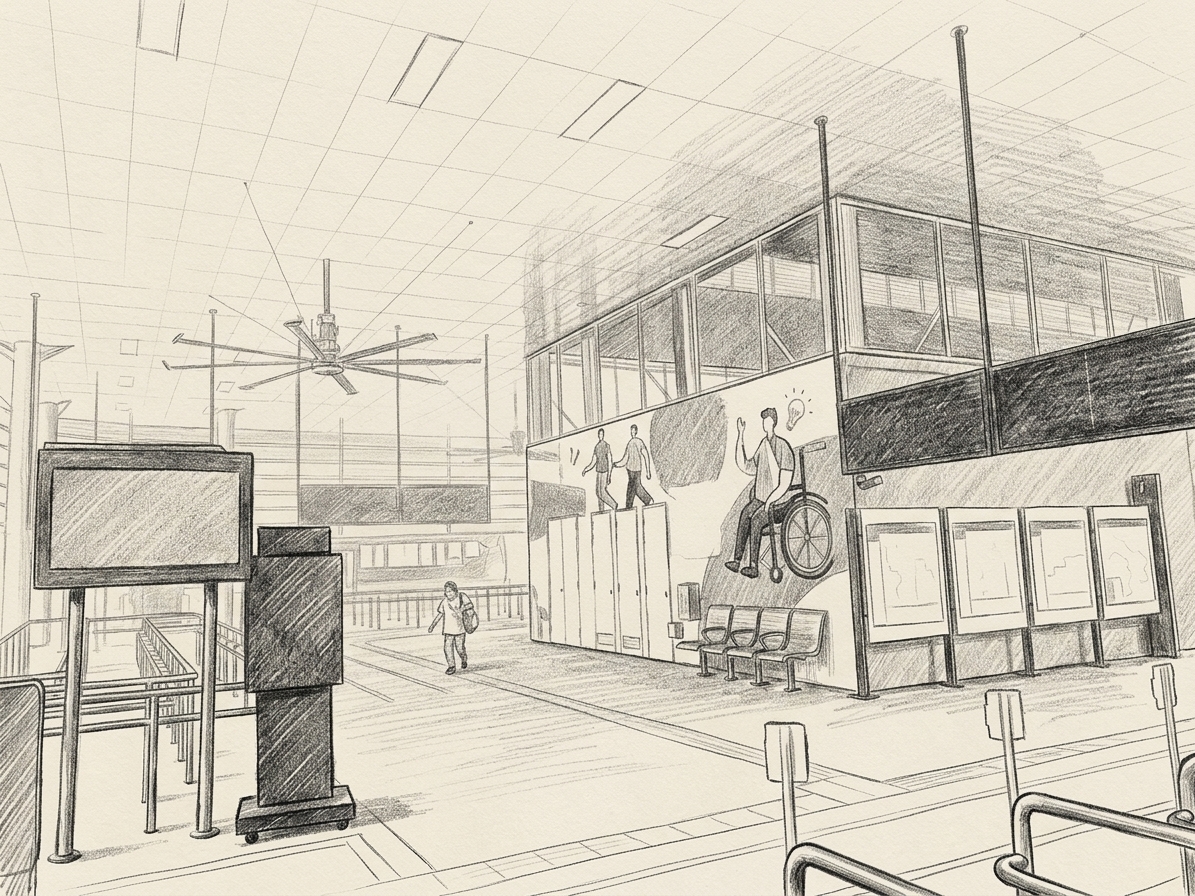
- KTM Shuttle Tebrau train: roughly 20 to 45 minutes door to door, the most consistent of the three
Between 350,000 and 500,000 people cross the Causeway daily, making it one of the busiest land border crossings in the world. That volume is exactly why peak-hour times are so unpredictable and off-peak times are so much better. If your job lets you shift your hours even slightly outside the 7 to 9am and 6 to 8pm windows, your actual commute experience changes completely.
What does commuting daily actually cost, in dollars?
This is where a lot of commuters underestimate. The petrol is the small part.
Driving solo. Add up the Vehicle Entry Permit, tolls, and fuel, and a solo driver is looking at roughly S$30 to S$50 per round trip. The number that catches people out is the entry levy: VEP is waived for the first 10 days a foreign-registered car enters Singapore in a calendar year, but after that it's S$35 for every day the car is in the country. For a daily commuter, that alone adds up to roughly S$700 to S$770 a month once the free days run out, on top of tolls (Woodlands S$0.80, Tuas S$2.10) and petrol. Carpooling with three others brings the per-person cost down to roughly S$15 to S$20 a trip, which changes the math substantially.
Public bus. The CW1 service from Kranji is S$2.60 one way; CW2 from Queen Street in Bugis is S$4.80 one way. Riding CW1 daily works out to roughly S$115 a month for 22 working days; CW2 comes to around S$210 a month.
KTM Shuttle Tebrau train. A flat S$5 one way, so S$10 a day and about S$220 a month for 22 working days. It runs on a fixed timetable of roughly 13 to 18 trips a day in each direction, so you're working around the train, not the other way round.
RTS Link. As of this writing, the RTS Link connecting Bukit Chagar in Johor to Woodlands North in Singapore is still targeted for commencement around the end of 2026, not yet running. Fares had not been officially published at the time of writing, so check the operator's announcement closer to launch. The train journey itself takes about five minutes rather than 20 to 45 minutes, and the line has capacity for up to 10,000 people an hour in each direction, which should meaningfully cut queueing versus the current checkpoint crush.
Side by side: commuting versus living in Singapore
| Monthly transport cost | Typical daily time cost | |
|---|---|---|
| Drive solo | ~S$700 to S$1,100 (levy + tolls + fuel) | 1.5 to 6 hrs round trip depending on timing |
| Carpool (4 pax) | ~S$300 to S$450 per person | 1.5 to 6 hrs round trip depending on timing |
| Bus (CW1/CW2) | ~S$115 to S$210 | 2 to 8 hrs round trip depending on timing |
| KTM Shuttle Tebrau | ~S$220 | 40 min to 1.5 hrs round trip |
| RTS Link (once running) | Varies, fares not yet published | Under 1 hr round trip, most of it on the Singapore MRT side |
| Living in Singapore (co-living room) | Room rent replaces transport cost entirely | 0, commute becomes local MRT/bus only |
Room rents in Singapore's co-living market currently run roughly S$600 to S$900 a month for a compact or budget room, S$1,000 to S$1,600 for a standard common room, and S$1,700 to S$2,500 for a master bedroom with an ensuite, depending on location, room size, and what's included. That's a real cost, and it's higher than any of the commuting options above on paper. The trade you're buying with it is your evenings and your mornings back, plus zero exposure to checkpoint queues, VEP levy changes, or a Sunday night jam that eats your whole weekend.
What the commute actually costs you beyond dollars
The numbers above are only half the picture. A few things don't show up in a fare table:
Unpredictability compounds. A 45-minute drive that occasionally becomes a 3-hour one isn't just an inconvenience, it's a scheduling risk. If your job has fixed start times, meetings, or shift handovers, you're either padding every commute with a large buffer or accepting that some days you'll be late.
Night and early-morning options thin out. Off-peak service frequency on the bus and train drops sharply late at night, and a bad jam at 11pm heading back to JB after a late shift is a genuinely rough way to end a workday.
Carpooling only works if your schedule matches someone else's. The S$15 to S$20 per-person figure assumes four people going the same way at the same time, every day. Solo driving is the norm for a lot of commuters, and solo driving is where the entry levy bites hardest.
Weather and long weekends make it worse, not better. Public holidays on either side of the border, and Chinese New Year or Hari Raya travel weeks especially, are when the Causeway is at its most unpredictable, exactly when you'd most want a smooth run home.
So which one makes sense for you?
Commuting from JB tends to work better if: you work standard office hours roughly 9am to 6pm with some flexibility either side, you already own a car or can reliably carpool, your household costs are lower in JB and that matters to your budget, and your job doesn't penalise the occasional late arrival.
Living in Singapore tends to work better if: your shift starts before 9am or ends after 7pm, you don't drive or don't want to depend on a car, your role has zero tolerance for lateness, you want your evenings and weekends free of border planning, or you're simply tired of a commute that's meant to be an hour but is sometimes four.
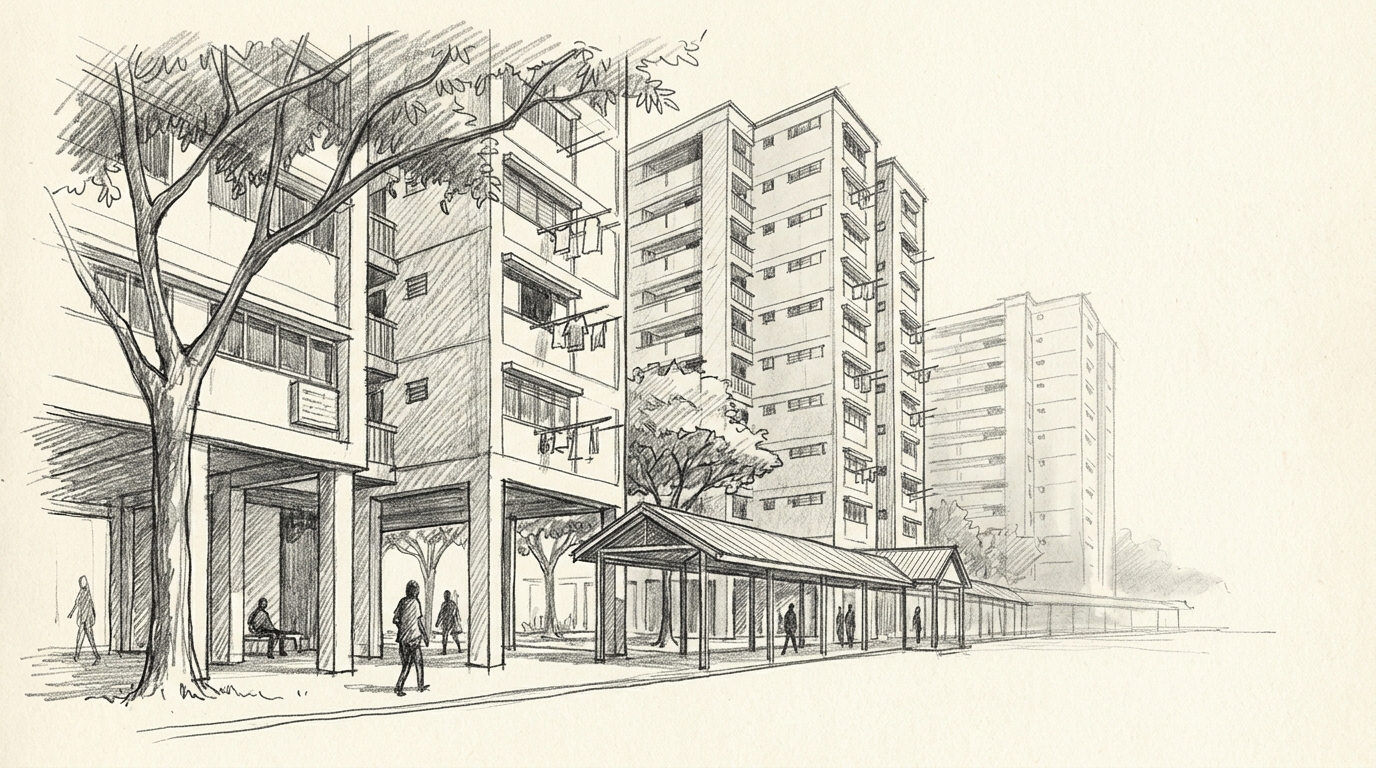
There's also a middle path worth naming honestly: some Malaysians in Singapore split the difference by living here on weeknights near work and heading back to JB on weekends. It's a real pattern, and a room set up for exactly this kind of flexible, month-to-month living works better for it than a full year's lease does.
The RTS Link, once it's actually running, should narrow this gap. A sub-hour, high-capacity crossing removes a lot of the worst-case scenarios above. Until it's operating and its fares are confirmed, the comparison above reflects what commuters are dealing with today, not what's promised for later.
If you're weighing a room in Singapore
If the numbers above are pointing you toward living closer to work, at least for a stretch, current room listings on lazybee.sg show the nearest MRT station for each house so you can check your actual future commute before booking a viewing. For the fuller picture on what a room costs beyond the headline rent, the monthly rental cost breakdown and a look at how commute time changes by neighbourhood are both worth reading before you decide. Co-living rooms come furnished and on flexible terms, which suits exactly the kind of weeknights-in-Singapore, weekends-in-JB pattern a lot of Malaysians end up settling into.
Sources: Causeway peak hours and crossing times, daily Causeway commuter volume, LTA, Johor Bahru to Singapore RTS Link, RTS Link commencement timeline, driving costs, VEP and tolls, Causeway Link bus fares, KTM Shuttle Tebrau fares and schedule, Singapore co-living room price ranges 2026.
Figures here that come from government schedules, MOM salary thresholds, ICA and HDB requirements, URA rules, fees and fares, are reviewed on their own timetables and move. Check the current number at the source before you rely on it.