Where to Live by Commute Time to the CBD
Where to live by commute time to Singapore's CBD: real MRT times, 10 areas within 30 minutes of Raffles Place, and how to test any listing.
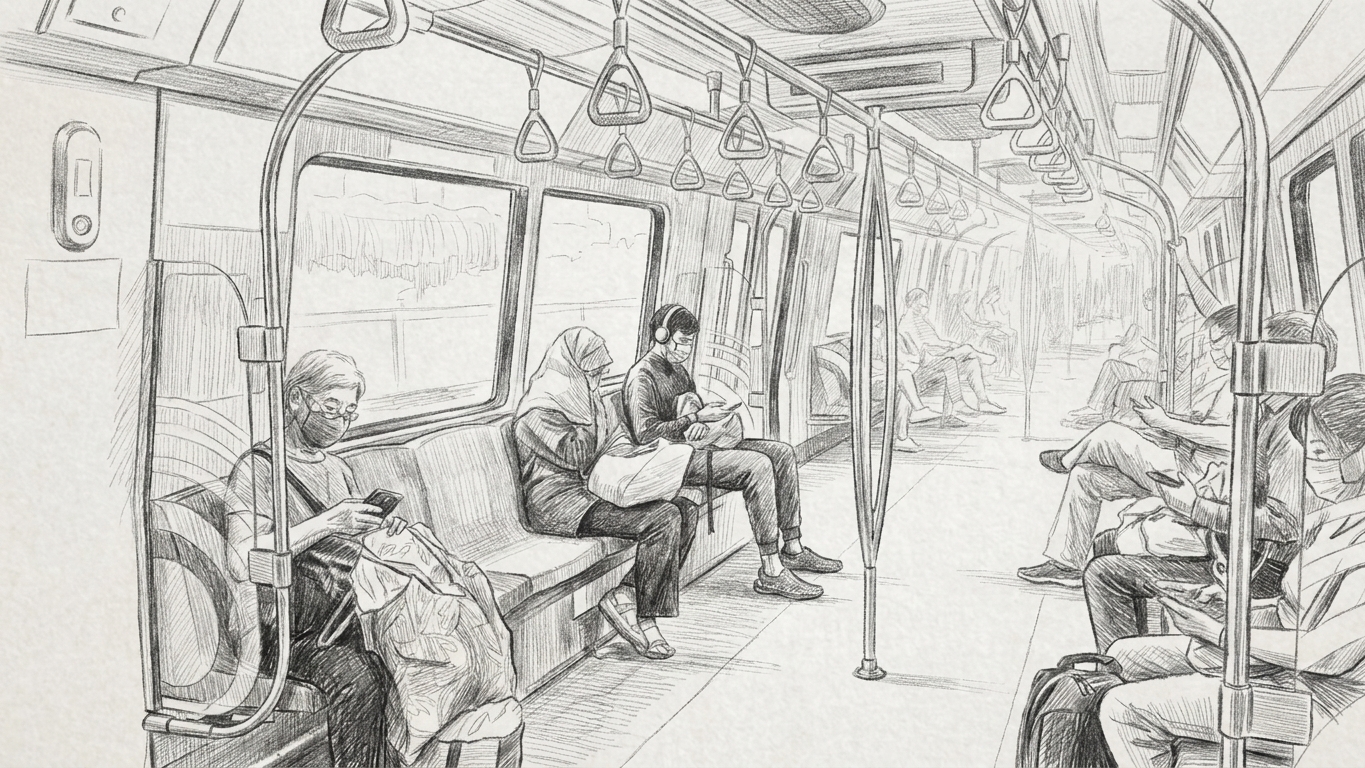
Where you should live by commute time to Singapore's CBD depends on your office, but here's the short version. Direct MRT lines put dozens of neighbourhoods within 15 to 25 minutes of Raffles Place, and once you add walking time on both ends, a realistic door-to-door commute of 30 to 40 minutes is achievable from a wide ring around the centre, not just from the centre itself. You do not need to live in Tanjong Pagar or Marina Bay to keep your commute short. You need to live near a station on a line that runs into the CBD without a transfer, or with one easy one.
The rest of this guide breaks down how to actually work that out for your own office, which areas deliver on it, and how to test any listing before you commit.
How Long Will My Commute Actually Be?
Your real commute is never just the train ride. It's four legs: walk to your home station, wait for and ride the train, walk from the CBD station to your office, plus any transfer in between. The MRT ride itself between a fringe station and Raffles Place typically runs 8 to 27 minutes depending on distance and whether you need to change lines. Add 5 to 10 minutes of walking and waiting on each end, and a 15-minute train ride can easily become a 30-minute door-to-door commute.
A direct line matters more than raw distance. A station 20 minutes away with no transfer often beats one that's technically closer but needs a change at a busy interchange like Dhoby Ghaut or City Hall during peak hour, where the platform itself can eat several minutes.
What Counts as a Good Commute Here
The CBD, in URA's own planning terms, is the Downtown Core: Raffles Place, Shenton Way, Robinson Road and Cecil Street, extending to Tanjong Pagar and Anson to the south and Marina Bay's Central and Bayfront areas to the east (URA). If your office sits anywhere in that stretch, the same commute math applies regardless of which exact building you're headed to.
For a benchmark, LTA's most recent Household Travel Survey put the mean travel time to work across Singapore at roughly 40 to 45 minutes, with a median of around 35 to 45 minutes (Ministry of Transport). Anything under 30 minutes door to door is genuinely better than what most residents actually experience. Under 20 minutes is short by any Singapore standard.
Commute Times and Rents in 2026
Proximity to an MRT line that runs straight into the CBD still commands a rent premium in 2026, but it's a smaller premium than most renters assume, and it doesn't scale evenly with distance. A room two stops from Raffles Place isn't proportionally cheaper than one twelve stops away. What actually moves the price is whether the line is direct, how central the neighbourhood feels day to day, and how much the surrounding area has going on outside commute hours.
That gap is where a lot of value sits. Areas one line-change or one extra ride's worth of distance out from the very centre often ask meaningfully less rent for a commute that's only five or ten minutes longer. If you're budgeting for a room, cross-reference against a full monthly cost breakdown before deciding how much of your budget location alone is worth.
Living Central vs Commuting In
| Living Central | Commuting In | |
|---|---|---|
| Typical commute | Under 15 minutes | 20 to 40 minutes |
| Rent | Highest in the market | Lower, often meaningfully so |
| Neighbourhood feel | Office towers, quieter at night and weekends | More residential, hawker centres, everyday life |
| Best for | Long or irregular hours, no patience for transfers | Anyone trading 10 to 15 minutes for a lower rent and a livelier area to come home to |
| Downside | You're paying centre-of-island rent for a district built for daytime, not living | A bad transfer or a station far from your desk can eat the time saving |
Neither option is wrong. The mistake is picking one without actually pricing out what the other costs you in money or in minutes.
10 Areas Within Thirty Minutes of Raffles Place
These are approximate MRT ride times to Raffles Place station, door-to-door will run a bit longer once you add walking on both ends. Ordered by how close they run.
- Bugis, about 5 minutes, direct.
- Tiong Bahru, about 8 minutes, direct.
- Farrer Park, about 12 minutes, one change at Dhoby Ghaut.
- Queenstown, about 13 minutes, direct.
- Novena, about 14 minutes, direct.
- Paya Lebar, about 14 minutes, direct.
- Toa Payoh, about 17 minutes, direct.
- Buona Vista, about 17 minutes, direct.
- Bishan, about 21 minutes, direct.
- Jurong East, about 27 minutes, direct on the East-West Line.
Jurong East is a major interchange, so it's a genuinely good commute base despite sitting on the far side of the island, and it happens to be where one of Lazybee's own houses, Ivory Heights, sits a short walk from the station.
Myth: You Must Live Central to Avoid a Long Commute
This is the assumption behind a lot of overpaying. The list above makes the actual case: a station that's technically far from the CBD on a map can still deliver a commute under 30 minutes if it sits on a direct line, while a station that looks close on a map can run longer if it needs a transfer at a crowded interchange.
Distance on the MRT map is not distance in minutes. A renter who picks a neighbourhood purely because it looks close to town, without checking whether the line runs direct, can end up with a worse commute than someone who chose a "further" area with no transfer.
Reading the MRT Map Like a Renter
Two things matter more than anything else on the map: which line your home station sits on, and whether that line reaches a CBD station without a change.
The North-South Line and East-West Line both run through Raffles Place and City Hall. If your home station is anywhere on either of those lines, you likely have a direct ride. The North East Line, Circle Line, Downtown Line and Thomson-East Coast Line all reach the CBD too, but usually via a transfer at an interchange like Dhoby Ghaut, City Hall, or Outram Park.
A transfer isn't automatically a dealbreaker. It's the difference between a clean cross-platform change and a walk through a crowded interchange at 8:30am that decides whether it costs you two minutes or ten. Before committing to an area, run the actual route on Google Maps or Citymapper at a weekday peak-hour departure time, not off-peak, since Singapore's peak crowding genuinely adds time on the busiest interchanges.
Mistakes: Choosing an Area Before You Know Your Office
The single most common mistake is picking a neighbourhood first and figuring out the commute later. Someone signs a room because a friend lives there, or because the area looks nice online, and only checks the commute after move-in, when it's too late to undo without breaking a lease.
Work backwards instead. Confirm your office address, or your likely office if you haven't landed the job yet, then filter areas by commute before you fall in love with a neighbourhood. A beautiful room with a 55-minute door-to-door commute gets old fast on a Monday morning in the rain.
Checklist: Test Any Listing Against Your Real Commute
Before you commit to any room or unit, run it against this list:
- [ ] Search the actual route from the listing's MRT station to your office station, at a weekday 8:30am departure, not off-peak
- [ ] Check whether the route is direct or needs a transfer, and where
- [ ] Add real walking time from the listing to its nearest station, not the straight-line distance on a map
- [ ] Add real walking time from the CBD station to your actual office building, some CBD stations are a 10-minute walk from the towers they're named after
- [ ] Test the return commute too, evening peak crowding can differ from the morning
- [ ] If the area is served by more than one line, check both routes, one is often meaningfully faster
- [ ] Confirm the listing's stated distance to the MRT against Google Maps yourself rather than taking a "5 minutes to MRT" claim on faith
Where to Go From Here
Once you know your real commute window, it's worth comparing that against a full monthly rental budget so you're weighing rent and commute together rather than one at a time. Current room listings on lazybee.sg show the nearest MRT station for each house, including Ivory Heights near Jurong East, so you can check the actual commute before you book a viewing rather than after.
Frequently Asked Questions
How do I find where to live by commute time to the CBD in Singapore? Start with your office address, then check which MRT stations reach it directly without a transfer. Areas on the North-South or East-West Line running through Raffles Place or City Hall usually deliver the shortest, most reliable commutes.
What's considered a good commute time in Singapore? Under 30 minutes door to door is better than what most residents experience, since LTA's latest survey puts the average commute to work at around 40 to 45 minutes. Under 20 minutes is short by local standards.
Do I have to live in the CBD itself to keep my commute short? No. Several neighbourhoods 15 to 25 minutes away by direct MRT, including Novena, Toa Payoh, Paya Lebar and Buona Vista, deliver a comparable commute to living centrally, usually at a lower rent.
Does a shorter MRT ride always mean a shorter total commute? Not always. A direct 20-minute ride can beat a "closer" station that needs a transfer at a busy interchange, since walking through a crowded interchange at peak hour adds real minutes the map doesn't show.
How much does commute distance actually affect rent in Singapore? It affects rent, but not proportionally. The gap in rent between a very central room and one 15 to 25 minutes out by direct MRT is often larger than the gap in actual commute time, which is where most of the value in choosing a slightly further area sits.
Sources: URA, Short-Term Accommodation guidelines; URA, Renting Property guidelines.