Cost of Living in Singapore for Taiwanese Nationals in 2026
The real cost of living in Singapore for Taiwanese nationals in 2026: rent, food, transport, TWD to SGD remittance, and pass fees, benchmarked against Taipei.
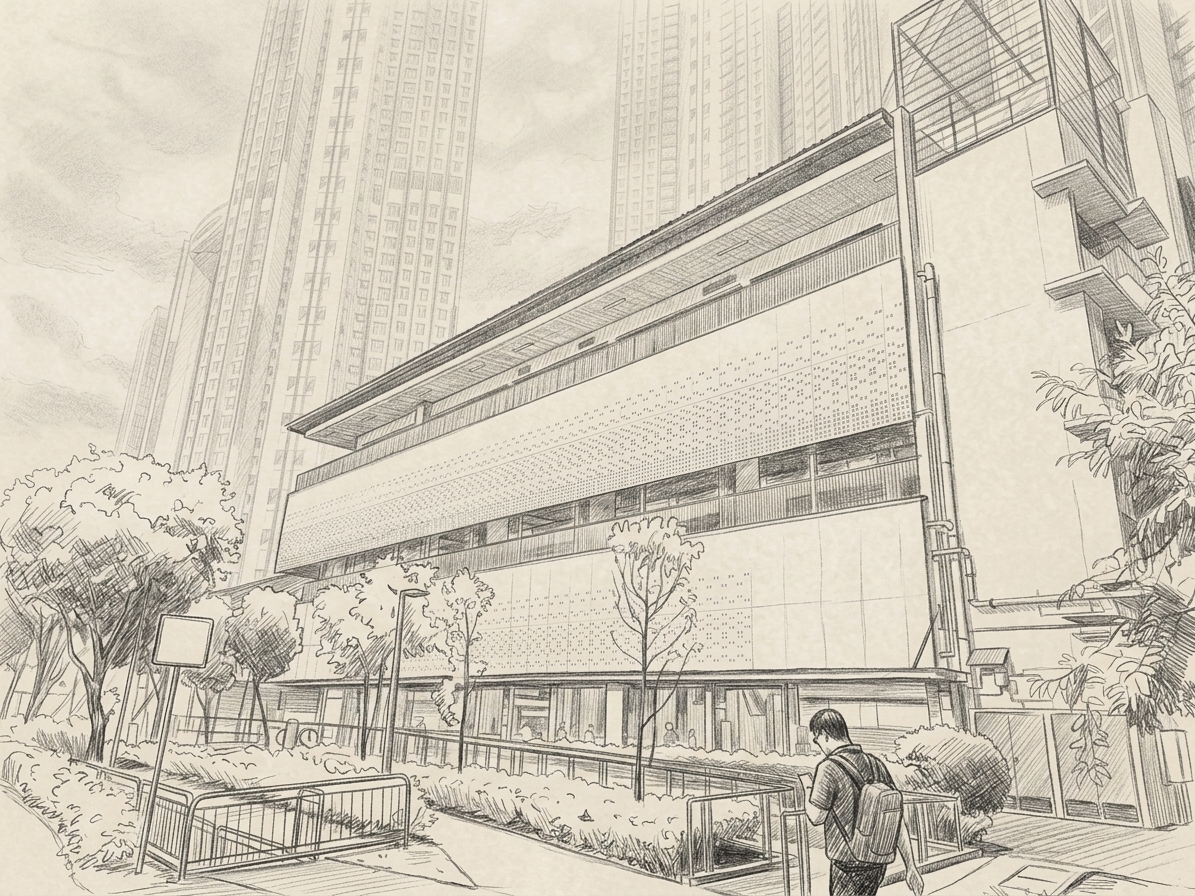
The cost of living in Singapore for Taiwanese nationals runs well above Taipei, driven mostly by rent rather than daily spending. A single professional on an Employment Pass renting a room in a shared home should budget roughly S$1,900 to S$2,900 a month all in: rent, food, transport, and phone. A family renting a full unit and sending one child to an international school can clear S$8,000 to S$12,000 a month once tuition is added.
The rest of this piece breaks down where those numbers come from, plus the costs a move from Taiwan specifically runs into that a generic "moving to Singapore" budget skips: TWD to SGD remittance, Taiwanese groceries and bubble tea, and flights home for Lunar New Year.
How much more expensive is Singapore than Taipei?
Cost-of-living comparison sites consistently put Singapore well above Taipei overall, though the size of the gap varies widely by source. Rent is the biggest driver. Taipei rents run roughly 40% to 50% below Singapore's for a comparable unit.
Day-to-day costs narrow that gap considerably. Hawker food, public transport, and mobile data in Singapore sit closer to Taipei prices than the headline comparison suggests. Housing is where the real jump happens, not groceries or getting around.
What does rent actually cost, and why a room usually makes more sense first
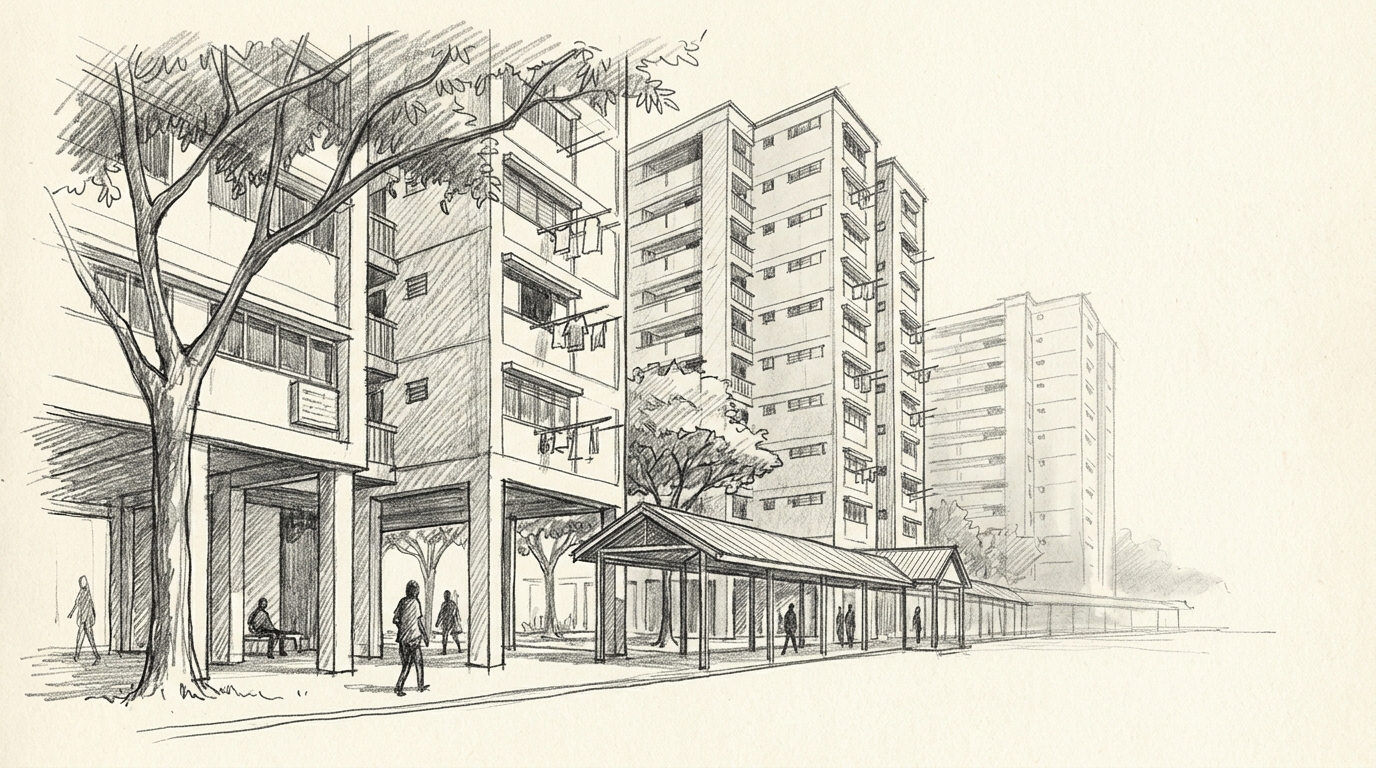
A room in a shared home in Singapore typically runs S$600 to S$1,200 for a basic or HDB room, up to S$1,700 to S$2,500 for a master bedroom or ensuite. A studio or one-bedroom unit on your own usually starts around S$1,900 and can pass S$3,500 in a central location. For a first move, before you have a Singapore salary history or a fixed view on which neighbourhood suits you, a room is the faster and lower-risk option.
There's a practical reason beyond cost too. Many landlords doing a private tenancy want a local guarantor or a Singapore bank statement history, which a first-time arrival doesn't have yet. A co-living licence agreement or a master-lease operator isn't underwriting you as an individual the same way, so that friction mostly disappears.
For the fuller breakdown of deposits, stamp duty, and what's included in rent versus billed separately, see cost of renting in Singapore 2026. That piece covers the general newcomer math in more depth than we'll repeat here.
Food, Taiwanese groceries, and bubble tea
A hawker-heavy diet runs roughly S$500 to S$1,000 a month, a genuine bargain by Singapore standards. Groceries alone, if you cook mostly local ingredients, land closer to S$200 to S$400 a month for one person.
Taiwanese food culture travels well here. Bubble tea chains that started in Taiwan, including The Alley, Tiger Sugar, and TP Tea, have multiple outlets across Singapore, and street food spots like I Love Taimei serve fried chicken and popcorn chicken alongside the usual boba menu. For pantry items, pineapple cakes, sauces, and noodles show up at Taiwan pop-ups such as the one at Yue Hwa Chinatown, and online Taiwanese grocers ship to Singapore for anyone missing a specific brand from home. None of this is priced like a domestic Taiwan supermarket, so someone eating Taiwanese at home often should budget closer to S$700 to S$1,100 a month for food, factoring in the import premium and the occasional bubble tea run.
Transport costs in Singapore
Public transport for a daily commute typically costs S$100 to S$150 a month on the MRT and buses, using a contactless card or SimplyGo. That's genuinely cheap. Add regular Grab rides, especially for late nights or grocery runs with heavy bags, and transport can climb to S$300 to S$400 a month.
Compared to getting around Taipei, which also has a dense, cheap, and famously punctual metro system, this is a category where the gap between the two cities barely shows up. Singapore's MRT covers most of the island reliably, so it's a genuine default rather than a backup plan.
Phone, data, and staying connected
A local SIM matters from week one, both for practical reasons (banking OTPs, delivery apps, work logins) and because Taiwan roaming plans get expensive fast if relied on past the first few days. Prepaid SIM-only plans in Singapore start from around S$7 to S$15 a month for a moderate data allowance, with heavier data plans (500GB to 1TB) running S$14 to S$25.
Setting this up on arrival, alongside opening a local bank account, is worth doing early rather than putting off. Both usually need your pass or entry stamp and a local address, another reason having a room booked before landing helps.
Sending money home: TWD to SGD remittance
This catches a lot of Taiwanese nationals out, since domestic Taiwan transfer apps don't cover Singapore the way they cover local transfers. Bank wires from Singapore to Taiwan typically carry a flat fee plus an exchange rate margin, and the combined cost usually runs well above a dedicated transfer service.
Digital transfer providers are meaningfully cheaper. Services like Wise convert at the mid-market rate and show one upfront fee that varies with the amount and payment method. Fees and the SGD to TWD rate both move, so check a live quote on the day you send rather than budgeting off a fixed number.
Employment Pass and other pass costs
Pass eligibility and fees apply the same way regardless of nationality; there's no separate fee schedule for Taiwanese applicants, and Taiwan passport holders don't face the additional visa surcharges that apply to some other nationalities. As of 2026, the standard Employment Pass costs S$105 for the application and a further S$225 if approved, so budget roughly S$330 total per pass, on top of whatever an employment agent or corporate services firm charges if one's involved. Minimum qualifying salary for an EP starts around S$5,600 a month in most sectors, higher in financial services and for older applicants.
Flights home and visiting during Lunar New Year
Budget carriers like Scoot fly nonstop between Singapore and Taipei in about 4.5 hours, and fares move constantly, so check live prices for your dates. Fares around Lunar New Year and other major holiday windows run higher than off-peak dates, so booking a few months ahead pays off. Budgeting one or two trips home a year, even at the higher end, is a manageable line item next to rent.
If you're bringing family: school costs are the real budget swing
For a single professional, school fees don't apply and the numbers above hold. For a family moving with a child, tuition is the single biggest additional cost. Singapore doesn't have a dedicated Taiwan-curriculum school the way it does for some other nationalities, so most Taiwanese families choose a bilingual Mandarin-English international school instead, such as HWA International School, Dulwich College, or another school with a strong Mandarin track.
International school fees in Singapore vary widely by school and level and are revised every year, and most schools add a one-time application fee. Extras like bus transport, uniforms, and activities add to base tuition, and fees alone can easily double a family's total monthly spend. Confirm current figures directly with the school before budgeting.
What does the cost of living in Singapore for a Taiwanese national look like by scenario?
| Scenario | Rent | Rough monthly total (all in) |
|---|---|---|
| Single professional, room in shared home | S$600 to S$1,700 | S$1,900 to S$2,900 |
| Single professional, own studio/1BR unit | S$1,900 to S$3,500 | S$3,200 to S$5,200 |
| Couple, shared apartment or two rooms | S$2,000 to S$3,500 combined | S$3,600 to S$5,800 |
| Family of 3, 1 child in international school | S$3,500 to S$5,500 | S$8,000 to S$12,000+ |
These are broad planning ranges, not a quote for any specific listing. Actual numbers move with district, unit condition, and how much of your diet stays Taiwanese versus local hawker food.
Frequently asked questions
Is Singapore much more expensive than Taipei for daily living? Yes, on housing especially. Cost comparison sources put Singapore anywhere from roughly 120% to 200% more expensive than Taipei or Taiwan overall, with rent alone running 40% to 50% higher. Daily costs like hawker food, transport, and mobile data are closer between the two cities than the housing gap suggests.
Can I find Taiwanese food and bubble tea in Singapore easily? Yes. Taiwanese bubble tea chains like The Alley, Tiger Sugar, and TP Tea have multiple outlets islandwide, and Taiwanese street food and grocery pop-ups appear regularly, including at Yue Hwa Chinatown. Prices sit above what the same items cost in Taiwan due to import and franchise pricing.
What does an Employment Pass cost in 2026? S$105 for the application and S$225 if approved, roughly S$330 total, plus any agent fees. The minimum qualifying salary starts around S$5,600 a month in most sectors. Fees and eligibility are the same regardless of nationality.
Is it cheaper to rent a room or a whole apartment when relocating to Singapore? A room is significantly cheaper, and it's also the easier option for a first move since it usually doesn't require a local guarantor or a Singapore rental history. For the full deposit and stamp duty breakdown, see cost of renting in Singapore 2026.
What's the cheapest way to send money between Singapore and Taiwan? Dedicated transfer services like Wise are typically far cheaper than a bank wire, since banks tend to bundle in a wider exchange rate margin on top of a flat fee. Compare a couple of providers' live quotes before sending, since fees and rates shift often.
Where to go from here
If you're arriving without a local guarantor, credit history, or a firm sense of which district to commit to, it's worth reading renting in Singapore from overseas and can foreigners rent in Singapore before you commit to anything. The moving to Singapore checklist is also worth working through in your first week: pass, bank account, and SIM card, in that rough order.
For an all-inclusive room that removes several of the setup costs above (utilities, wifi, and furnishing bundled into one number, no local guarantor needed), the room listings on lazybee.sg show current pricing and availability directly, so you can compare against whatever else you're considering without waiting on an enquiry reply.
Figures here that come from government schedules, MOM salary thresholds, ICA and HDB requirements, URA rules, fees and fares, are reviewed on their own timetables and move. Check the current number at the source before you rely on it.