Cost of Living in Singapore for Filipino Nationals in 2026
Cost of living in Singapore for Filipino nationals in 2026: real rent, food, remittance to the Philippines, and flight costs, plus a full monthly budget.
The cost of living in Singapore for Filipino nationals in 2026 typically runs S$1,700 to S$2,300 a month excluding rent, covering food, transport, phone and wifi, a Filipino-grocery habit, and remittance costs to the Philippines. Add rent for a room in a shared home, usually S$800 to S$1,800 depending on room type and location, and a realistic all-in monthly number lands between S$2,500 and S$4,000. Someone renting a whole unit alone should budget noticeably higher, since a full apartment costs considerably more than a room and rarely includes utilities.
Those numbers shift depending on your pass, how much of your Filipino-food habit you keep up locally, and how much you send home each month. This piece breaks all three down, with a full budget at the end.
What does it cost to live in Singapore as a Filipino national in 2026?
Singapore's general cost of living for a single person, excluding rent, runs roughly S$1,500 to S$1,900 a month on Numbeo's 2026 data, covering groceries, transport, phone, and everyday spending. That figure isn't built around any one nationality; it's a general baseline.
For a Filipino national, the number shifts a little. Remittances home are a real recurring cost a generic figure skips, though a Filipino-food habit doesn't push costs up as sharply as some other cuisines, since rice, pork, chicken, and vegetables are already cheap staples here.
Filipinos make up one of Singapore's largest foreign communities, more than 200,000 people according to the Philippine Embassy in Singapore, working across healthcare, IT, hospitality, professional services, construction, marine, and domestic work. The rental and remittance math below applies mainly to professionals, healthcare workers, and other pass holders who rent their own place. Foreign domestic workers on a Work Permit are required by MOM regulations to live at their employer's registered address, so this guide isn't primarily aimed at that group.
Rent: the single biggest line item
Rent dominates the monthly number more than any other cost, the same as for every nationality moving to Singapore. A room in a shared home typically runs S$800 to S$1,800 a month depending on room type, with all-inclusive co-living rooms bundling utilities and wifi into that one figure. A whole studio or one-bedroom unit runs considerably more, and almost never includes utilities in the headline rent.
The full breakdown of what rent actually costs across room types, whole units, and what's included versus billed separately is covered in cost of renting in Singapore 2026. That piece isn't Philippines-specific, but the rent math is the same regardless of where you're moving from. This article focuses on what changes on top of that baseline for a Filipino national's move.
Filipino groceries and food costs in Singapore
Cooking Filipino food in Singapore is more affordable than some other cuisines, since core ingredients, rice, pork, chicken, fish, and vegetables, are already everyday staples at wet markets here. Specific imported items, Lucky Me instant noodles, banana ketchup, Filipino sauces and snacks, cost more than back home, but they're a smaller slice of a typical grocery basket than for cuisines that lean more heavily on imported staples.
Lucky Plaza on Orchard Road is the recognised hub for Filipino grocery shopping and food, often called "Little Manila." Stores like Pinoy Ave stock Filipino pantry staples, and restaurants such as Kabayan and Tapa King serve home-style dishes. A monthly Filipino-grocery top-up sourced there, on top of a regular wet-market shop, typically runs S$100 to S$250 for a single person.
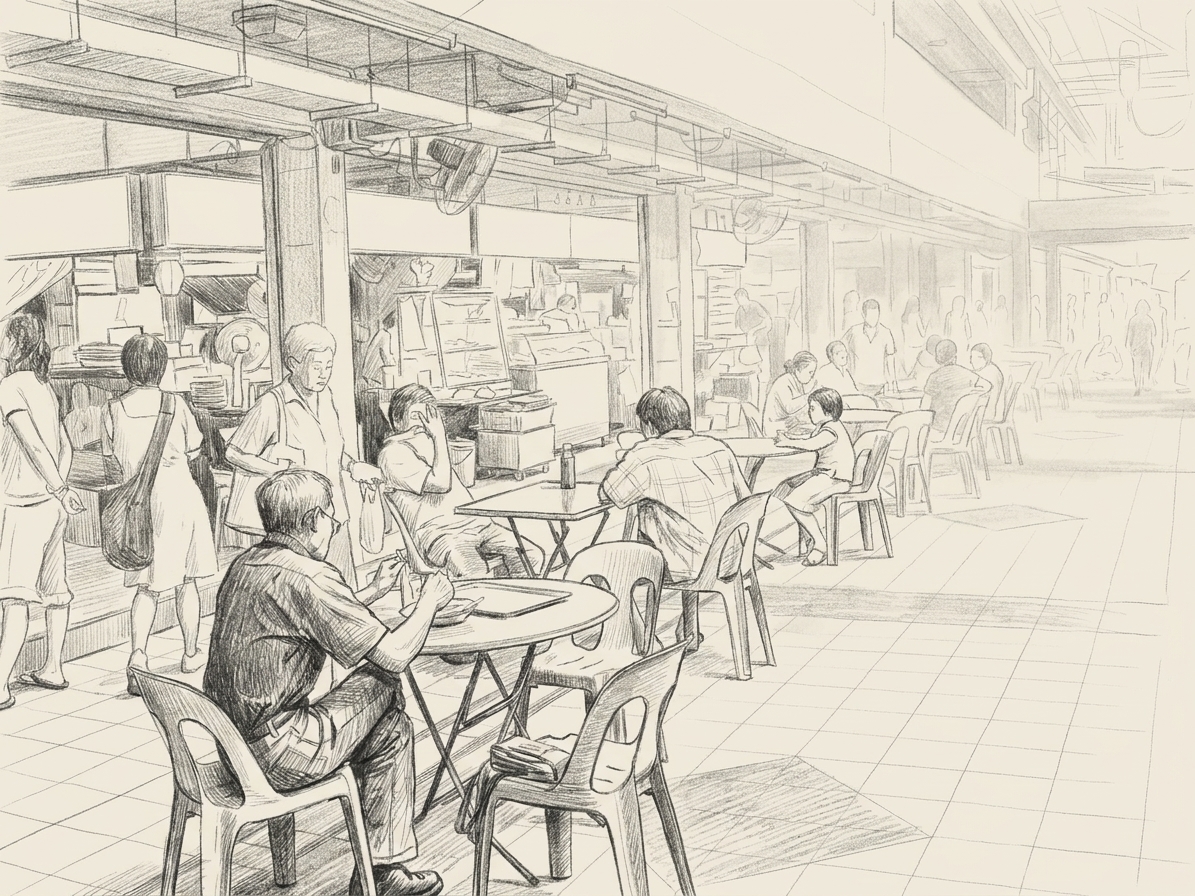
Eating out doesn't have to be expensive either. A hawker meal runs S$5 to S$10, and Filipino restaurants at Lucky Plaza or elsewhere generally run S$8 to S$15 a plate. Mixing hawker meals with home cooking and the occasional Filipino restaurant meal, a realistic monthly food budget is S$350 to S$600 for someone cooking often, or S$600 to S$900 for someone eating out more.
Work passes: what they mean for the budget
Most Filipino professionals moving to Singapore for work arrive on an Employment Pass or S Pass, and the pass type affects the budget indirectly through the minimum salary tied to it. As of 2026, the Employment Pass requires a minimum qualifying monthly salary of S$5,600 in most sectors, rising to S$6,000 from January 2027, and the S Pass requires S$3,300 in most sectors, both rising with age.
These are minimums set by MOM, not typical offer levels, so most incoming professionals land above the floor. Filipino workers on a Work Permit, common in construction, marine, and services, are often housed by their employer rather than renting independently, though this varies by sector and employer.
A related question that comes up constantly for anyone on a work pass is what documents are needed to actually sign a lease. That's covered in can foreigners rent in Singapore.
Sending money back to the Philippines: remittance costs
For most Filipino nationals living in Singapore, sending money home is a genuine recurring cost that a generic cost-of-living guide skips entirely. The good news is the SGD to PHP corridor is a reasonably efficient one, since so much remittance volume runs through it.
Digital-first providers like Wise and Instarem generally offer rates close to the mid-market exchange rate with low fees, and usually cost less all-in than a traditional bank wire, which adds a wider exchange-rate margin on top of its fee. Budget the fee and exchange-rate spread separately from the transfer amount itself, since a bank wire can cost several times more for the same amount sent.
Flights and staying connected to family
Round-trip flights between Singapore and Manila are frequent, direct, and take about four hours, making trips home genuinely manageable. Fares vary by booking window and season and climb sharply around Christmas and Holy Week, so check live prices before committing to dates. Budgeting one or two trips home a year, plus an occasional emergency fare, is a realistic line item most cost-of-living guides skip entirely.
Where Filipino professionals and workers tend to live
Lucky Plaza and Orchard Road are the obvious first answer for community and groceries, especially on Sundays. But it's a shopping and social hub, not a budget residential area, and most Filipino professionals live elsewhere and travel in for groceries and community.
Co-living rooms across Singapore put you within MRT reach of Lucky Plaza without requiring you to base yourself in the Orchard area specifically, which tends to run at a premium on rent. How operators structure pricing and what's actually included is covered in co-living operators in Singapore compared.
A realistic monthly budget for a Filipino national in Singapore
| Item | Typical monthly cost |
|---|---|
| Room rent (shared home, often all-inclusive) | S$800 to S$1,800 |
| Food, including a Filipino-grocery top-up | S$350 to S$600 |
| Transport (public transport, daily commute) | S$100 to S$150 |
| Phone and wifi (where not bundled into rent) | S$30 to S$60 |
| Remittance to the Philippines (fee and spread only, not the transfer amount itself) | S$10 to S$35 |
| Flights home (averaged monthly, 1 to 2 trips a year) | S$30 to S$70 |
| Total, room + living costs | S$1,320 to S$2,715 |
This is a working professional's baseline, not a hard ceiling. Someone renting a whole unit alone instead of a room should add roughly S$1,000 to S$2,500 more to the rent line, since a full apartment costs considerably more and rarely includes utilities.
Myth: most Filipinos in Singapore are domestic workers
This assumption gets made a lot, and it flattens a much broader picture. Filipino nationals in Singapore work across healthcare, where thousands are registered nurses in public hospitals, IT, engineering, hospitality, professional services, and skilled trades, alongside a large and long-established domestic work sector.
The two groups have very different housing situations. Domestic workers on a Work Permit must live at their employer's registered address under MOM rules. Professionals on an Employment Pass or S Pass, along with many Work Permit holders in other sectors, rent their own room or unit like anyone else moving to Singapore for work. This article, and the room-rental market generally, is built around that second group.
Frequently asked questions
What is a realistic monthly budget for a Filipino national living in Singapore in 2026? For a single professional renting a room, roughly S$2,500 to S$4,000 a month all-in, covering rent, food including a Filipino-grocery habit, transport, phone, remittance costs, and an averaged flight budget. Renting a whole unit alone pushes that meaningfully higher.
Is Filipino food expensive in Singapore? Core ingredients like rice, pork, chicken, and vegetables are already cheap staples in Singapore. Specific imported Filipino items cost more than at home, but a monthly grocery top-up from a store like Pinoy Ave typically runs S$100 to S$250.
What's the cheapest way to send money from Singapore to the Philippines? Digital-first remittance apps like Wise and Instarem generally beat traditional bank wire transfers on both fee and exchange-rate spread for the SGD-PHP corridor. Compare live quotes before choosing, since rates shift.
Do I need an Employment Pass or S Pass to rent in Singapore? You need a valid pass to rent legally as a foreigner, and most landlords and co-living operators will ask to see it as part of document checks. The specifics by pass type are covered in can foreigners rent in Singapore.
Can a Filipino domestic worker rent a room separately from their employer? No. Under MOM Work Permit rules, a foreign domestic worker must live at the residential address stated on her work permit, generally the employer's home. This is a regulatory requirement, not a matter of preference.
Where to go from here
If you're weighing a room in a shared home against a whole unit for your first stretch in Singapore, the general cost breakdown in cost of renting in Singapore 2026 covers the rent math in full, and this piece is worth reading alongside it for the Philippines-specific costs on top. For current room pricing and what's included in each listing, within easy MRT reach of Orchard Road as well as across the rest of the island, the room listings on lazybee.sg show the full number upfront rather than gating it behind an enquiry.
Figures here that come from government schedules, MOM salary thresholds, ICA and HDB requirements, URA rules, fees and fares, are reviewed on their own timetables and move. Check the current number at the source before you rely on it.