What Changes in Your Housing Options When You Turn 25 in Singapore
Turning 25 in Singapore changes no housing law. Here's what actually shifts, and why 35, not 25, is the real number to know.
Short answer: nothing changes legally. There's no housing law, HDB scheme, or tenancy rule in Singapore that switches on at exactly age 25. The contractual age for signing a normal lease is 18. The age that actually matters for owning a flat as a single person is 35, not 25. If you've seen "25" floating around as some kind of housing milestone, it's most likely getting confused with the Single Singapore Citizen Scheme, and that scheme kicks in a full decade later.
What does change around 25 isn't legal. It's practical. Income, savings, and what you're willing to share a home with all shift in this stretch of your twenties, and that's what actually moves your housing options, not a birthday.
The myth: does turning 25 unlock anything with HDB?
No. This is worth stating plainly because the confusion is common enough to search for. The Single Singapore Citizen Scheme (SSCS), which lets an unmarried Singapore citizen buy an HDB flat on their own, sets the minimum age at 35, not 25. Under this scheme you can buy a BTO 2-room Flexi flat or most resale flat types solo. Widowed, orphaned, or single parents can apply earlier, from 21, but that's a specific carve-out, not a general age-25 rule. [Source: HDB, DBS, MyNiceHome]
There is active government discussion about lowering that eligibility age. In mid-2026, National Development Minister Chee Hong Tat confirmed the government is reviewing the 35-year threshold for singles, following earlier public debate about dropping it to 28. As of this writing there's no confirmed new age or timeline, and officials have specifically declined to commit to one, citing housing supply constraints. Until something is formally announced, 35 remains the real number for singles buying HDB solo. [Source: Mothership, The Online Citizen, July-Aug 2026]
So what's actually 18, what's actually 21, and what's actually 35
Three different ages get thrown around in Singapore housing conversations, and none of them is 25.
18 is the age of contractual capacity for most agreements, including a standard tenancy or co-living licence agreement. This changed in 2009 when the Civil Law Act was amended to lower it from 21. If you're renting a room on a normal lease term, 18 is the age that matters, and it already applied whether you were 18, 21, or 24 when you signed.
21 still applies to a narrow carve-out: buying, mortgaging, or leasing land for more than 3 years. Almost no residential renter runs into this, since co-living and standard tenancy terms sit well under 3 years. It's also the age floor for the small set of HDB singles who qualify early under the widowed, orphaned, or single-parent carve-out mentioned above.
35 is the number for a single Singapore citizen buying an HDB flat solo under SSCS, as of today. That's the milestone people are often half-remembering when they ask what changes at 25.
None of these three numbers is 25. If you're turning 25 and wondering whether your rental options just expanded on paper, they didn't. Your rental capacity was already unlocked years earlier, at 18.
What actually does shift around 25
Even though nothing legal changes, this stretch of the mid-twenties is a real inflection point for most people renting in Singapore, for reasons that have nothing to do with statute.
Income has usually moved past entry level. Someone who finished National Service and university, then started working around 23 or 24, is typically two to three years into their first or second job by 25. That's often enough time for a first pay rise or a job switch, which changes what's actually affordable. A single room that felt like a stretch at 23 might be comfortably within budget at 25.
Savings habits are more established, or the gaps are more visible. By 25, most working adults have a clearer read on take-home pay against rent, transport, and everything else. That clarity tends to push people toward either committing to a slightly better room now, or tightening up to save harder for the years ahead, since a BTO or resale flat purchase is still likely years away even under current rules.
The relationship stage changes what "co-renting" means. Mid-twenties is when more people are in longer-term relationships, and some start exploring renting together before any flat purchase is on the table, since marriage and a BTO application are still years off for most couples at this age. A private room in a shared apartment often fits that stage better than either extreme.
Independence from the family home becomes a more active decision. Plenty of Singaporeans live with parents well into their late twenties, partly because the 35-year threshold for solo HDB ownership makes early independence feel financially awkward on paper. Around 25, more people start weighing the trade-off deliberately: pay rent now for independence, or stay home and save harder toward a flat later. Neither is wrong, but it's usually 25, not 21, when the decision starts to feel real.
Renting vs staying home at 25: the actual trade-off
| Renting at 25 | Staying home at 25 | |
|---|---|---|
| Monthly cost | Real, budgeted rent | Often low or $0, but varies by household |
| Independence | Full control over space and routine | Shared with family norms and schedule |
| Commute | Choose based on your job | Fixed by parents' location |
| Savings toward a future flat | Requires discipline, since rent competes with it | Easier on paper, if the savings habit actually holds |
| Best fit | Established income, wants independence now | Still building savings, commute is workable |
There's no universal right answer here. What matters is picking the option that matches your actual income and goals at 25, not a legal deadline, because there isn't one.
If you're choosing to rent at 25
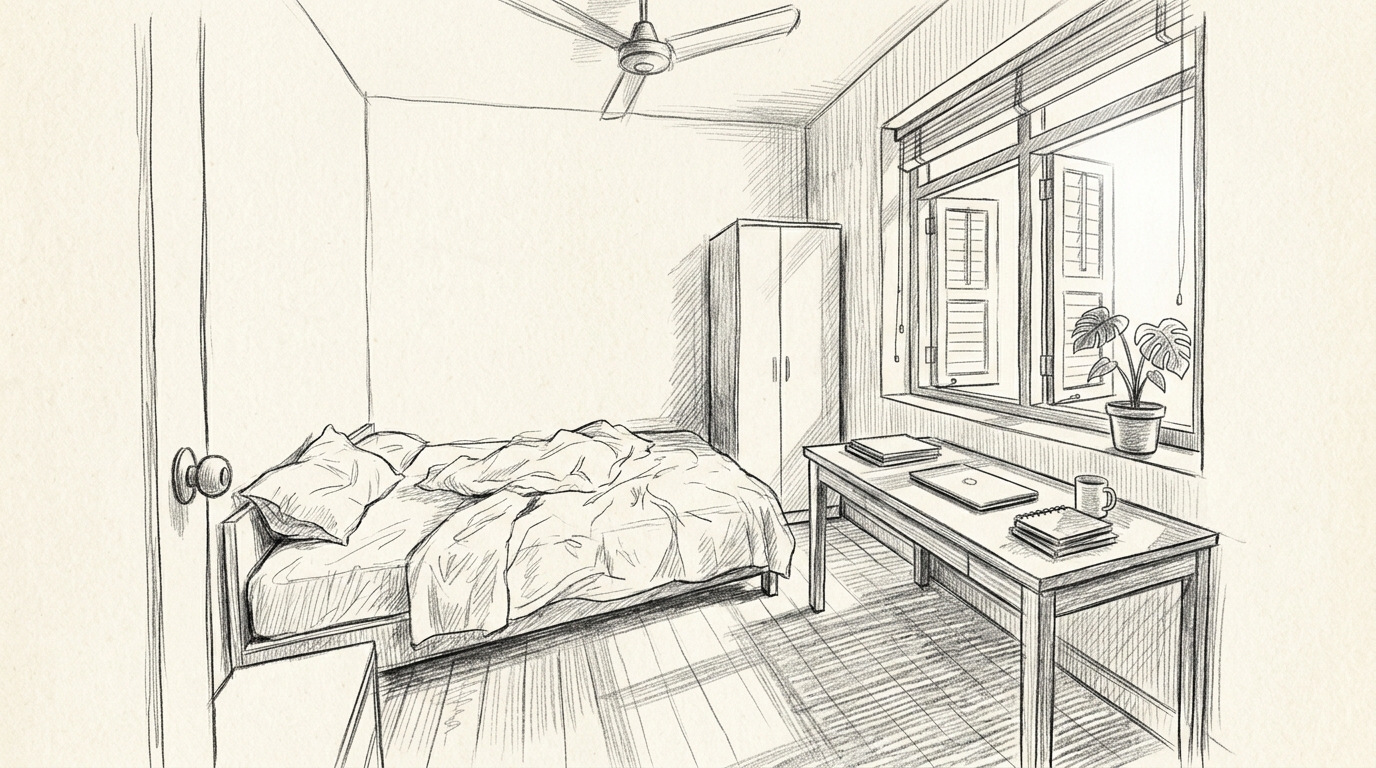
If independence wins that trade-off, the practical question is what kind of room fits a mid-twenties budget without overcommitting years before any flat purchase is realistic. A private room in a co-living setup is often the middle ground: your own space and door, shared common areas, and a fixed monthly number that's easier to plan a savings rate around than a full apartment lease.
That's a genuinely different budget question from renting a whole condo unit solo, worth comparing properly rather than assuming one is automatically better.
Frequently asked questions
Does turning 25 change my HDB eligibility in Singapore? No. The relevant age for a single citizen to buy an HDB flat solo is 35 under the Single Singapore Citizen Scheme, not 25. There's no HDB rule tied specifically to age 25.
Is there a legal housing change at age 25 at all? No. The legal ages that matter for housing in Singapore are 18 (contractual capacity for most leases) and 21 (leases over 3 years, land purchase, and the early-eligibility carve-out for widowed, orphaned, or single-parent HDB applicants). 25 isn't one of them.
Will the HDB age for singles actually drop to 28 or 25? It might, but it hasn't yet. The government confirmed in mid-2026 that it's reviewing the current 35-year threshold, following public debate about lowering it to 28. No new age or effective date has been confirmed as of this writing.
If nothing legally changes at 25, why does it feel like a housing milestone? Because the practical factors around it do shift, income, savings clarity, relationship stage, and the pull toward independence from the family home. Those are real changes. They're just not legal ones.
Is 25 a good age to move into co-living instead of staying with parents? It can be, if your income comfortably covers rent without crowding out savings toward a future flat. There's no rule that says you must wait for any particular age. The decision comes down to your own budget and goals, not a threshold in the law.
If independence at 25 is looking more affordable than it did a couple of years ago, a private room with a fixed, all-inclusive rent is usually the easiest way to test the move without overcommitting. Current availability at lazybee.sg shows the full monthly number upfront, or get in touch to book a viewing.
Figures here that come from government schedules, MOM salary thresholds, ICA and HDB requirements, URA rules, fees and fares, are reviewed on their own timetables and move. Check the current number at the source before you rely on it.