Your Late 20s in Singapore: Renting Alone vs Co-Living
Renting alone vs co-living in Singapore: real 2026 rent, deposit, and setup numbers to help you weigh independence against cost in your late 20s.
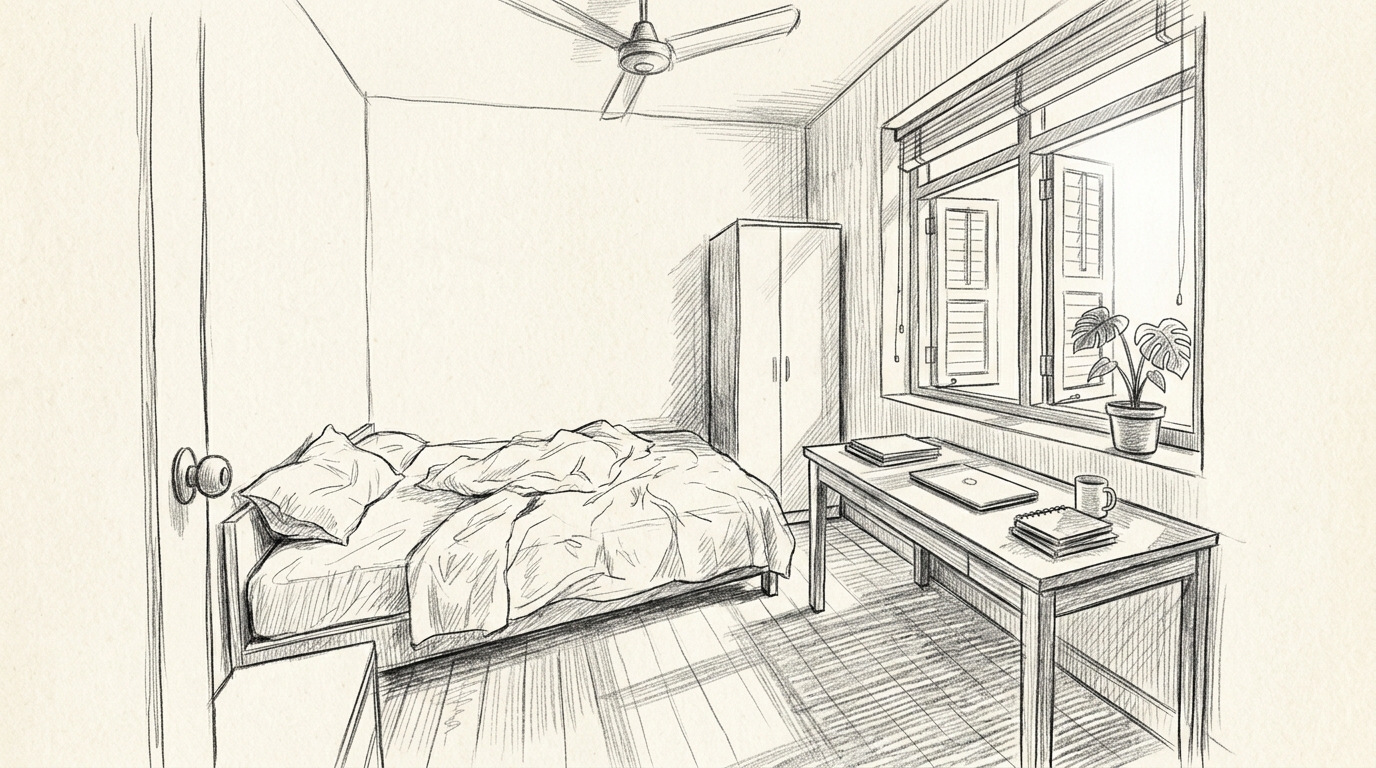
Renting alone in Singapore means paying roughly S$1,900 to S$4,500 a month for a studio or one-bedroom unit, plus a deposit, agent fee, stamp duty, and furniture on top. Co-living means a furnished room, usually all-in, with none of that upfront setup. Neither is the "correct" choice by default. It comes down to how much you value full privacy and a lease in your own name versus how much you'd rather keep your cash free and your admin light.
This isn't a guide about being "too old" for a shared room or "too young" for your own address. It's a cost and lifestyle comparison for anyone who has more income and more specific preferences than they did at 22, and who isn't trying to buy a flat this year either. Here's what each option actually costs and demands.
What Renting Alone Actually Costs in 2026
A studio apartment in Singapore currently rents for around S$1,900 to S$3,500 a month, with a market median closer to S$2,450. Location does most of the work here. Central and city-fringe studios sit at the top of that band, while studios further from the city core come in lower.
Step up to a one-bedroom condo and the range moves to roughly S$2,500 to S$4,500 a month, with city-centre units often clearing S$3,500 to S$5,500. Citywide, the average one-bedroom rent is closer to S$3,900, though that figure gets pulled upward by prime-district listings. Rent growth has slowed to around 3% year-on-year, so 2026 pricing is more stable than the sharp jumps seen a few years back.
None of that is the full cost of moving in. Renting alone comes with a set of upfront costs that co-living simply doesn't have.
The Upfront Costs Nobody Mentions in the Listing
- Security deposit: typically one month's rent for a one-year lease, two months' for a two-year lease.
- Advance rent: usually one month, paid on top of the deposit.
- Stamp duty: for leases up to four years, 0.4% of the total rent payable across the whole lease term, due within 14 days of signing. Late stamping carries a penalty of up to four times the duty owed.
- Agent fee: if you're the one who engaged the agent, market norm is around half a month's rent per year of lease. Landlords tend to cover this themselves only when monthly rent is S$3,500 or higher on a one-year-plus lease, so on a mid-range unit, expect to pay it yourself.
- Furniture and appliances: unfurnished and partially furnished units are common outside the serviced-apartment segment. Furnishing from scratch runs S$2,000 to S$8,000 depending on how much you buy versus rent, and how far you go beyond the basics.
Add it up on a S$2,800/month studio with a one-year lease, and you're often looking at S$6,000 to S$10,000 in cash before your first month even starts, deposit, advance rent, stamp duty, agent fee, and basic furniture combined. That's before wifi installation, moving costs, or the first utility bill.
The Ongoing Costs
Utilities for a single-person studio typically run S$120 to S$180 a month, electricity around S$50 to S$100 depending on aircon use, water S$30 to S$70. Add wifi, usually S$40 to S$60 a month once you've paid the installation and signed a contract of your own. None of this is bundled. You own every account, chase every bill, and deal with every outage yourself.
What Co-Living Actually Costs in 2026
Co-living rooms in Singapore span a wide range because the room type does the heavy lifting on price. Budget or compact rooms sit around S$600 to S$900 a month. Common rooms typically land between S$1,000 and S$1,600. Master bedrooms and ensuite rooms run S$1,700 to S$2,500 and up, especially in central locations or design-led properties.
The number quoted is usually the whole story. Wifi, utilities, and cleaning of common areas are typically bundled into one all-in monthly fee. There's no separate PUB account, no wifi installation appointment, no agent fee, and in most cases a much smaller deposit, often one month rather than two months plus advance.
Leases also tend to be shorter and more flexible than a standard tenancy. Many co-living operators run month-to-month terms after an initial minimum stay, instead of locking you into 12 or 24 months. That matters if your job, relationship, or travel plans over the next year are anything less than fully settled, which describes most people in their late 20s more than it describes anyone else.
Side by Side: The Real Numbers
| Renting alone (studio/1BR) | Co-living room | |
|---|---|---|
| Monthly rent | S$1,900 to S$4,500 | S$600 to S$2,500, depending on room type |
| Deposit | 1 to 2 months' rent | Usually 1 month |
| Agent fee | Often 0.5 month per year of lease | None, operator-run |
| Stamp duty | 0.4% of total rent over the lease | None, you're not the named tenant on a property lease |
| Furniture | S$2,000 to S$8,000 upfront, or rent it monthly | Included |
| Utilities and wifi | S$160 to S$240/month, separate accounts | Bundled into the room rent |
| Lease length | Typically 12 to 24 months | Often month-to-month after an initial period |
| Privacy | Full unit, your own front door | Own room, shared common areas |
| Admin load | You own every account and every bill | One monthly payment, one point of contact |
Renting alone wins on privacy and on having a lease entirely in your own name, which matters for some visa, bank, or life-admin situations. Co-living wins on cash flexibility, setup speed, and the ability to change your mind without eating a broken-lease penalty.
What Actually Changes at This Stage
By your late 20s, the calculation is genuinely different from a first move to Singapore. You probably have more income than you did at 23, which makes the raw rent gap between the two options feel smaller. You also likely have accumulated some furniture, or strong opinions about what you want in a space, which shifts the furnishing math if you go solo.
What usually hasn't changed is certainty about the next 12 to 24 months. Careers move. Relationships move in or move out. Companies relocate people. A two-year lease is a bet on your life staying still, and for a lot of people at this stage, it isn't a safe bet yet. That's less about age and more about where you actually are, and it's worth being honest with yourself about rather than defaulting to whatever your peers are doing.
The other real shift is that a shared room with strangers your first year in the city and a shared room now can be two different experiences. Co-living operators vary a lot on room type, house size, and who else lives there. A private ensuite in a smaller house with three or four housemates is a different day-to-day than a six-bed dorm-style share. If privacy and quiet matter more to you now than they did at 22, that's a room-type decision inside co-living, not necessarily a reason to rule it out entirely.
A Middle Path: Higher-Tier Co-Living Rooms
The comparison isn't strictly binary. Master bedroom and ensuite co-living rooms sit in a price zone that overlaps with the lower end of solo studio rents, while still keeping the all-in bill, shorter lease, and zero furnishing spend. For someone who wants more privacy and space than a standard common room but isn't ready to take on a full tenancy, this tier is worth pricing out specifically rather than defaulting straight to "renting alone" or "the cheapest co-living room available."
Lazybee runs exactly this kind of room, furnished, all-in, across a small number of Singapore neighbourhoods, with live availability listed at lazybee.sg. Ensuite and larger rooms are there for people who want more than a shared bathroom and a common room, without taking on a two-year lease to get it.
How to Actually Decide
Run the comparison on your own numbers, not the averages above. Price out an actual unit you'd consider renting, all-in with deposit, agent fee, stamp duty, and furniture, and compare that real total against a co-living room at the tier you'd actually pick, not the cheapest one on the list.
Then weigh the two things a spreadsheet won't tell you: how certain you are about staying in one job, one relationship status, and one part of the city for the next year, and how much you'd pay, in cash or in convenience, to keep that flexible instead.
FAQ: Renting Alone vs Co-Living in Your Late 20s
Is it cheaper to rent alone or co-live in Singapore? Co-living is cheaper on the all-in monthly number in almost every comparison, and it avoids the S$6,000 to S$10,000 in upfront costs that renting alone typically requires for deposit, agent fee, stamp duty, and furniture. Renting alone can close the gap over a long enough lease if you already own furniture and split none of the setup cost.
Can I get a co-living room with more privacy than a standard shared room? Yes. Master bedroom and ensuite rooms exist within co-living specifically for this, usually with your own bathroom and more space, at a price still below a comparable solo unit.
Do I need a guarantor or long credit history to rent alone in Singapore? Not typically as a tenant with a stable income and valid pass or citizenship status, though some landlords ask for proof of income, and some request a local guarantor for shorter income histories.
Is co-living only for people just arrived in Singapore? No. Co-living tenant bases in 2026 include long-term residents, PRs, and citizens at every income level who value the flexibility, not just newcomers still finding their feet.
How much should I budget upfront to rent a studio alone? Plan for S$6,000 to S$10,000 in total upfront cash on a mid-range studio: deposit, advance rent, stamp duty, agent fee if applicable, and basic furniture, before your first monthly rent payment even lands.
Figures here that come from government schedules, MOM salary thresholds, ICA and HDB requirements, URA rules, fees and fares, are reviewed on their own timetables and move. Check the current number at the source before you rely on it.