Tiong Bahru Renter's Guide: Is It Worth the Rent?
A practical Tiong Bahru rent guide: what you actually pay for, how it compares to Everton Park and Outram, and what to check before you view.
Yes, if what you're paying for is walkability, food, and a neighbourhood that actually looks like somewhere, not just a postcode. Tiong Bahru rents sit above the HDB average for Singapore, and a fair chunk of what you're paying for is the estate itself: pre-war Art Deco blocks, one of the country's best-loved hawker markets, and a walk-everywhere layout that a lot of newer estates can't offer at any price. Whether that's "worth it" depends on what you'd trade it for.
This guide is for anyone weighing up a room or a unit in Tiong Bahru against somewhere else in the central area. We'll cover what makes the estate different, how it stacks up against Everton Park and Outram, the mistake that costs people the most money here, and a checklist for the viewing itself.
What makes Tiong Bahru different
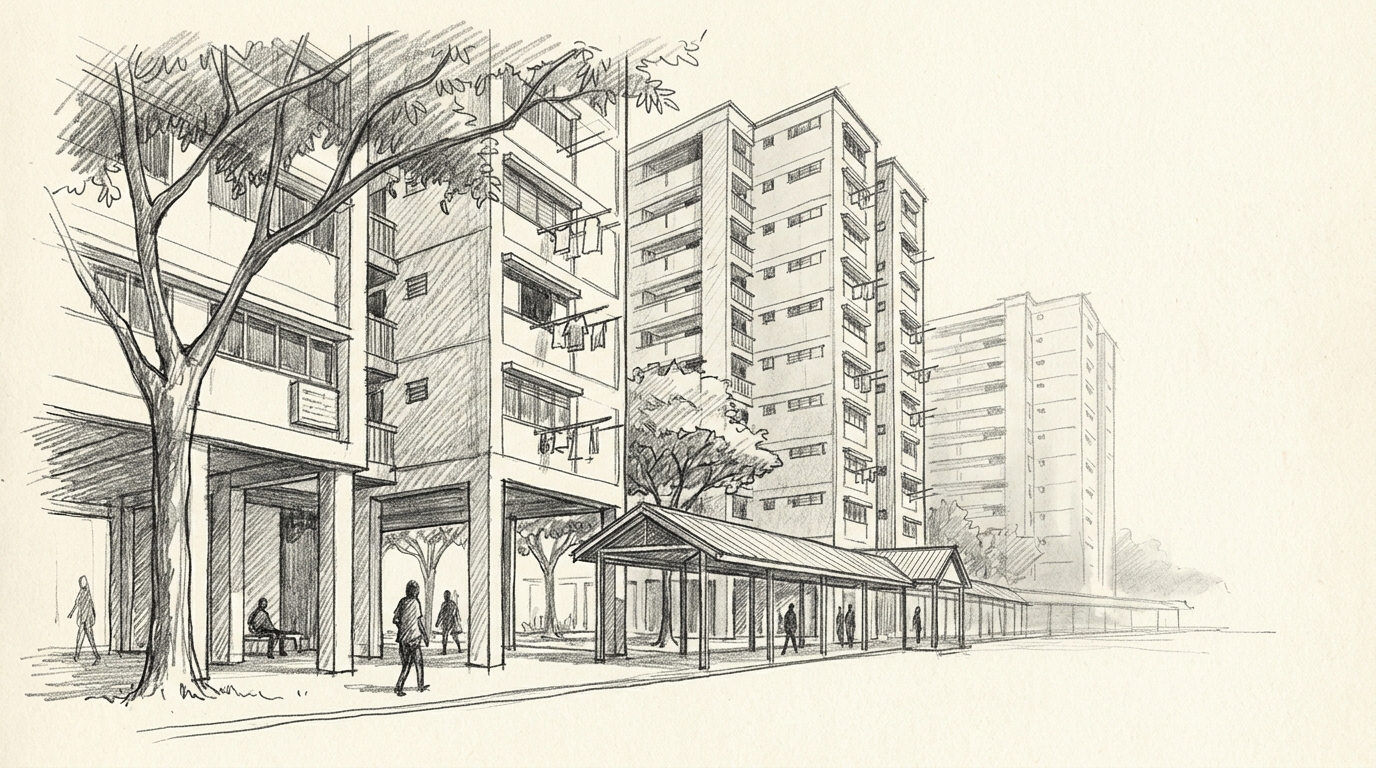
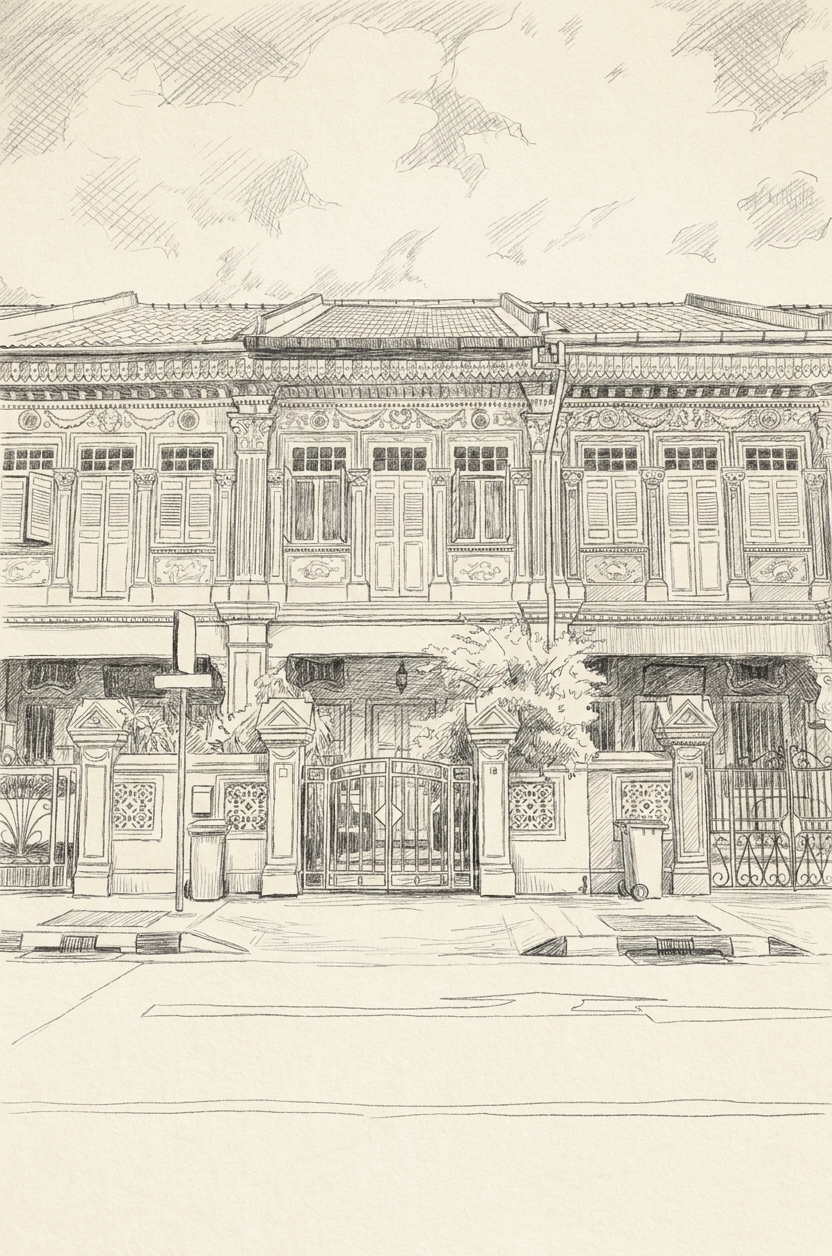
Tiong Bahru is Singapore's oldest public housing estate, built between 1936 and 1941 by the Singapore Improvement Trust, the colonial-era body that predated the HDB. Architect Alfred G. Church designed it in the curved, horizontal-line Art Deco style of the period, loosely modelled on British new towns like Harlow and Stevenage. Twenty blocks of pre-war flats, plus 36 shophouse units, were gazetted as a conservation area by URA in 2003, believed to be the only intact pre-war public housing estate left in Southeast Asia.
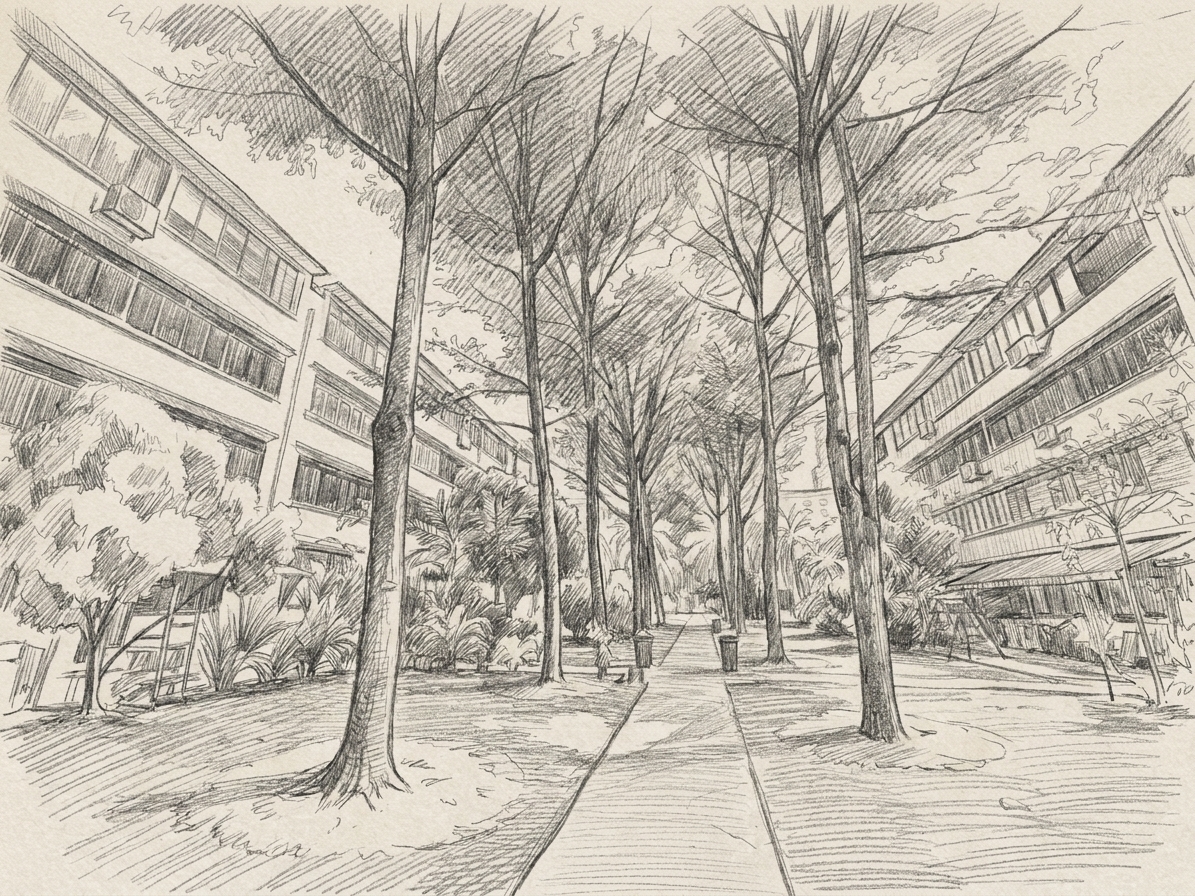
That history is why the estate looks the way it does: rounded balconies, spiral staircases, low-rise blocks topping out at three or four storeys, inside a conservation boundary roughly bounded by Outram Road, Seng Poh Road, Yong Siak Street, and the Central Expressway. URA's conservation rules are strict here, facades and original architectural details can't be altered, which is exactly why the estate kept its character while the blocks around it got taller.
The result is a neighbourhood most of Singapore doesn't have an equivalent for: heritage housing you can actually rent a room in, not just visit. That scarcity is the core of why rent here runs higher than a comparable room a few MRT stops away.
Tiong Bahru in 2026
The fundamentals haven't shifted much this year. Tiong Bahru MRT station (EW17, East-West Line) is still a single-line station, not an interchange, sitting roughly a seven-to-ten-minute walk from the market depending on the exit, so plenty of residents cycle or bus the last stretch. The nearest interchange is Outram Park (EW16/NE3/TE17), a short bus ride away.
The market itself, rebuilt in 2004 to 2006 with lifts and Art Deco detailing that echoes the surrounding blocks, remains the anchor of daily life: a wet market downstairs, over 80 hawker stalls upstairs, prices that stayed closer to old-Singapore than the café strip nearby would suggest. The wider Greater Southern Waterfront masterplan is the bigger 2026 story for this side of town, a long-run redevelopment lifting rental interest across the Central Region south of the CBD, Tiong Bahru included, even though no new development is planned inside the conservation area itself.
Rent has held roughly flat to slightly up through the first half of 2026, in line with the broader Rest of Central Region rental market. Room listings for the estate currently span a wide range, roughly S$650 to S$1,350 for a common room depending on size, and considerably more for a whole unit. If you're pricing this against a citywide budget, our cost of renting in Singapore in 2026 guide has the fuller breakdown of what a realistic monthly number looks like beyond just the rent line.
Tiong Bahru vs Everton Park vs Outram
All three sit within a few minutes of each other in the Bukit Merah / Outram planning area, and prospective renters often cross-shop them without realising how different the actual living experience is.
| Tiong Bahru | Everton Park | Outram | |
|---|---|---|---|
| Character | Pre-war Art Deco conservation estate, low-rise | 1970s-80s HDB estate, hillier terrain, quieter | Mixed HDB and private, hospital and heritage-precinct mix |
| MRT access | Tiong Bahru (EW17), single line | Outram Park (EW16/NE3/TE17) and Tanjong Pagar (EW15) nearby, multiple lines | Outram Park interchange on doorstep for much of the estate |
| Food and retail | Tiong Bahru Market, independent cafes, bakeries | Tanjong Pagar Plaza food centre, Duxton Hill nearby | Chinatown Complex, hospital-area amenities, Everton food options |
| Vibe | Design-conscious, quieter streets, tourist-adjacent on weekends | Residential, less foot traffic, up-and-coming | Busier, more transient, closer to CBD edge |
| Typical rent position | Premium for the area | Comparable to slightly below Tiong Bahru | Comparable, sometimes lower for older blocks |
The honest read: Outram wins on raw MRT connectivity, a three-line interchange. Everton Park is quieter and slightly cheaper, with genuine character and good access to that same interchange. Tiong Bahru wins on neighbourhood identity and walkable amenity density, the specific thing you're paying the premium for. None of these are wrong choices, they're different trades.
Myth: Tiong Bahru is only for creatives with money
This gets repeated a lot because Tiong Bahru's café strip and design-shop cluster get disproportionate media coverage relative to the size of the actual estate. It's not true as a blanket statement. Underneath the coffee shops, the estate is still a working HDB and rental neighbourhood with a wide spread of housing types, from small pre-war walk-ups to newer condos on its fringes.
Room rentals span a real range, from budget common rooms around S$650 to S$900 up through pricier ensuites, not a single "creative-industry" price point. What draws people here isn't a uniform income bracket, it's a preference for walkability and character over the newest possible building. Plenty of renters are students, young professionals, and long-stay expats on ordinary budgets who simply valued that trade-off enough to book a slightly pricier room over a cheaper, less distinctive one elsewhere.
Moving to Tiong Bahru: a first look
If you've never lived here, the layout takes about a week to click. The estate is genuinely walkable: market, laundromat, pharmacy, and a dozen cafes within ten minutes on foot of most blocks. You'll rely on that more than transit for daily errands, and on the MRT or a short bus ride for anything further out.
A few things worth knowing before you commit. The conservation blocks are often walk-ups without lifts, so ask about floor level if stairs are a problem. Weekends bring visitor foot traffic to the market and café strip, which some residents love and others find crowded, so ask about the specific street if you want quiet. Parking is tight and mostly resident-permit or paid, so factor that in if you're bringing a car.
None of this makes Tiong Bahru harder to live in day to day. It just rewards a bit of orientation before you sign, more than a newer, more generic building would.
Mistake: paying estate prices for a newer block
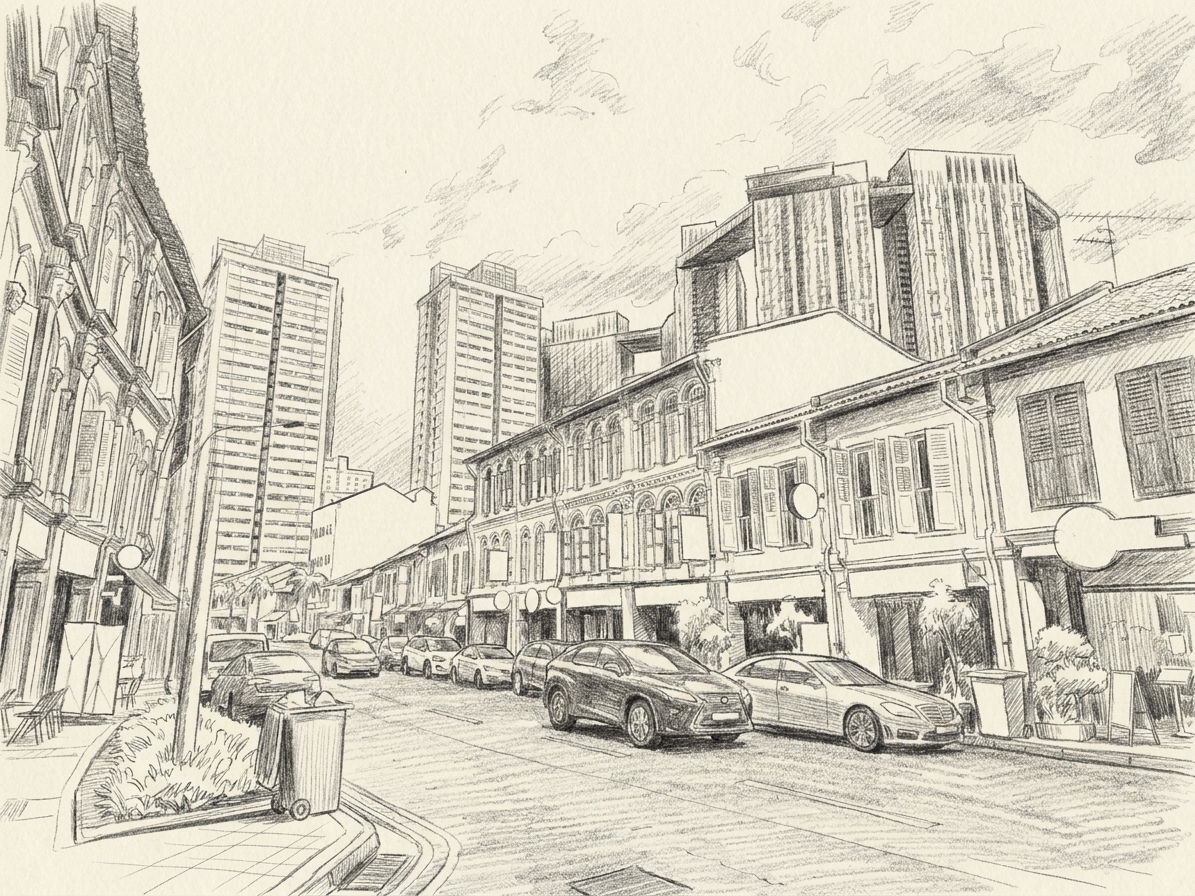
The single costliest mistake renters make here is treating "Tiong Bahru" as one price tier. It isn't. The pre-war conservation blocks, the 1970s-80s HDB blocks just outside the boundary, and the newer condo developments on the estate's edges are three different products wearing the same neighbourhood name, and they don't share a price logic.
A newer block near Tiong Bahru carries the address without the heritage feature that justifies a premium: no Art Deco detailing, no spiral staircase, often less walkable to the market than the conservation core. If you're paying a Tiong Bahru premium, make sure you're paying it for something you actually value, the architecture itself, the walk to the market, or genuine proximity to the café strip, not just the postcode on a listing.
The fix is simple: ask exactly which block you're viewing and check it against a map of the conservation boundary. A five-minute difference in walk time to the market can be the entire justification for a few hundred dollars a month in rent.
12 things within ten minutes of the market
Tiong Bahru Market sits at the functional centre of the estate, so most listings get pitched on distance to it. Here's roughly what that ten-minute radius actually gets you:
- Tiong Bahru Market and Food Centre, wet market downstairs, hawker stalls upstairs
- Tiong Bahru Bakery, the original outpost that kicked off the café-strip reputation
- Independent coffee shops along Yong Siak Street and Eng Hoon Street
- Books Actually, a well-known independent bookstore
- A cluster of design and lifestyle stores in the shophouse units
- Tiong Bahru MRT station (EW17), roughly seven to ten minutes on foot
- A supermarket for everyday groceries
- Guan House and Qi Tian Gong temples, part of the estate's older civic fabric
- Havelock Road and the Singapore River, a short walk further out
- Bus connections running toward Outram, Chinatown, and the CBD
- Laundromats and pharmacies, standard estate-level amenities
- Parks and courtyards built generously into the original 1930s layout
That density is the actual product you're renting into, more than any single building.
Checklist: viewing in Tiong Bahru? Check these ten things
- [ ] Confirm the block is inside the conservation boundary, not just nearby
- [ ] Ask about lift access if it's a pre-war walk-up
- [ ] Walk the actual route to the MRT station yourself, don't trust a listed distance
- [ ] Check the street for weekend foot traffic if you want a quieter block
- [ ] Ask what's included in the rent (utilities, wifi, cleaning) before comparing price
- [ ] Check aircon age and servicing history
- [ ] Confirm parking arrangements if you're bringing a vehicle
- [ ] Ask about noise from cafes or the market if the unit faces a main street
- [ ] Check mobile signal and wifi speed in the room itself
- [ ] Confirm total move-in cost (deposit, advance rent, any agent fee) before you commit
Frequently asked questions
Is Tiong Bahru expensive to rent in? Yes, relative to the citywide average. It carries a premium versus comparable rooms in nearby estates like Everton Park, mainly because of its walkability and heritage character rather than newer building specs.
Is Tiong Bahru good for expats? Generally yes, for anyone who values walking over driving and wants a neighbourhood with an identity beyond "residential estate." The single-line MRT connection is the main trade-off against somewhere like Outram.
Is Tiong Bahru MRT an interchange station? No. Tiong Bahru (EW17) sits on the East-West Line only. The nearest interchange is Outram Park, a few minutes away by bus or a longer walk.
Do all the pre-war blocks in Tiong Bahru have lifts? Not all of them. Many of the conservation-era walk-ups don't, so it's worth asking specifically about floor level and lift access before viewing, especially if stairs are a dealbreaker.
Is co-living available in Tiong Bahru? Lazybee doesn't currently operate a building in Tiong Bahru itself, but our rooms in nearby central and southern Singapore locations put you within easy reach of it. Check current room listings on lazybee.sg for what's available closest to the area.
Where to go from here
If Tiong Bahru's premium feels like the right trade, the next step is lining up a viewing and being specific about which block and street, not just the neighbourhood name. Still comparing it against other central options? Our guide to co-living operators in Singapore and the cost of renting in Singapore in 2026 breakdown are both worth reading alongside this one. For current room availability across Lazybee's Singapore locations, the listings on lazybee.sg show pricing and what's included upfront.
Sources: URA, Short-Term Accommodation guidelines; URA, Renting Property guidelines; HDB, Renting out a flat: regulations.