First-Time S Pass Holders: A Complete Housing Guide
A first-time S Pass holder's guide to renting in Singapore: salary rules, documents, lease length, landlord scrutiny, and mistakes to avoid.
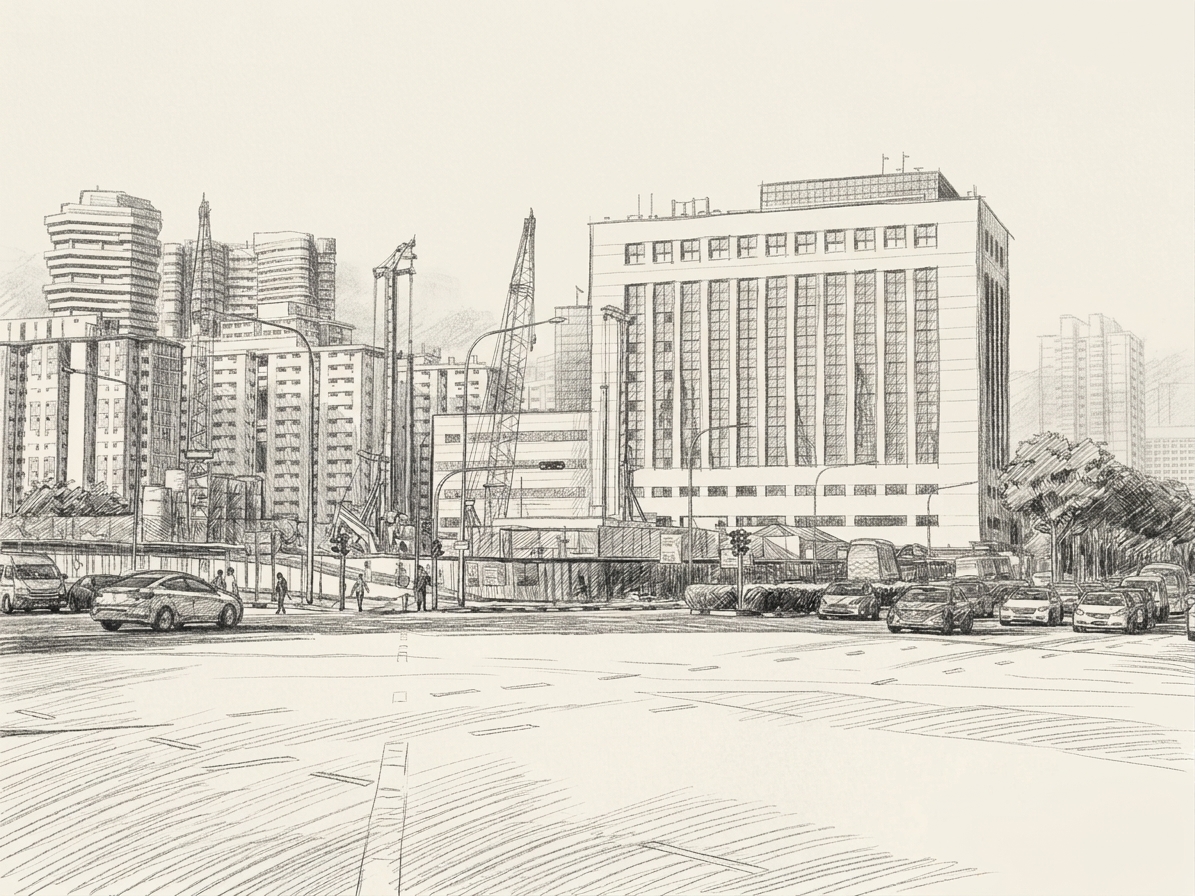
If you've just landed an S Pass to work in Singapore, here's what you actually need to rent a place: your S Pass card (or in-principle approval letter), passport, proof of your monthly salary, and a deposit, usually one month's rent. You can sign a lease as a foreigner on an S Pass with no special permission needed. The catch isn't legality, it's practicality. Most leases run a minimum of three months, some landlords ask more questions of S Pass holders than Employment Pass holders, and if you're new to Singapore you won't know which questions are normal and which are a landlord being overly cautious.
This guide covers what an S Pass actually is, what it takes to qualify in 2026, the paperwork you'll need, why the rental market treats S Pass holders slightly differently to EP holders, the lease-length rule almost nobody explains properly, and the mistakes first-timers make most often.
What is an S Pass, and why does it matter for renting?
An S Pass is a Singapore work pass for mid-skilled professionals, technicians, and associate professionals, people who don't clear the salary bar for an Employment Pass but are filling a specific skilled role. Common holders include technicians, nurses, IT support staff, retail and F&B supervisors, junior engineers, and lab technicians.
That "mid-skilled" tier matters for housing in one way: your employer's S Pass headcount is capped by a quota, and every S Pass costs them a monthly levy. Neither fact changes your legal right to rent, but it shapes how some landlords perceive an S Pass tenant, covered below.
How much do you need to earn to qualify for an S Pass in 2026?
As of 1 September 2025, the minimum qualifying salary for an S Pass is S$3,300 a month for most sectors, rising with age up to S$4,800 at 45 and above. In financial services, the bar is higher: S$3,800 at entry level, scaling to S$5,650 at 45 and above.
A further increase is already scheduled: from 1 January 2027 for new applications, the general minimum rises to S$3,600, scaling to S$5,100 at 45 and above, and financial services rises to S$4,000, with its ceiling staying at S$5,650. Renewals move to the new figures for passes expiring from 1 January 2028. Check these figures directly against MOM's S Pass eligibility page before quoting them to a tenant, since salary thresholds move and this article won't catch a change made after publication.
Practically, this puts most S Pass holders' take-home pay below what most Employment Pass holders earn. That's not a judgment, it's the reason S Pass renters tend to shop harder for value, look more seriously at co-living and shared rooms, and budget rent as a fixed percentage of salary rather than "whatever's available."
What documents do you need to rent your first place?
Landlords and co-living operators in Singapore will typically ask for:
- Your S Pass (the physical card, or the in-principle approval letter if the card hasn't been issued yet)
- Your passport, valid for the length of the lease
- Proof of employment, an offer letter or employment contract showing your monthly salary
- A security deposit, usually one month's rent for a room, higher for a whole unit
- First month's rent in advance, standard practice across the market
Some landlords ask for a local guarantor or a larger deposit if you've only just started your job and don't yet have a Singapore bank statement. This is more common with private landlords letting out a whole HDB or condo unit than with co-living operators, who are used to processing new arrivals with nothing but a pass and a passport.
Why some landlords scrutinise S Pass applications more than EP ones
This is the part most guides skip. There's no law that treats an S Pass tenant differently from an EP tenant. Both can rent freely. But in practice, some landlords and operators apply a bit more scrutiny to S Pass applicants, for reasons about risk perception, not regulation.
The core reason is that an S Pass is tied to a company quota and levy. If an employer's business slows, S Pass headcount is often the first thing trimmed, since it's the most flexible category for the company to adjust. An Employment Pass holder, with no quota attached to their role, is seen by some landlords as a slightly more "sticky" tenant, less likely to have their job (and therefore their income and lease-paying ability) change on short notice.
That perception isn't universal and it isn't fair to every S Pass holder. A senior technician five years into a stable role is a far safer bet than plenty of EP holders on a first six-month contract. But if you're renting for the first time, expect the odd landlord to ask more questions or push for a slightly bigger deposit. It's a business habit, not a rule, and it varies a lot by industry. If your S Pass is in a sector where employer-arranged shared housing is common, manufacturing, logistics, and parts of healthcare more than tech or retail, you may find fewer landlords have even priced out renting to individual S Pass tenants, simply because they haven't seen much of that demand.
Co-living operators tend to be the most pass-agnostic option here. The room, not the whole unit, is the product, and operators process applications across every pass type, so the paperwork check is usually faster and less subjective than with a private landlord renting out their own home.
The 3-month minimum lease rule, explained
Private residential property in Singapore, whole unit or single room, generally can't be let out for less than three consecutive months. This is a longstanding rule from the Urban Redevelopment Authority (URA), aimed at stopping private homes being run as unlicensed short-term accommodation. Check the current wording and any exceptions directly with URA before treating this as legal advice.
The practical upshot: don't expect a legitimate month-to-month room in a condo or HDB flat. A listing offering anything shorter than three months on private residential property is a signal to ask more questions, not fewer. Reputable co-living operators build lease terms around this rule as standard, making a first lease with an operator the path of least friction if you're not sure yet how long you'll stay in a given job or part of Singapore.
Where S Pass holders actually live
There's no single answer, and it genuinely depends on your sector and salary band. A few patterns show up consistently:
- Co-living rooms are popular with S Pass holders in tech, retail, F&B management, and admin/support roles, where rent needs to be predictable and there's no time to furnish a flat from scratch.
- Shared HDB or condo rooms, rented directly from a flatmate or landlord, suit S Pass holders who already have a friend or colleague network in Singapore.
- Employer-arranged shared housing is common in some sectors, particularly manufacturing, construction-adjacent roles, and parts of healthcare, where the employer already runs housing for a workforce of similar passes. If this applies to your job, HR is the first place to ask, since it changes your housing budget and timeline.
- Whole-unit rentals are less common for a first-time, single S Pass holder, mostly on cost, but do happen for higher earners nearer the top of the salary band.
If you're not sure which category you fall into, ask your employer directly whether housing is part of the package before you start hunting on your own.
Common first-timer mistakes S Pass holders make
- Assuming the S Pass card has to be in hand before signing anything. Most operators and landlords accept an in-principle approval letter to hold a room while the physical pass is issued.
- Underestimating the deposit. Budget one month's deposit plus one month's rent upfront, and a bit more buffer if you don't yet have a Singapore bank account.
- Chasing listings shorter than three months. If it's private residential property, it isn't legal below three months, and a listing that ignores this is a red flag on the operator, not a bargain.
- Not asking their own employer about levy and quota risk. It's a fair question to HR: is your role considered stable within the company's quota, or the kind of headcount trimmed first in a downturn. The answer shapes how much lease flexibility to build in.
- Renting sight unseen from a listing photo alone. First-timers without a local network are the most likely to skip a viewing. Ask for a video walkthrough at minimum if you can't view in person before you land.
- Not checking who else shares the space. Ask directly how many housemates share the unit and what happens if one leaves partway through your lease.
Next steps
If your S Pass sector doesn't come with employer-arranged housing, or you'd rather have your own space with predictable rent from day one, co-living is built for this. Browse available rooms and book a viewing directly through Lazybee, an in-principle approval letter is enough to get started.
FAQ
Can I rent an apartment in Singapore with only an S Pass in-principle approval letter, not the physical card yet? Yes, most landlords and co-living operators will accept the IPA letter to start the process, though you'll usually need the physical pass before or shortly after move-in.
Is it harder to rent with an S Pass than an Employment Pass? Not legally. Both can rent freely with no special permission. In practice, some landlords apply slightly more scrutiny to S Pass applications because the pass is tied to an employer quota, but this varies by landlord and industry, and co-living operators are generally least affected by it.
What's the minimum lease length in Singapore? Private residential property generally can't be leased for less than three consecutive months under URA rules. Check current specifics with URA for your exact situation.
Do I need a guarantor to rent as a first-time S Pass holder? Not usually, but some private landlords may ask for one, or a larger deposit, if you don't yet have a local bank statement or credit history.
Does my employer have to provide housing on an S Pass? No, it isn't a legal requirement. It's more common in certain sectors, manufacturing, logistics, and some healthcare roles, than others. Confirm directly with your employer rather than assuming either way.
Figures here that come from government schedules, MOM salary thresholds, ICA and HDB requirements, URA rules, fees and fares, are reviewed on their own timetables and move. Check the current number at the source before you rely on it.