SMU's No-Halls Policy: Where SMU Students Actually Live
Does SMU have halls of residence? Barely. Here's the real capacity, why it's so small, and where SMU students end up living instead.
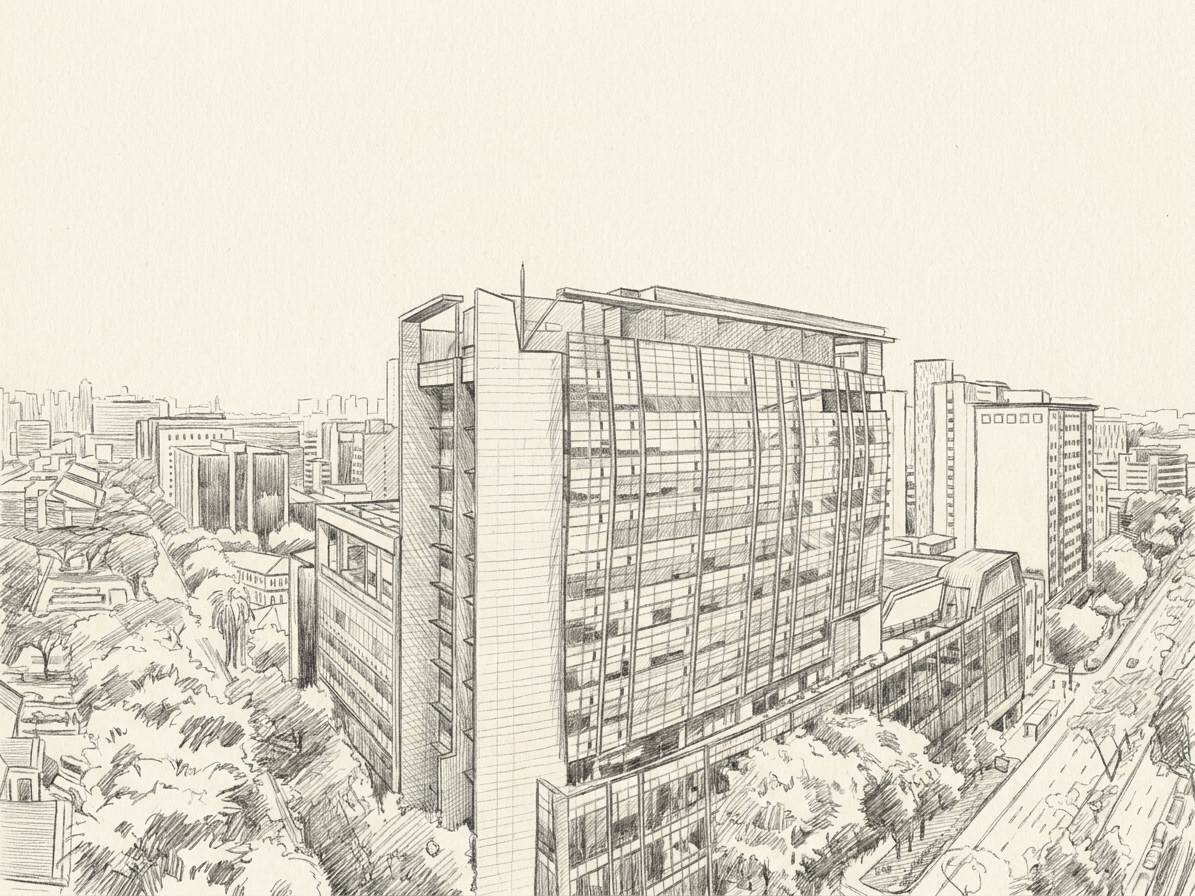
Is it true SMU has no halls of residence? Almost. SMU isn't legally banned from housing students, and it does run a small residence plus a handful of leased beds in partner buildings. But total capacity sits somewhere around 400 to 500 beds against a student population of more than 12,000 (SMU statistical highlights, Sep 2025). That's not a hall system in the way NUS or NTU run one. It's a rounding error, and it's why the vast majority of SMU students find their own place off campus.
If you're starting at SMU and assumed you'd get a hall room like your friends at the other two universities, this is the piece that corrects that assumption before it costs you a scramble in week one.
Does SMU Actually Have Zero On-Campus Housing?
Not zero, but close enough that "no halls" is the honest way to describe it. SMU's main dedicated residence is Prinsep Street Residences (PSR), 22 apartments across three blocks that house up to 250 students (SMU, Prinsep Street Residences). Beds there are prioritised for PhD and postgraduate research students first, with local and international undergraduates from the College of Integrative Studies (CIS) getting discounted rates when spots open up (CIS, About PSR). It's not a general applicant pool the way a typical university hall is.
Beyond PSR, SMU leases beds in three commercially run co-living and student housing buildings around town, not campus land it owns: 44 beds at Keystone Clarke Quay, 72 beds at Commune @ Henderson, and an unspecified block at CAMPUS by The Assembly Place, a dedicated student hostel for pass holders (SMU, Campus Housing). Add those together with PSR and you're still well under 500 beds for a school with over 10,000 undergraduates alone.
| Housing | Beds | Who gets priority |
|---|---|---|
| Prinsep Street Residences (PSR) | Up to 250, across 22 apartments in three blocks | PhD and postgraduate research students first. Local and international College of Integrative Studies undergraduates get discounted rates when spots open |
| Keystone Clarke Quay | 44 | Leased from a commercially run building, not campus land |
| Commune @ Henderson | 72 | Leased |
| CAMPUS by The Assembly Place | An unspecified block | A dedicated student hostel for pass holders |
| Total | Roughly 400 to 500 | Against a student population of more than 12,000, over 10,000 of them undergraduates |
Compare that to NUS or NTU, where halls and residential colleges house thousands of students each, largely as a default first-year assignment. SMU never built that. So while "SMU has literally zero on-campus housing" isn't quite accurate, "SMU doesn't have a hall system that most students can rely on" is exactly right.
Why Doesn't SMU Have a Hall System Like NUS or NTU?
Geography, mostly. SMU's campus sits on about 6.4 hectares at 81 Victoria Street, right inside the Bras Basah and Bugis civic district in the city centre. NUS spreads across Kent Ridge and NTU sits on a large suburban site near Jurong West, both with room for the residential college model built around blocks of student halls. SMU doesn't have that kind of land to work with, since it was deliberately built as a compact city campus woven into an arts and heritage district rather than a self-contained suburban one.
That trade-off is the whole point of an SMU education for a lot of students: lectures a short walk from the CBD, Bugis, and the arts belt, instead of a shuttle bus ride to a hall on the edge of town. The cost of that trade-off is that the university itself can't offer most of its students a bed to go with the classroom.
So Where Do SMU Students Actually Live?
Off campus, in the private rental market, same as most working adults in Singapore. The main categories are HDB flats (a shared room in someone's flat, or occasionally a whole unit split between students), condominiums, and increasingly managed co-living rooms that come furnished with utilities and wifi already sorted.
Recent 2026 guides for students moving to Singapore put the rough monthly bands at SGD 700 to 1,200 for a shared HDB room, SGD 1,200 to 1,800 for a managed studio or student residence, and from about SGD 1,800 upward for a whole private apartment, with rents in the Bras Basah and Bugis area itself running roughly SGD 1,100 to 2,600 depending on room type and building age (SMU, Alternative Housing Options). Those are market-wide figures, not any single operator's listing, so treat them as a planning range rather than a quote.
| Option | Rough monthly band |
|---|---|
| Shared HDB room | SGD 700 to 1,200 |
| Managed studio or student residence | SGD 1,200 to 1,800 |
| Whole private apartment | From about SGD 1,800 upward |
| Rooms in Bras Basah and Bugis itself | Roughly SGD 1,100 to 2,600 depending on room type and building age |
These are market-wide figures, not any single operator's listing, so treat them as a planning range rather than a quote.
Because SMU sits in the city, students aren't locked into one corridor the way NUS students cluster around Clementi or NTU students cluster around Jurong. Anywhere on the Circle Line or Downtown Line reaching Bras Basah or Bencoolen works, which opens up neighbourhoods across the island rather than just the immediate area around campus. Our guide on housing near NUS, NTU, and SMU breaks down commute times and areas in more depth if you're weighing a few campuses at once.
What This Means If You're Starting at SMU
A few practical points follow directly from how thin PSR and the leased blocks are:
Apply for PSR early if you're eligible, but don't count on it. Applications open on a fixed window each year and results land months before the term starts. If you're not a postgraduate research student or CIS applicant, your odds are low regardless of when you apply.
Start the off-campus search well before term begins. With no hall system as a fallback, the private market is the plan, not the backup plan. Leave weeks, not days, especially if you're arriving from overseas and want to view or video-call before signing anything.
Every private lease in Singapore has a three-month floor. This applies across the board, co-living included, so factor that into how you time a lease against your Student Pass validity. Our guide on renting on a Student Pass versus an EP or S Pass covers how to match lease length to pass length properly.
Furnished beats unfurnished for a first move. Landing without a local network is stressful enough without also sourcing a mattress, a router, and a fridge in your first week. A room that's ready to move into removes one whole category of hassle.
Where Lazybee Fits
Lazybee runs three co-living houses across Singapore, and two sit directly on transit lines that reach SMU's doorstep. Chiltern Park is in Serangoon near Lorong Chuan MRT, on the Circle Line that runs straight to Bras Basah. Thomson Grove sits off Yio Chu Kang Road near Lentor MRT, on the North-South Line into the city. Ivory Heights, our third house, is in Jurong East, better suited if NTU or NUS is your main campus.
| Lazybee house | Nearest MRT and line | Route to SMU |
|---|---|---|
| Chiltern Park, Serangoon | Lorong Chuan, Circle Line | The Circle Line runs straight to Bras Basah |
| Thomson Grove, off Yio Chu Kang Road | Lentor, North-South Line | Into the city on one line |
| Ivory Heights, Jurong East | Jurong East | Better suited if NTU or NUS is your main campus |
Every room comes furnished with utilities and wifi already included, so there's nothing to source separately after you land. Full detail on each house, including room mix and what to check on a viewing, is in our guide to all three Lazybee houses. Current availability is always kept up to date on lazybee.sg, since with a school that doesn't run its own halls, knowing what's actually open matters more than usual.
Frequently Asked Questions
Does SMU have halls of residence at all? A small amount. Prinsep Street Residences houses up to 250 students, mostly prioritised for postgraduate research students and CIS applicants, and SMU leases a further 100-plus beds across partner buildings like Keystone Clarke Quay and Commune @ Henderson. Total capacity is a fraction of the student population, so most students don't get a spot.
Why doesn't SMU build more on-campus housing? Its campus sits on about 6.4 hectares in the middle of the Bras Basah and Bugis district, a compact city site rather than the large suburban land NUS and NTU have for a residential college model. The trade-off is a city campus with less room for halls.
Where do most SMU students live if not on campus? In the private rental market, in HDB rooms, condos, or managed co-living spaces, spread across neighbourhoods on the Circle Line or Downtown Line since the campus is centrally located and not tied to one corridor.
Can international students get a guaranteed room at SMU? No. PSR and the leased partner beds aren't guaranteed to any applicant pool, including international undergraduates, so it's worth planning an off-campus option in parallel rather than waiting on a housing outcome.
Is a three-month lease really the shortest option in Singapore? Yes, that floor applies across the private rental market, co-living operators included. Match your lease length to your Student Pass validity rather than defaulting to the standard twelve-month term.
Sources: URA, Short-Term Accommodation guidelines; URA, Renting Property guidelines; HDB, Renting out a flat: regulations; HDB, Renting out bedrooms: regulations; MOM, Employment Pass eligibility; MOM, S Pass eligibility.