The Singapore Co-Living Landscape in 2026: Who Owns What
Who actually owns Singapore's co-living rooms in 2026: market size, the major platforms, who backs them, and how to check who runs any building.
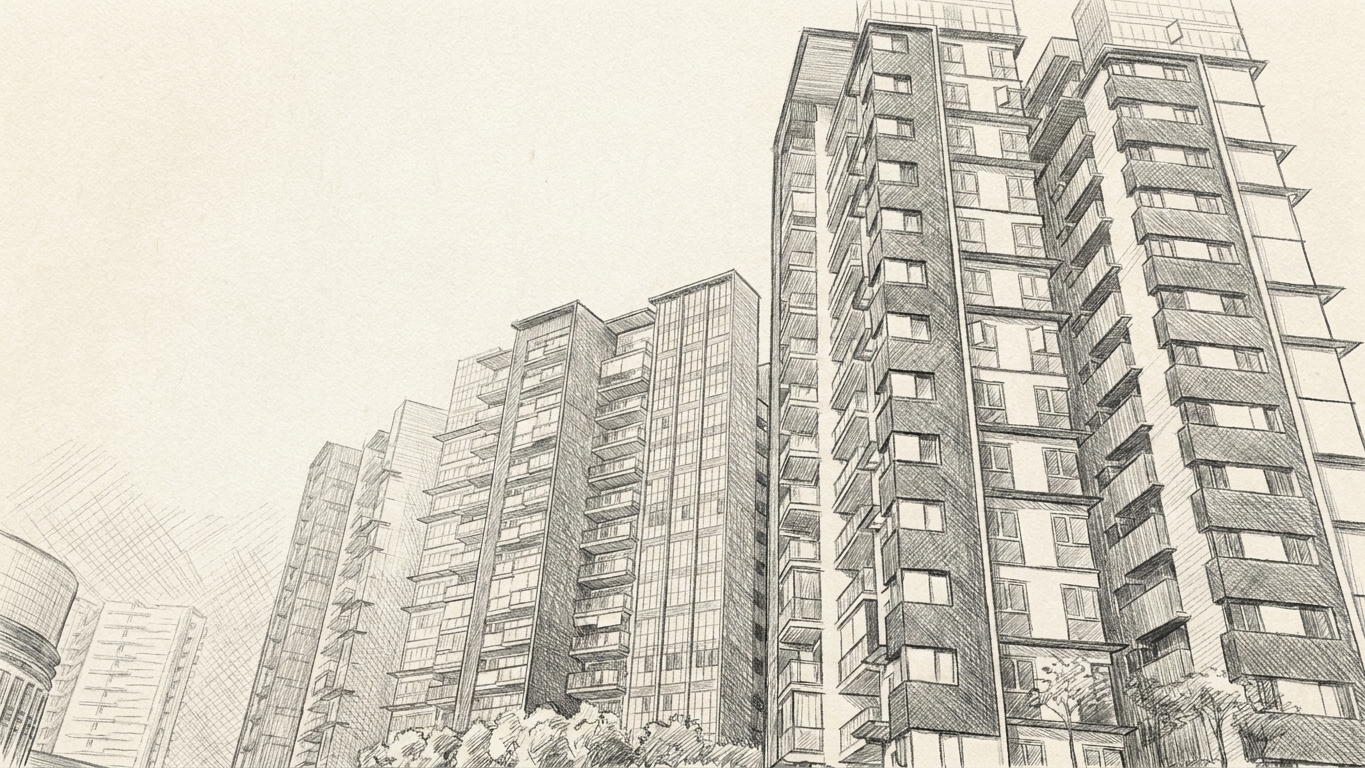
Singapore's co-living sector is now worth around S$1.4 billion by JLL's estimate, spread across roughly 9,000 to 10,000 professionally managed rooms. That's still only about 6% of the city's total rental stock.
Two operators listed on the SGX within three months of each other, in November 2025 and January 2026. A handful of large, institutionally backed platforms run most of that supply. A long tail of smaller, owner-run operators, Lazybee among them, run the rest.
Here's who's actually behind the rooms you'll be looking at.
This isn't a guide to picking a room. It's a map of the Singapore co-living landscape in 2026: how big it is, who owns the big names, how fast it's consolidated, and how to check who you're really renting from before you sign anything.
How big is Singapore's co-living sector, actually?
Independent market research prepared by Cushman & Wakefield for Coliwoo's IPO prospectus put institutional and professionally managed co-living supply at close to 10,000 rooms in early-to-mid 2026. That's against a combined private non-landed and HDB rental stock of roughly 190,000 units citywide.
That works out to co-living covering somewhere around 6% of the addressable rental market. Still small relative to the whole city, but far larger than the handful of scrappy shared houses the sector started as a decade ago.
JLL's investor research puts the capital value of the sector at around S$1.4 billion as of early 2026, describing a shift from what used to be an "opportunistic" bet into value-add and core-plus institutional strategy. That's real estate language for: big money now treats co-living as a normal, bankable asset class, not a millennial fad.
The clearest signal of that shift is investor sentiment itself. JLL's research found that 65% of investors surveyed in early 2026 viewed Singapore co-living as stable. That's a near-complete reversal from 2024, when 73% of that same investor cohort called it high risk.
Occupancy across the sector is running at 85% to 95%, with gross operating margins in the 55% to 70% range. Those are numbers that look more like a mature hospitality asset than a startup.
The three tiers that make up the co-living landscape
Almost every co-living listing you'll see in Singapore falls into one of three tiers, and it's worth knowing which one you're looking at before you get to price.
Large, institutionally backed platforms. These run hundreds to thousands of rooms across multiple buildings. Real estate conglomerates, private equity, or listed parent companies sit behind them. Coliwoo, Cove, Hmlet, lyf, and Weave Living belong here.
Homegrown operators that scaled up. Singapore-founded, built organically over several years, now large enough to rival the institutional names on room count, just without the same corporate backing structure behind them. The Assembly Place is the clearest example, and as of early 2026 it claims to be the single largest community-living operator in the country by room count.
Small, independent, owner-run operators. A handful of houses, sometimes a single building, run by the person who also answers your WhatsApp message. Lazybee is one of these, with three houses and under 20 rooms total.
There are still dozens of operators at this scale across the city, even after several years of consolidation thinned the field. Most of them never make it onto a "top operators" list because they're not trying to.
The big institutionally backed platforms, one by one
| Operator | Rough scale | Who's behind it | Public listing |
|---|---|---|---|
| Coliwoo | ~3,000 rooms across 25 locations at IPO (Nov 2025), targeting close to 4,000 by end-2026 | Parent company LHN Group | SGX Mainboard (W8W), listed 6 Nov 2025 |
| The Assembly Place | ~3,422 rooms across around 100 property assets | Homegrown, founder-led | SGX Catalist, listed 23 Jan 2026 |
| Cove | 2,000+ rooms in Singapore, 8,000+ across Asia Pacific after acquiring Casa Mia Coliving (Nov 2025) | Keppel Land among its investors | Private |
| Hmlet | Part of a combined ~2,915-unit portfolio across Singapore, Hong Kong, and Japan | Mitsubishi Estate, via subsidiary FL Japan, since April 2026; previously part of Habyt, with earlier backers including Sequoia Capital India and Aurum Investments | Private |
| lyf | Five lyf-branded properties in Singapore as of 2026 | CapitaLand, via Ascott | Private (parent CapitaLand is listed) |
| Weave Living | Two Singapore properties (Midtown and Hillside, the latter around 175 units), part of a wider regional portfolio | Warburg Pincus-backed, with a S$150 million joint venture with SLB Development for Singapore expansion | Private |
Coliwoo is the biggest name by room count and the first co-living operator to list on the SGX mainboard. It reported 96.1% average occupancy across 2025, and its most recent half-year results showed occupancy near 97% with revenue up 17% year on year.
It's owned by LHN Group, an established Singapore facilities and real estate group. Worth knowing: Coliwoo isn't a standalone startup, it's a listed division of a larger property business.
The Assembly Place started with six rooms in 2021 and now runs closer to 3,400. Its model leans on master-leasing existing buildings and assets rather than owning towers outright, which is part of how it scaled to roughly 100 separate property assets.
Its IPO was 35.5 times oversubscribed in January 2026, and it's now planning to take the same model into Kuala Lumpur.
Cove grew mainly through acquisition, most recently absorbing Casa Mia Coliving's roughly 500 rooms in late 2025. That deal pushed Cove past 2,000 rooms in Singapore alone and over 8,000 across the wider region, with reported annualised rental income above US$50 million.
Keppel Land is among its backers, which puts a Singapore-listed conglomerate quietly behind one of the region's largest co-living names.
Hmlet has had the most tangled ownership story of any name on this list. It merged into the European operator Habyt in 2022. In April 2026, Mitsubishi Estate, the Japanese real estate giant, acquired Habyt's entire Asia-Pacific business, revived the original Hmlet brand, and brought founder Yoan Kamalski back to run it.
If you're renting from "Hmlet" today, you're effectively renting from a Mitsubishi Estate subsidiary.
lyf, run by CapitaLand's Ascott arm, sits slightly apart from the rest. Its five Singapore properties, including one-north, Funan, and the newly opened Chinatown site, lean closer to a boutique serviced-apartment experience than a shared-house one, with amenity-heavy common spaces and hotel-style service.
In a sign of how tightly the big names are now interconnected, CapitaLand Ascott Trust agreed in August 2026 to acquire Coliwoo Midtown for S$134 million. One listed co-living-adjacent player is now a landlord to another.
Weave Living is smaller in Singapore than its regional footprint suggests, with two properties here so far. It's backed by Warburg Pincus, though, and has a S$150 million joint venture with local developer SLB Development to grow its Singapore presence.
How fast has this sector actually grown?
Fast, and mostly through consolidation rather than pure new supply. ColivHQ's tracking shows the field of named Singapore co-living operators shrinking from a much longer, more fragmented list a few years back to a shorter, stronger one in 2026. The shakeout started around 2020, when the market was crowded with roughly three dozen named operators, many undercapitalised and running a handful of units each.
Two of the survivors reached the public markets within three months of each other. A third, Cove, grew largely by buying a smaller independent operator outright rather than building from scratch. What's left standing by 2026 is a shorter list, but each name on it is running at genuine scale.
That consolidation story, deal by deal, plus the mechanics of how institutional money actually structures these investments, is its own topic. Worth reading separately if you want the full picture rather than the summary here.
How do you actually check who runs a building you're looking at?
This is the part that matters most if you're a prospective tenant or an owner sizing up who to lease your unit to, and it takes about five minutes.
Read the actual agreement before you sign. The legal entity named on your licence or tenancy agreement is who you're contracting with. It isn't always the consumer-facing brand you found on Instagram or Roomies. A brand can be a management layer over several different underlying legal entities.
Look that entity up on ACRA's Bizfile. It's free and takes minutes. You'll see whether it's a private limited company, how long it's been registered, and sometimes its parent structure.
A brand-new entity with no track record behind an established-sounding brand name is worth a direct question.
Check SGX filings if the operator is listed. Coliwoo and The Assembly Place both publish regular business updates, occupancy figures, and portfolio counts as part of their listing obligations. That's public information you can read before you even message them.
Ask directly who owns the room versus who operates it. A master-leased room and a wholly owned one carry different risk if the operator's business runs into trouble. A legitimate operator, large or small, should answer this without hesitation.
Notice whether pricing is published or gated. It's not proof of anything on its own, but operators with nothing to hide tend to put the number on the listing rather than behind a lead-capture form.
Our piece on co-living operators in Singapore compared goes deeper on how the big platforms and smaller operators actually differ on price and experience once you're comparing rooms rather than brands.
If you want the legal side of what should be in that agreement regardless of who's behind the brand, our guide to the difference between a licence agreement and a tenancy agreement covers what to check before signing.
And if you're weighing occupancy limits or minimum stay rules against a specific unit, our 2026 occupancy cap guide covers the current rules directly, since they've moved more than once in the last two years.
Where a smaller operator like Lazybee sits in this picture
We're not pretending to be a large platform, and there's no ownership map worth drawing for us. Lazybee is three houses, Chiltern Park, Ivory Heights, and Thomson Grove, run directly by the people who lease them.
No parent conglomerate, no SGX filing, no institutional investor behind the brand. Our guide to the three houses covers what's actually in each one.
That's not a knock on the bigger names. Scale genuinely buys things a small operator can't match: more locations, dedicated maintenance teams, professional facilities management.
It just means the two models are answering different questions. Worth knowing which one you're looking at, rather than assuming every listing sits on the same kind of business behind it.
The bottom line
Singapore's co-living sector went from a scattered list of small operators to a roughly S$1.4 billion market with two SGX listings, inside about five years. A handful of institutionally backed platforms now control most of its ~9,000 to 10,000 rooms.
Coliwoo, The Assembly Place, Cove, Hmlet, lyf, and Weave Living account for the bulk of that professionally managed supply. They're backed respectively by LHN Group, independent ownership, Keppel Land, Mitsubishi Estate, CapitaLand, and Warburg Pincus. Everyone else, including operators like us, makes up the smaller, independent tail still doing this room by room.
Whichever tier a listing sits in, the check is the same: read the agreement, look up the entity, and ask who actually owns the room before you commit.
Current Lazybee availability across Chiltern Park, Ivory Heights, and Thomson Grove, with pricing shown on the listing itself, is at lazybee.sg.
Figures here that come from government schedules, MOM salary thresholds, ICA and HDB requirements, URA rules, fees and fares, are reviewed on their own timetables and move. Check the current number at the source before you rely on it.