Big Co-Living Operator vs Independent: What Actually Changes for You
Big co-living operator vs independent in Singapore: real differences in response time, pricing, contracts, and what happens if the operator is acquired.
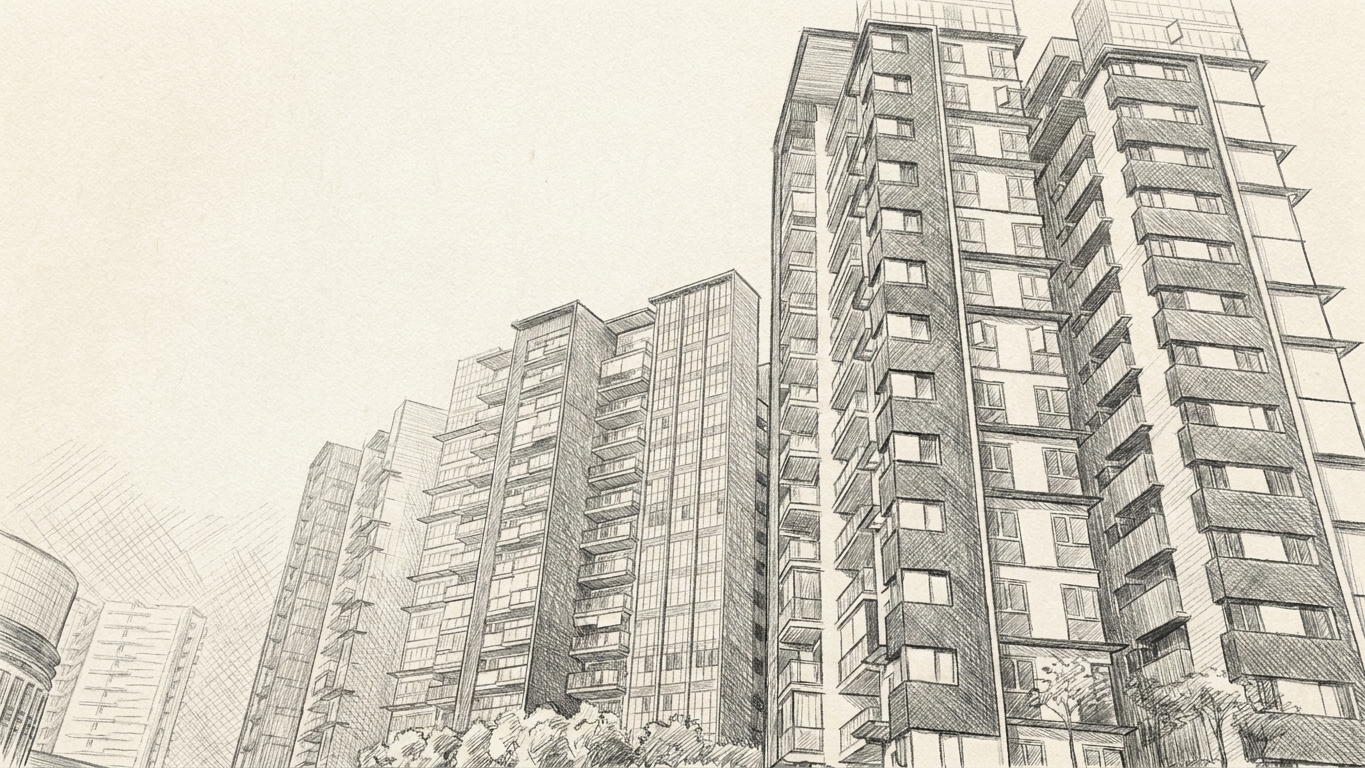
Renting from a large, institutionally-backed operator like Coliwoo, Cove, Hmlet, or lyf feels different day to day than renting from a small, owner-run house, even when the room itself looks similar in photos. The differences that actually matter are how fast a maintenance issue gets fixed, whether the price you see is the price you pay, how much a contract will bend if your plans change, and what happens to your lease if the operator you signed with gets bought out from under you. Both models can be run well. Neither is automatically the safer or better choice, and the honest answer is that it depends what you're optimising for.
This piece lays out those differences plainly, including where the big platforms genuinely win, and covers a risk that's easy to miss: Singapore's co-living sector has been consolidating hard through 2025 and 2026, and an operator getting acquired, merged, or rebranded is no longer a hypothetical.
What "big" and "independent" actually mean here
A big operator, in this context, means a platform running hundreds or thousands of rooms across multiple buildings, usually with institutional funding or a public listing behind it. Coliwoo listed on the SGX Mainboard in November 2025, raising S$101 million, and has scaled from 267 rooms in 2022 to roughly 3,200 by early 2026, with a target of around 4,000 rooms in Singapore by the end of the year. Cove runs a wider regional portfolio spanning HDB flats, condos, and landed homes, and pushed past 2,000 rooms in Singapore (8,000+ across Asia Pacific) after acquiring Casa Mia Coliving in November 2025. Hmlet covers the broadest published price range of any operator, from around S$1,000 a month up to S$7,500, reflecting a portfolio that spans shared rooms through full serviced apartments. lyf, run by Ascott (CapitaLand), operates a smaller number of larger, more hotel-adjacent properties, five in Singapore as of mid-2026.
An independent operator is the other end of the spectrum: a small number of houses, run by the same person or small team who owns the rooms and answers your messages directly. Lazybee is one example, three houses across Chiltern Park, Ivory Heights, and Thomson Grove. No regional managers, ticketing software, or call centre in between.
Response time to maintenance issues
This is the difference tenants notice fastest. Big platforms run maintenance through an app or ticketing system: you log a fault, it gets triaged, and a technician gets dispatched, often within a stated SLA. That system exists because it has to, since a platform managing thousands of rooms across dozens of buildings can't run on someone's personal WhatsApp. When it works, it's reliable, and someone is accountable for the fix even outside office hours.
A small operator skips the ticketing layer entirely. You message the person who owns the room, they either fix it themselves or call the same handyman they've used for years, and there's no queue to sit in. The trade-off is that response quality depends entirely on that person actually being reachable. If they're travelling, unwell, or overloaded, there's no backup layer to fall through to. Ask directly, before signing, who handles a maintenance issue and how fast, and treat a vague answer as a warning sign regardless of which model you're looking at.

Price transparency: is the number you see the number you pay?
This one varies more by operator than by size, but there's a real pattern. Several big platforms don't publish pricing outright on the listing page and instead require an enquiry or a WhatsApp form before you get a number, which makes it hard to comparison-shop without handing over your contact details first. Others publish clearly. It's worth checking this for any specific listing rather than assuming based on brand size.
Small operators generally have less reason to gate pricing, since there's no sales funnel to protect and no lead-qualification process to run tenants through. At Lazybee the price shown on the room listing is the price, before you talk to anyone. That said, "published price" and "final price" aren't automatically the same thing anywhere: always check what's actually bundled into that number (utilities, wifi, cleaning) before comparing it against another listing. Our piece on what's included in co-living rent breaks down what "all-inclusive" should actually mean.
Contract flexibility
Big platforms tend to run standardised contracts across their whole portfolio, since consistency is part of how they manage risk and legal exposure at scale. Notice periods, early termination fees, and renewal terms are usually fixed and non-negotiable, applied the same way to every tenant in every building. That's not a bad thing by itself. It means every tenant gets treated identically, and there's no risk of getting a worse deal because you didn't ask the right question.
A small operator has more room to bend, precisely because there's no portfolio-wide policy to protect. Whether that flexibility actually helps you depends on the specific person you're dealing with and what you ask for upfront, not on the fact that they're small. If your plans might change, ask about early termination terms before signing regardless of operator size. Our piece on early termination of a co-living lease covers what's typically negotiable and what usually isn't.
Community feel
Big operators increasingly build "community" as a programmed feature: organised events, common lounges designed for mixing, sometimes a dedicated community manager. It works well for people who want structured social contact without organising it themselves, and it scales in a way an owner-run house can't.
In a small house, community is more organic and depends heavily on who else happens to be living there, since there's no staff role generating it. Some tenants prefer that unscripted version. Others would rather have a programmed calendar they can opt into or ignore. Neither is more "real," it's a preference question.
What happens if the operator gets acquired
This is the part most comparison articles skip, and it's not a small risk right now. Singapore's co-living market has consolidated hard: the sector now runs an estimated 9,000 rooms with the top three operators controlling roughly half of that. Recent deals include Cove's acquisition of Casa Mia (November 2025), The Assembly Place buying Commontown and 120 Libeto's rooms (2024), Dash Living's entry via an Easycity acquisition, and CapitaLand Ascott Trust agreeing in August 2026 to buy Coliwoo Midtown for S$134 million.
The clearest example of what acquisition churn can look like for a tenant is Hmlet. It merged with the European operator Habyt in 2022 and rebranded fully to Habyt through 2023. Then, in 2026, Habyt's Asia-Pacific properties were progressively moved back under the Hmlet name and a unified platform, meaning tenants who signed with "Hmlet," lived under "Habyt," and are now back to "Hmlet" again, across a few years, with the app, support contact, and sometimes the operating entity changing each time.
None of this typically breaks your actual lease. A tenancy or licence agreement is a contract between you and a legal entity, and its core terms (rent, term, deposit) generally survive an ownership change, since a change of owner can't unilaterally void your agreement under Singapore contract law. What does change, sometimes with real friction, is the app, who you contact for maintenance, the brand on the door, and occasionally which entity holds your deposit. If you're mid-lease when an acquisition is announced, ask in writing who now holds your deposit and where complaints go, and keep your original signed, stamped agreement regardless of what changes around it.
Big platforms aren't the only ones with acquisition exposure, but they're the most likely to actually get bought, since institutional buyers acquire operators with scale, not a single three-room house. The comparable risk for a small operator isn't usually acquisition, it's simpler: the operator winds down, sells the property, or stops actively managing it. That's a different failure mode, and it's exactly why vetting a small operator properly matters before you sign, not after.
How to vet a small operator properly
"Small" is not automatically safer than "big," and treating it that way is a mistake. A small operator with no real business behind it carries genuine risk that a listed company doesn't. Before signing with any small or independent operator, check:
- Business registration. A legitimate operator should be running under a registered company (checkable via ACRA's BizFile), not just a personal name with no paper trail.
- Property ownership or a valid master lease. Ask who actually owns the unit, or if they're subletting, ask to see the head lease that permits it. You can cross-check ownership against SLA records if something feels off.
- A stamped tenancy or licence agreement. An agreement only holds up in a Singapore court if it's been e-stamped with IRAS. An operator who avoids giving you a proper written, stampable agreement is a hard stop. Our piece on the difference between a licence agreement and a tenancy agreement explains what should actually be in it.
- Where the deposit goes. A deposit paid into a personal bank account with no paper trail is far riskier than one paid to a registered company, since there's no separation between the operator's finances and yours if something goes wrong. Our piece on security deposits in co-living covers what's normal and what to push back on.
- A real viewing, on video at minimum. Photos alone, especially professional-looking ones reused across multiple listings, are a known scam pattern. Our guide to viewing a room remotely has a full checklist for exactly this.
- Existing tenants you can actually ask. A small operator with nothing to hide should be comfortable connecting you with a current tenant, or at minimum showing you the house on a live video call rather than only sending photos.
- Price that isn't dramatically below market. More than roughly 20% cheaper than comparable listings nearby is a known scam signal, not a bargain, per Singapore rental-scam guidance.
None of this is exotic. It's the same due diligence you'd want to do on any landlord, just applied with slightly more attention because there's no company brand or public listing standing behind the person you're dealing with.

Big vs independent: the practical differences at a glance
| Big operator | Independent operator | |
|---|---|---|
| Maintenance | App/ticketing system, SLA-driven, backup staff if one person is out | Direct message to the owner, usually faster, no backup layer |
| Pricing | Sometimes gated behind an enquiry form | Usually published outright on the listing |
| Contract terms | Standardised, applied the same to every tenant | More negotiable, depends on the individual operator |
| Community | Programmed events, dedicated community role | Organic, depends who else lives there |
| Acquisition risk | Real and current (consolidation is active), lease usually survives | Lower acquisition risk, but higher risk of an under-resourced or informal setup if not vetted |
| Choice of location | Wide, dozens of buildings and neighbourhoods | Narrow, a handful of specific rooms |
Which model actually suits you
If you want the widest choice of neighbourhoods, value a dedicated maintenance team and app-based support, and don't mind a more corporate, hotel-adjacent feel, a large platform is a sound default. Several run genuinely well-maintained buildings, and the professional infrastructure is real, not just marketing.
If you'd rather deal directly with the person who actually owns the room, want a price you can see before you have to hand over your contact details, and are comparing a small number of specific houses rather than dozens of listings, an independent operator tends to suit better, provided you've actually vetted them using the checks above.
At Lazybee, we're the second kind: three houses, pricing published on the room listing itself, and the person who answers your message is the same person who runs the building. We think that's a fair trade-off for the right tenant, and we'd rather you compare us honestly against the bigger names than take our word for it. Current rooms across Chiltern Park, Ivory Heights, and Thomson Grove are listed at lazybee.sg, and you can book a viewing directly against the same calendar we use ourselves.
Sources: HDB, Renting out a flat: regulations; IRAS, Stamp duty on renting a property; IRAS, Stamping a lease or tenancy; ACRA BizFile, for verifying an operator's registered entity and UEN.