How Many People Can Legally Live in a Singapore Home in 2026?
The 2024 jump from 6 to 8 tenants per unit was extended to 31 Dec 2028 by HDB and URA in Jan 2026. Here is exactly what qualifies and what changed.
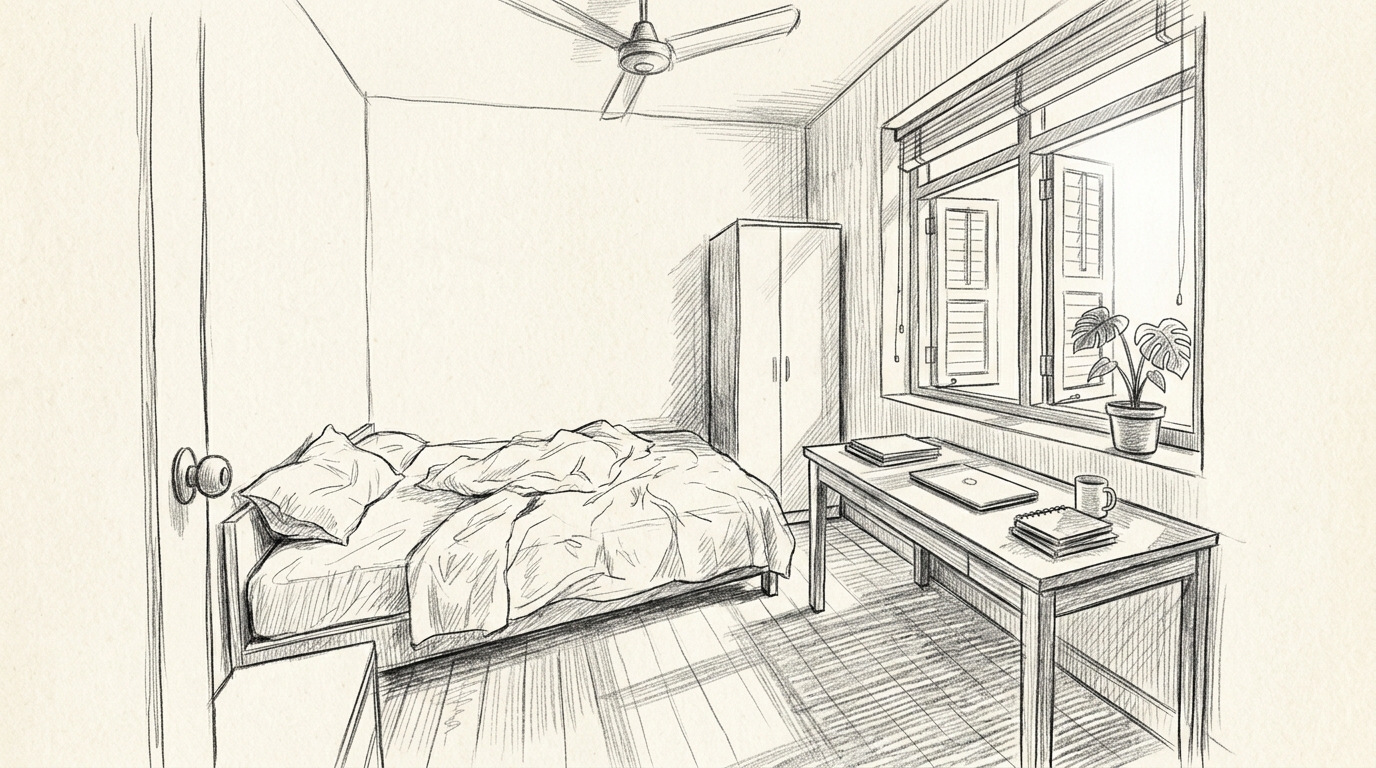
In 2026, up to eight unrelated adults can legally share a home in Singapore, as long as the unit qualifies. That means a 4-room or larger HDB flat, or a private residential unit of at least 90 square metres, with the owner registered or approved for the higher cap. Smaller units are still capped at six unrelated occupants.
This isn't new for 2026. HDB and URA first relaxed the cap from six to eight back in January 2024. What changed this year is that the relaxation, which was only ever meant to be temporary, has been extended. On 16 January 2026, HDB and URA jointly announced the cap stays at eight all the way through 31 December 2028.
If you're renting a room in Singapore right now, or you're a landlord trying to figure out what you're allowed to do with a spare room, here's what actually changed and what didn't.
What an Occupancy Cap Is, and Why Yours Just Changed
An occupancy cap is the maximum number of unrelated people allowed to live in one residential unit at the same time. It exists to stop overcrowding and keep shared housing from turning into a dis-amenity for neighbours, think noise, lift queues, rubbish, parking.
"Unrelated" is the key word. A family of ten living together has never been capped. The rule only counts people who aren't part of the same family unit, which is exactly the situation in most co-living setups and shared rentals.
Before January 2024, the cap for both HDB flats and private homes was six unrelated people. Landlords renting to sharers, and co-living operators like Lazybee, had to work within that number regardless of how large the unit was. That's the cap most renters still assume applies today. It doesn't, for qualifying units.
The Occupancy Cap Extension to 2028, Explained
Here's the timeline in plain terms.
January 2024: HDB and URA raised the cap from six to eight unrelated occupants, but only for larger homes, 4-room and bigger HDB flats, and private residential units of at least 90 sqm. This was framed from the start as temporary, meant to help meet rental demand while more housing supply came online.
16 January 2026: HDB and URA jointly announced the relaxation is extended for another two years, to 31 December 2028. The eight-person cap for qualifying units doesn't revert to six. It simply continues.
Why extend it: the government pointed to sustained rental demand and said it would keep monitoring the market and review whether to extend again past 2028. Still a temporary measure on paper, but with runway to the end of the decade. (Source: HDB press release, 16 Jan 2026; URA press release pr26-03.)
Six Occupants vs Eight: What Actually Changed
| Cap of 6 (default) | Cap of 8 (relaxed) | |
|---|---|---|
| Applies to | Any HDB flat or private unit, any size | HDB 4-room and larger; private units 90 sqm and up |
| Approval needed | None beyond standard tenancy rules | HDB approval before tenancy starts, or URA registration for private units |
| Status in 2026 | Still the default for smaller/other units | Extended through 31 Dec 2028 |
| Who it suits | Studios, 2 and 3-room flats, small condo units | Larger flats and condos being run as shared or co-living housing |
The number that changed is the ceiling, not the rulebook. Smaller units never got the bump and still sit at six. The paperwork requirement, approval or registration before you rent to that many people, hasn't gone away either.
5 Things the Occupancy Cap Extension Changes for Renters
- More legal shared rooms in the market. Qualifying flats and condos keep listing up to eight beds instead of squeezing down to six, which matters in a tight rental market.
- No sudden downgrade for existing sharers. No one in a qualifying eight-person unit needs to worry about the cap snapping back to six at end-2026, which is what would have happened without the extension.
- Landlords can plan further out. A two-year runway to end-2028 makes it worth registering a larger unit for shared occupancy, rather than treating the rule as one that might vanish within months.
- The paperwork still matters. A higher cap doesn't remove the approval step. HDB flats still need approval before the tenancy starts; private units still need URA registration.
- Smaller units are unaffected. Renting a studio or a 2 or 3-room flat, this extension changes nothing. Your cap was, and stays, six.
The Cap Went Back to Six. It Did Not.
This myth keeps circulating because the original 2024 relaxation was announced as temporary with an end date. Some renters and even some listings assumed that once that date passed, the rule would simply lapse and the old six-person cap would return automatically.
That's not what happened. HDB and URA extended it before the original deadline arrived, so there was no gap where the cap reverted. As of 2026, if your unit qualified for eight before, it still qualifies for eight, through 31 December 2028. If you see a listing or agent telling you the cap is back to six for a large qualifying unit, that's outdated information, not current policy.
The Cap Mistake Landlords Are Still Making in 2026
The most common mistake isn't misunderstanding the number, it's skipping the approval step. Some landlords hear "the cap is eight now" and start renting to eight without ever applying for HDB approval or registering the private unit with URA.
That approval isn't backfilled later. Renting above six without it means operating outside the relaxed cap altogether, and authorisation can be revoked if the unit causes real dis-amenity to neighbours even after it's granted. Get the paperwork sorted before signing tenants, not after.
Does Your Unit Qualify for Eight? Run This Check
- Is it an HDB flat that's 4-room or larger, or a private unit of at least 90 sqm? If not, your cap is six, full stop.
- Has the owner applied for HDB approval, or registered with URA for a private unit? Without this, the higher cap doesn't apply even if the unit is large enough.
- Are all occupants genuinely unrelated, not part of the same family unit? The cap counts unrelated persons only.
- Can the unit reasonably house that many without becoming a dis-amenity to neighbours, noise, common area use, parking? Authorities can revisit approval if this becomes a problem.
If you tick all four, the unit qualifies for eight through end-2028. If any answer is no, work from a cap of six until it's fixed.
The Joint HDB and URA Announcement, Line by Line
The 16 January 2026 release is short and procedural, but three lines matter most for anyone renting or letting a room:
- The relaxation is extended to 31 December 2028, a straight two-year extension from the original end date.
- The qualifying criteria are unchanged: HDB flats of 4-room or larger, and private residential properties of at least 90 sqm.
- Owners must still seek approval before the tenancy starts (HDB, via e-services or GoBusiness Portal) or register with URA (private units), and that authorisation can be revoked over serious dis-amenities.
Nothing in it changes who counts as a related occupant, and nothing lowers the bar for smaller units. It's an extension of the existing rule, not a new one.
For what it's worth, this is roughly how a well-run co-living operator like Lazybee already structures its rooms, within the approved cap for each address, not pushed to the legal maximum just because the rule allows it. Current room listings are at lazybee.sg.
FAQ: Occupancy Caps, Every Question We've Been Asked Since January
Is the occupancy cap still 8 people in 2026? Yes, for qualifying units, HDB flats of 4-room and larger, and private residential units of at least 90 sqm. HDB and URA extended this on 16 January 2026 through 31 December 2028.
Does the 8-person cap apply to every HDB flat? No. Only 4-room and larger flats qualify. 1, 2, and 3-room flats stay capped at six.
Does the 8-person cap apply to every condo? No. Only private units of at least 90 sqm qualify. Smaller units stay capped at six.
Do I need approval to rent to 8 people even if my unit qualifies? Yes. HDB flat owners need approval before the tenancy starts. Private owners register with URA. Size alone isn't enough.
Will the cap go back to 6 after 2028? Unknown. HDB and URA say they'll keep monitoring the rental market and review extending further, so no decision has been made for after 31 December 2028.
Does the cap count family members? No. It only applies to unrelated occupants, people not part of the same family unit. Families have never been capped this way.
Is this the same rule for HDB and private property? Same logic, larger units get a higher cap, different process. HDB flats need HDB approval. Private units need URA registration.
Figures here that come from government schedules, MOM salary thresholds, ICA and HDB requirements, URA rules, fees and fares, are reviewed on their own timetables and move. Check the current number at the source before you rely on it.