Moving to Singapore From the Philippines: A Co-Living Housing Guide
Moving to Singapore from the Philippines? What your EP, S Pass or Student Pass allows, realistic room costs, and how co-living gets you settled fast.
Moving to Singapore from the Philippines means you can only sign a lease once your Employment Pass, S Pass, or Student Pass is actually issued, not while it's still processing. Filipinos are one of the larger foreign communities in Singapore, working across healthcare, IT, finance, engineering, and hospitality, plus a steady stream of students at the local universities. Co-living is usually the fastest legal way to have a furnished room waiting for you, without a local guarantor or a bare unit to furnish from scratch.
This guide covers what your pass actually lets you rent, what a room realistically costs, and the practical things that make the first month easier, from opening a bank account to finding Filipino groceries on a Sunday.
Can I Rent a Room Before My Pass Is Issued?
No. You need the pass itself in hand, not a Letter of Consent, an offer letter, or an In-Principle Approval. This applies to every nationality equally, the Philippines included. If your flight lands before the pass clears, you'll need a hotel or a short-stay serviced apartment to bridge the gap.
Some co-living operators will provisionally hold a room once they've seen your offer letter or IPA, with the actual agreement only signed once the pass is verifiable. Worth asking about directly if your start date is tight.
For the full mechanics of what passes qualify and what a legitimate operator checks before you sign, see our guide on renting in Singapore as a foreigner.
Which Pass Are You Likely Moving On?
Filipino nationals moving to Singapore for work or study usually land on one of three passes, and each changes how you should plan your lease.
Employment Pass (EP). For professionals, managers, and executives. As of 2026 the qualifying salary floor is S$5,600 a month for most sectors (S$6,200 in financial services), rising with age up to roughly S$10,700 for candidates 45 and above, and assessed alongside the COMPASS points framework. The floor is set to rise again to S$6,000 (S$6,600 in financial services) from January 2027, so if you're negotiating an offer now, check which threshold applies to your start date.
S Pass. For mid-skilled roles. Since September 2025 the qualifying salary is S$3,300 a month for new applications (S$3,800 in financial services), rising with age to around S$4,800 (S$5,650 in financial services) at 45 and above. This floor also climbs from January 2027.
Student Pass. Filipino students study across Singapore's universities and polytechnics, and a Student Pass renews alongside your enrolment, so treat it as a shorter runway than an EP when picking a lease length.
Filipino professionals are a notable presence in Singapore's healthcare sector in particular, with hospitals and nursing homes actively recruiting nurses and allied health workers from the Philippines, alongside a strong footprint in IT, finance, and engineering roles. Whichever pass you're on, match your lease to how long the pass has left, not the standard 12-month term a landlord defaults to. Our EP vs S Pass vs Student Pass renting guide walks through this in more detail, since it's the single most common planning mistake foreign renters make here.
Can I Bring My Family Over?
If you're an EP or S Pass holder earning at least S$6,000 a month in fixed salary, you can sponsor a legally married spouse and unmarried children under 21 on a Dependant's Pass. Variable bonuses don't count toward that figure. Parents generally need a Long-Term Visit Pass instead, which carries a higher salary bar, commonly around S$12,000 a month. A Dependant's Pass holder can't automatically work; they'd need their own separate work pass for that.
If you're moving solo first and bringing family over later, a co-living room is a reasonable way to get settled before committing to a bigger family-sized unit.
What Does a Room Actually Cost in Singapore?
Room prices vary by type and location, and the honest range across the market in 2026 looks roughly like this:
| Room type | Typical monthly rent |
|---|---|
| Compact or budget room | S$600 to S$900 |
| Common room | S$1,000 to S$1,600 |
| Master bedroom (ensuite) | S$1,700 to S$2,500+ |
Where you land in that range depends on location, room size, and whether the bathroom is attached. Co-living rent usually bundles in wifi, utilities, and furnishing, so the sticker price is closer to your actual monthly cost than a bare HDB or condo rental, where those get billed separately. We don't quote a fixed number here because it changes by room and by month. Current availability and pricing for Lazybee's Chiltern Park, Ivory Heights, and Thomson Grove rooms are listed on lazybee.sg.
On top of rent, budget for a security deposit, typically one month's rent, refundable in full at move-out barring real damage. Our security deposit guide covers what's standard and how to get it back without a fight.
Why Co-Living Works Well for a First Move
Renting solo in Singapore usually means chasing a local guarantor, negotiating a 12-month tenancy, and furnishing an empty unit from scratch, none of which is realistic if you're landing with two suitcases and a start date in ten days. Co-living sidesteps most of that.
- No guarantor chase. Most co-living operators verify your pass and income directly, instead of requiring a local guarantor the way some HDB or condo landlords do for first-time renters.
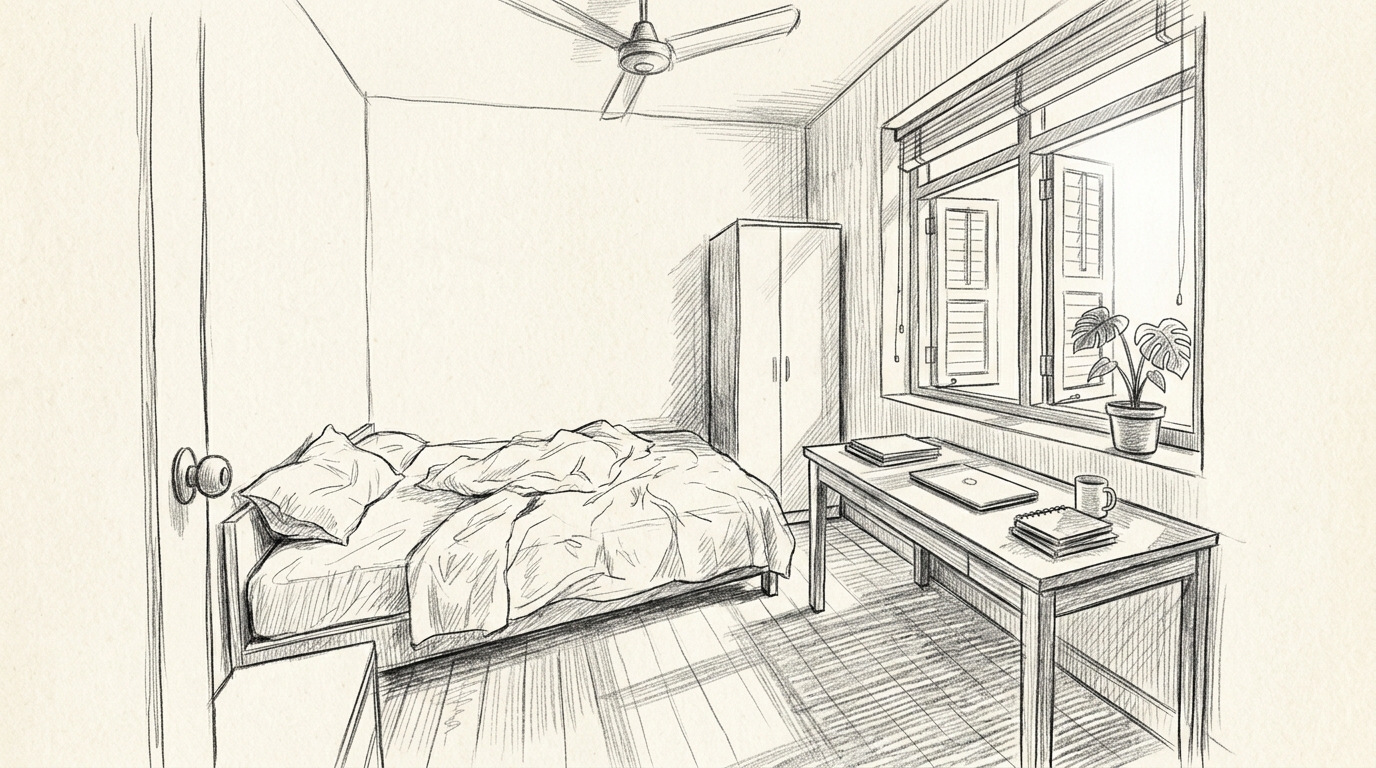
- Furnished from day one. Bed, wardrobe, wifi, and often a shared kitchen are already set up, so you're not buying furniture in your first week.
- Shorter, more flexible lease terms. This matters most for Student Pass holders on an annual renewal cycle, or anyone whose pass validity doesn't comfortably cover a standard 12-month tenancy.
- A built-in social layer. Moving to a new country alone is easier with housemates already in the building, even if you keep to yourself most weeks.
Settling In: The Practical Stuff
A few things worth knowing in your first month, separate from the housing question itself.
Banking. DBS, OCBC, and UOB all offer accounts foreigners can open with a valid pass and passport, usually in person at a branch once you have a local address. Having your co-living room confirmed before you go to the bank saves a step, since some banks ask for a residential address on file.
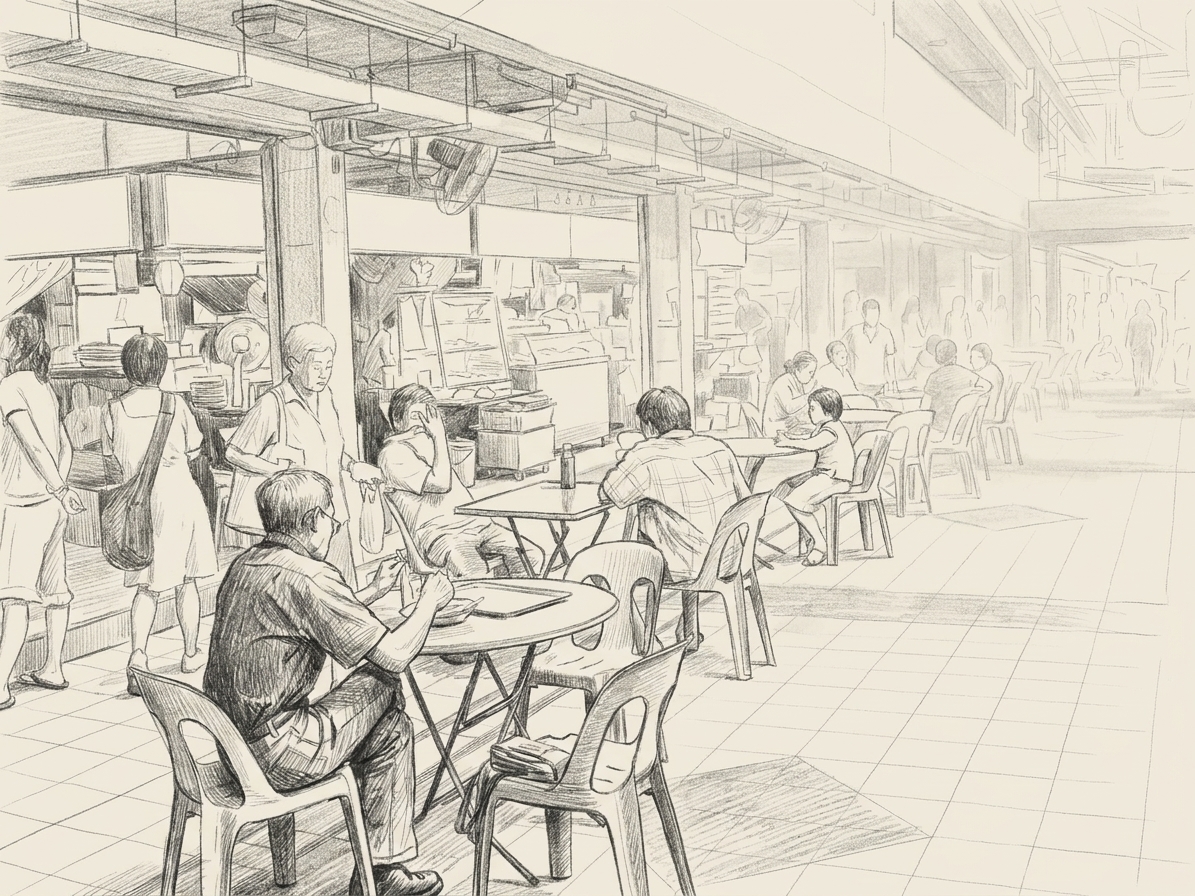
Groceries and Filipino essentials. Lucky Plaza on Orchard Road is the best-known hub, especially on Sundays, with remittance agencies, Filipino grocers stocking imported snacks and condiments, hair and beauty salons, and a food court serving Filipino dishes. Smaller Filipino grocery corners have also opened in neighbourhood malls closer to residential areas, so it's rarely a special trip once you know your area.
SIM and connectivity. A local SIM (Singtel, StarHub, or M1) needs your passport and pass on hand, and can usually be done same-day at a mall outlet or airport kiosk.
Community. Singapore is home to a large and long-established Filipino community, spanning skilled professionals, students, and a wider network built over decades. Sunday gatherings at Lucky Plaza and Orchard Road are a genuine social institution, not just a shopping trip, and several churches around the island hold dedicated Filipino-language Sunday masses. Basketball leagues, alumni associations, and professional networking groups are active too, so you'll find your circle faster than you might expect.
Before You Sign: What to Check
- Your pass is issued and in hand, not just an offer letter or IPA.
- The lease length doesn't outlast your pass validity, especially on a Student Pass or S Pass.
- The deposit terms and refund process are written into the agreement, not just promised verbally.
- The room count and floor area match what's actually being advertised. Our guide on is co-living legal in Singapore covers the minimum stay and occupancy rules every legitimate room should already comply with.
Once those four are confirmed, you're not taking on any more risk than a Singaporean renter would.
Frequently Asked Questions
Can I rent a room in Singapore before my Employment Pass is issued? No. You need the pass itself in hand. Use a hotel or short-stay serviced apartment while it's being processed, and ask your prospective operator if they'll hold a room against your offer letter or IPA.
Do I need a guarantor to rent as a Filipino national in Singapore? Not usually with a co-living operator, since they verify your pass and income directly. Some standalone landlords ask for one, particularly for first-time renters or Student Pass holders.
How much should I budget for a room in Singapore? Realistically S$600 to S$2,500+ a month depending on room type and location, plus a deposit of around one month's rent. Check current listings for exact pricing rather than relying on a fixed figure, since it moves by room and by month.
Can I bring my family to Singapore on an Employment Pass? Yes, if your fixed monthly salary is at least S$6,000, you can sponsor a spouse and unmarried children under 21 on a Dependant's Pass.
Is there a large Filipino community in Singapore? Yes, spanning healthcare, IT, finance, engineering, and other professional sectors alongside a sizeable student population, with well-established hubs like Lucky Plaza for groceries, remittances, and Sunday gatherings.
Looking for a furnished room with the paperwork done properly and no guarantor chase? Browse current availability at lazybee.sg.
Figures here that come from government schedules, MOM salary thresholds, ICA and HDB requirements, URA rules, fees and fares, are reviewed on their own timetables and move. Check the current number at the source before you rely on it.
Sources: MOM, Employment Pass eligibility and salary; MOM, S Pass eligibility and salary; MOM, Dependant's Pass eligibility; Rappler, Singapore looks to recruit more Filipino health workers; Rice Media, Lucky Plaza Through the Eyes of Filipinos Who Know It Best; Figment, Co-Living Cost Singapore 2026 Price Guide.