Finding Korean Food and Community Near Your Room in Singapore
Where to find real Korean food and community in Singapore, and how commute time from Serangoon, Jurong East, and Upper Thomson to Tanjong Pagar compares.
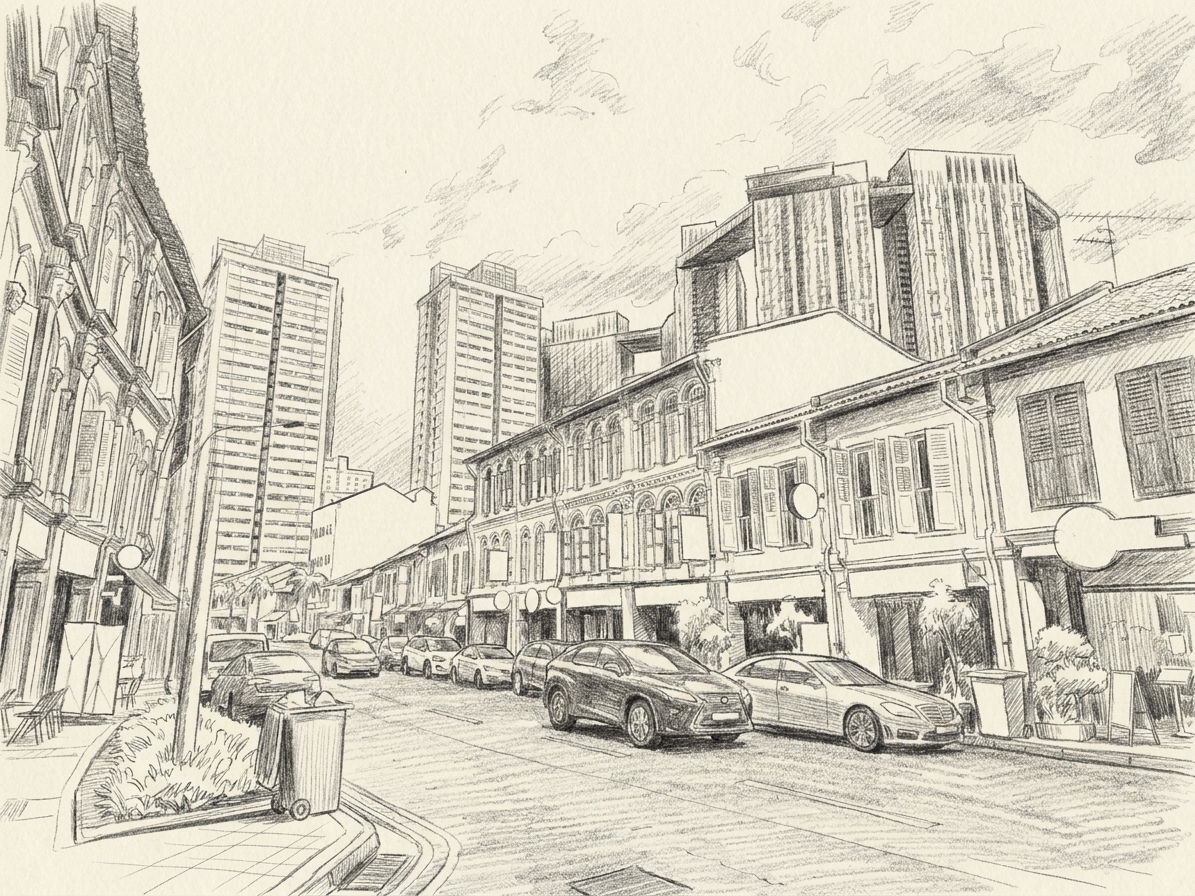
If you're Korean and moving to Singapore, or you've just developed a serious craving for real jjajangmyeon, the short answer is Tanjong Pagar. The stretch of Tanjong Pagar Road and Amoy Street near Maxwell and Telok Ayer MRT stations is Singapore's Koreatown, home to a dense cluster of Korean restaurants, grocers, and the Korean Association Singapore itself. Where you choose to live changes how often you can actually get there, which is the part most guides skip.
This piece covers what's really in that Koreatown pocket, where else Korean community life happens across the island, and how commute time from Lazybee's three neighbourhoods (Serangoon, Jurong East, and Upper Thomson/Lentor) stacks up if that food and community matter to your daily life, not just your weekend.
Why Tanjong Pagar Is Singapore's Koreatown
The nickname isn't marketing. Over the last two decades, Korean restaurants, cafes, and even Korean-themed wedding photography studios have clustered along a roughly 300-metre stretch of Tanjong Pagar Road near Duxton Hill, with the count of Korean food outlets in double digits in that pocket alone. It grew organically as Korean professionals and their families settled in the area, and it's kept growing with the wider popularity of Korean food and culture across Singapore.
The anchor for the community side, not just the food side, is the Korean Association Singapore (한인회), which operates out of 71B Tanjong Pagar Road. It runs cultural events, Korean language classes, scholarships, and general community programming, and it's the most established formal touchpoint for Koreans living in Singapore, expat or long-term resident.
Amoy Street, one MRT stop over from the main Tanjong Pagar strip, has its own smaller cluster worth knowing. Restaurants like Gangnam Ok and PUJIM sit right along Amoy Street, close to both Telok Ayer and Tanjong Pagar MRT stations, and newer openings keep landing in this pocket as the area's reputation builds.
What You'll Actually Find There
Restaurants. The range runs from casual Korean-Chinese spots like Itaewon Jjajang, known for jjajangmyeon and jjamppong, through to full Korean BBQ houses. Todamgol is a long-running option for home-style dishes like army stew and bibimbap if you want the food your family would actually cook, not the Instagram version.
Groceries. Koryo Mart's Tanjong Pagar branch, at 30/32 Tanjong Pagar Road, is the main one-stop shop in the area for jang, frozen goods, snacks, and instant noodles, and locals note its prices tend to run lower than other Korean marts around the island. If Tanjong Pagar is inconvenient on a given day, Koryo Mart and Seoul Mart both have other locations across Singapore, and most stock the basics you'd need for a proper home-cooked meal.
Community and language. Beyond the Korean Association, the Singapore Korean International School in Bukit Timah runs a Saturday Hangul School open to students from both local and international schools, which functions as a community touchpoint for Korean families even outside term-time programming. Korean churches also exist across the island; if a faith community matters to you, it's worth searching for the specific denomination and language service you're looking for, since options are more spread out geographically than the food scene is.
| What | Where | Notes |
|---|---|---|
| Korean Association Singapore (한인회) | 71B Tanjong Pagar Road | Cultural events, Korean language classes, scholarships, general community programming |
| Restaurants | Tanjong Pagar Road near Duxton Hill, plus Amoy Street | Itaewon Jjajang for jjajangmyeon and jjamppong, Todamgol for home-style army stew and bibimbap, Gangnam Ok and PUJIM on Amoy Street |
| Groceries | Koryo Mart, 30/32 Tanjong Pagar Road | The main one-stop shop for jang, frozen goods, snacks and instant noodles, with prices reported lower than other Korean marts. Other Koryo Mart and Seoul Mart branches sit across the island |
| Language and schooling | Singapore Korean International School, Bukit Timah | Saturday Hangul School, open to students from both local and international schools |
| Delivery | Koryo Mart and other Korean marts, including via foodpanda | A practical stopgap between in-person runs |
Choosing Where to Live, Not Just Where to Eat
None of this means you need to live in Tanjong Pagar itself. Central district rents run high, and most people who eat there regularly don't actually live there, they commute in for it. What matters more is how often you realistically want to make that trip, and how painless the ride is when you do.
Lazybee runs co-living rooms in three Singapore neighbourhoods, each with a different relationship to that Koreatown pocket:
Serangoon
Serangoon is an MRT interchange on the North East Line and Circle Line, which makes getting into town straightforward. The route into Tanjong Pagar area typically means riding the North East Line down to Outram Park, then one stop over on the East West Line to Tanjong Pagar itself, a single transfer. It's a manageable trip for a weekly grocery run or a dinner out, without being on your doorstep.
Jurong East
Jurong East sits on the East West Line, the same line that runs straight through Tanjong Pagar, which means no transfer at all. A direct ride door to door on one line tends to be the simplest kind of commute to plan around, even if Jurong East itself is further out geographically. If you're weighing "will I actually make this trip on a Tuesday night," a same-line ride is the easiest one to say yes to.
Upper Thomson / Lentor
Both Upper Thomson and Lentor sit on the Thomson-East Coast Line, which now runs all the way down through the city to stations like Maxwell, right at the edge of the Koreatown pocket, and further to Marina Bay. That's also a single-line ride with no transfer, though it covers more stations end to end than the Jurong East route, so budget more time for it. It's the newest of the three lines to reach this far south, and it's made this part of the island noticeably more connected to the city core than it used to be.
| Lazybee neighbourhood | MRT line | Route to the Tanjong Pagar and Amoy Street pocket | Transfers |
|---|---|---|---|
| Serangoon | North East Line and Circle Line interchange | North East Line down to Outram Park, then one stop on the East West Line to Tanjong Pagar | 1 |
| Jurong East | East West Line | The same line that runs straight through Tanjong Pagar, door to door | 0 |
| Upper Thomson / Lentor | Thomson-East Coast Line | Runs down to Maxwell at the edge of the pocket, and on to Marina Bay. More stations end to end, so budget more time | 0 |
None of these are a five-minute walk. All three are workable if a Korean meal or a grocery run is a once-a-week thing rather than a daily one, which is the realistic pattern for most people regardless of where they live in Singapore.
Making the Trip Worth It
A few practical notes if you're planning around this:
- Batch your trips. Combine a Koryo Mart run with dinner at one of the Amoy Street or Tanjong Pagar restaurants so the commute pays off twice.
- Weekday evenings vs weekends. The Tanjong Pagar strip gets busy after work hours on weekdays with the CBD crowd, and busier again on weekends. If you want a quieter meal, aim for an early weekday dinner.
- Check community calendars. The Korean Association Singapore and SKIS both run periodic events open beyond their core membership. It's worth checking in occasionally even if you're not enrolled in anything formal.
- Delivery covers the gaps. Most of the major Korean marts also deliver, including via foodpanda, which is a reasonable stopgap between in-person runs if your week gets busy.
Living Well Beyond the Koreatown Trip
Where you sleep and where you eat don't have to be the same neighbourhood, and for most people in Singapore they aren't. What matters is picking a base that makes the trips you actually want to take, whether that's a Korean BBQ dinner or just getting to work, genuinely doable rather than a production every time.
Lazybee's rooms in Serangoon, Jurong East, and Upper Thomson and Lentor are all built around that idea: a comfortable, well-run room with reliable transport links, so the rest of your life in Singapore, food and community included, stays within reach. If you're weighing up a neighbourhood, it's worth looking at the actual room listings and current availability rather than going on the general reputation of an area alone.
FAQ
Is Tanjong Pagar the only place to find Korean food in Singapore? No. Korean restaurants and cafes have spread across the island as the cuisine's popularity has grown, but Tanjong Pagar and the adjoining Amoy Street stretch remain the densest cluster and the closest thing Singapore has to a dedicated Koreatown.
Do I need to live near Tanjong Pagar to stay connected to the Korean community? Not necessarily. The Korean Association Singapore and SKIS's Saturday Hangul School are the main organised touchpoints, and both are reachable from most parts of the island by MRT. Regular commuting is more about convenience than necessity.
Which Lazybee neighbourhood has the most direct MRT route to Tanjong Pagar? Jurong East sits on the same East West Line as Tanjong Pagar, so it's a direct ride with no transfer. Serangoon needs one transfer via Outram Park. Upper Thomson and Lentor are on the Thomson-East Coast Line, which now reaches Maxwell and Marina Bay directly, also without a transfer, though it's a longer ride end to end.
Can I get Korean groceries delivered instead of travelling to Tanjong Pagar? Yes. Koryo Mart and other Korean marts across Singapore offer delivery, including through platforms like foodpanda, which is a practical option between in-person trips.
Sources: URA, Short-Term Accommodation guidelines; URA, Renting Property guidelines.