Finding Indonesian Community Near Your Room in Singapore
Where Singapore's Indonesian community actually gathers, from Geylang to Kampong Glam, and how to pick a co-living room with easy access to it.
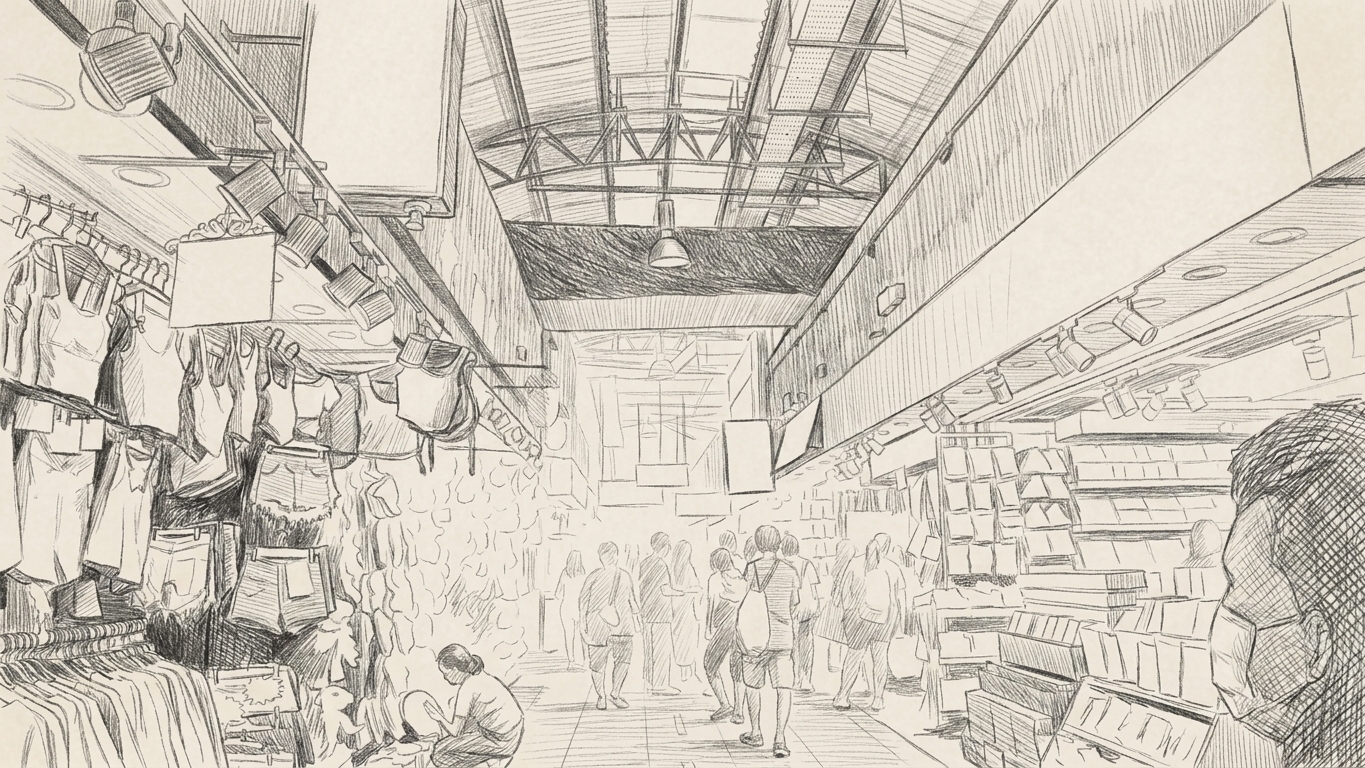
Singapore's Indonesian community isn't concentrated in one neighbourhood, but a few areas function as its real hubs. Geylang's City Plaza is the main weekend gathering point. Kampong Glam and Arab Street carry the deepest Javanese heritage in the city. Geylang Serai Market covers everyday halal groceries and Malay-Indonesian food. None of that means you need to live inside any of these pockets. What matters more is whether your MRT line gets you there in a reasonable ride, which is a transport question, not a neighbourhood one.
This guide covers where those hubs actually are, what each one offers, and how to think about location if staying close to Indonesian food, faith, and community matters to your day-to-day life in Singapore.
Where does Singapore's Indonesian community actually gather?
Geylang, especially around City Plaza. City Plaza on Geylang Road is the closest thing Singapore has to a dedicated Indonesian community hub. On Sundays, the grass patch beside the mall fills with people on picnic mats, and the shops and food stalls inside cater almost entirely to an Indonesian crowd, Indonesian grocers, remittance agents, salons, and eateries like Es Teler 77. It draws mostly domestic workers on their day off, but also students, professionals, and families passing through for the food and the groceries you can't easily find elsewhere.
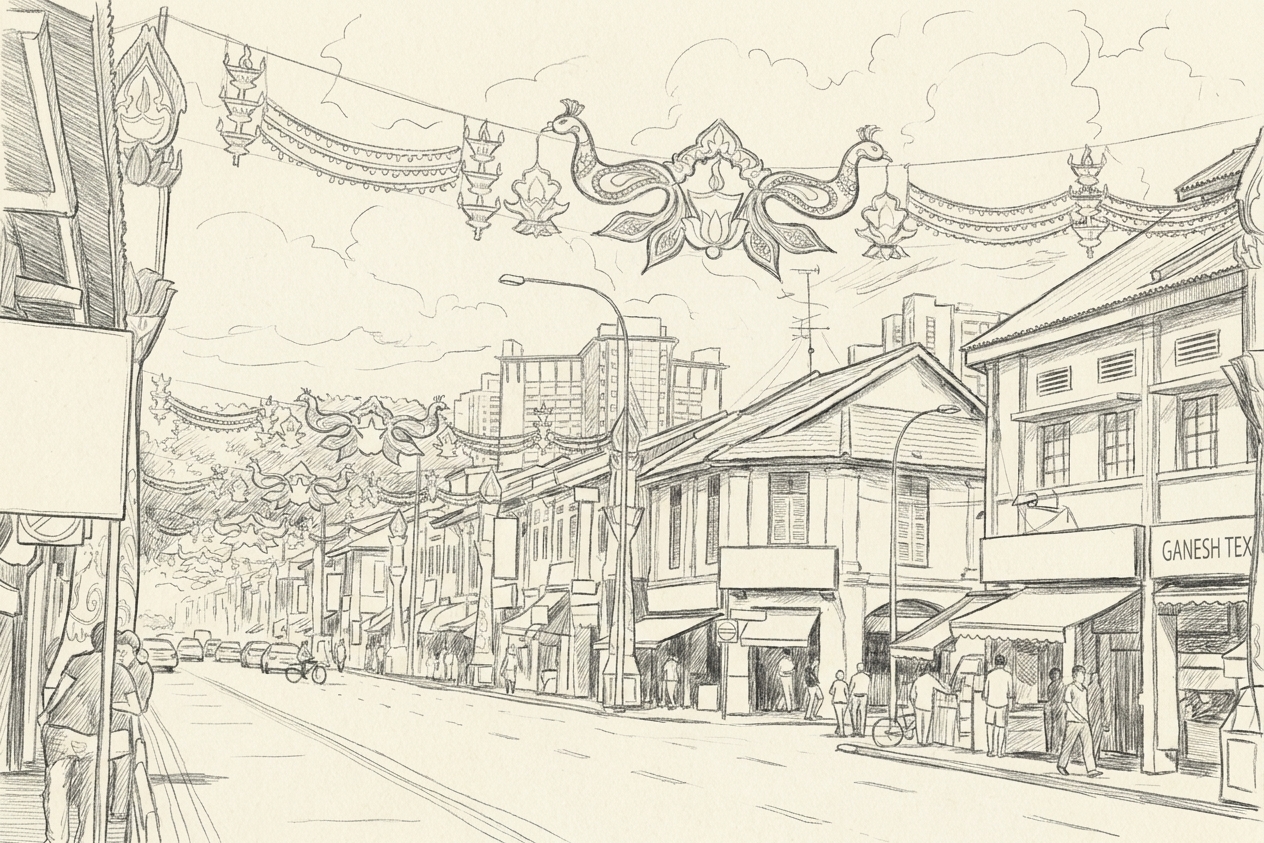
Kampong Glam and Arab Street. This is the historical layer. The area was once known as Kampong Java, named for the Javanese migrants who settled there, and Arab Street carried the Chinese nickname "Jawa koi", Java Street, for the same reason. That heritage is still visible in the mix of halal eateries, textile shops, and mosques along the strip, even though the area today reads more broadly Muslim-Malay-Arab than specifically Indonesian.
Geylang Serai Market. A short walk from Paya Lebar MRT, this is the everyday version of the above two. Halal meat, tropical produce, spices, and a hawker centre that leans heavily Malay and Indonesian in its stalls. It's less of a social gathering point and more of a weekly-shop destination.
Bugis. A cluster of Indonesian restaurants sits around Bugis, including several Padang and Javanese-style eateries near the MRT station. It's a good food stop rather than a community hub in itself, but it sits on two MRT lines, which makes it an easy add-on to a trip into Geylang or Kampong Glam.
Mosques, schools, and organisations worth knowing about
Faith and family infrastructure matter as much as food for a lot of people, and Singapore has real institutions here, not just restaurants.
An-Nahdhah Mosque in Bishan is one of the larger mosques on the island, built to serve the Muslim community in the area with capacity for around 4,000 worshippers. Al-Falah Mosque near Orchard Road serves a similar role closer to town. Neither is exclusively Indonesian, Singapore's mosque network serves the whole Muslim community, but both sit on well-connected MRT lines if regular prayer access matters to your choice of area.
Sekolah Indonesia Singapura, the official Indonesian school, is at 20A Siglap Road, teaching in Bahasa Indonesia with English as a second language. It's specifically for the children of Indonesian nationals, embassy staff, and state-owned enterprise employees based in Singapore, so it's most relevant if you're relocating with family rather than moving alone.
The Indonesian Embassy sits at 7 Chatsworth Road in Tanglin, near Orchard. Useful to know if you'll need passport, visa, or consular services during your stay.
There's also a longer-running student and professional network, PPI Singapura (Perhimpunan Pelajar Indonesia Singapura), which organises events for Indonesian students across the island's universities. Worth searching out if you're here to study rather than work.
How this connects to picking a co-living room
None of these hubs sit inside a co-living house. The practical question isn't "which room is in Geylang," it's "which room gets me to Geylang, Bugis, or Bishan without a miserable commute." That's a transport question, and it plays out differently across Lazybee's three houses.
| Chiltern Park (Serangoon) | Ivory Heights (Jurong East) | Thomson Grove (near Lentor) | |
|---|---|---|---|
| To Geylang / City Plaza | Circle Line to Paya Lebar, transfer to East-West Line, one stop to Aljunied. Around 20-25 minutes with one change. | Direct on the East-West Line. Longer ride since Jurong East sits at the opposite end of the island, budget close to 45 minutes. | No direct line. North-South Line to City Hall, transfer to East-West Line. Around 35-40 minutes. |
| To Bugis / Kampong Glam | North East Line to Little India, transfer to Downtown Line, two stops to Bugis. Around 20-25 minutes. | Direct on the East-West Line, no transfer. Around 35-40 minutes. | North-South Line direct to City Hall, one stop on East-West Line to Bugis. Around 25-30 minutes. |
| To An-Nahdhah Mosque (Bishan) | Circle Line, a few stops. Under 15 minutes. | North-South Line via Jurong East, longer ride, around 30 minutes. | North-South Line, two stops from Yio Chu Kang. Around 10 minutes. |
Chiltern Park and Thomson Grove both come out ahead for reaching Bishan and the mosque quickly. For Geylang and Bugis, Chiltern Park's dual-line access in Serangoon gives it the shortest overall trip of the three, while Ivory Heights, out in Jurong East, has the longest ride to all three destinations even though it never needs a transfer.
None of this makes one house objectively better. If daily prayer access or a short mosque run matters most, that points toward Chiltern Park or Thomson Grove. If your priority is the food and grocery runs on weekends, a slightly longer single Sunday trip from Ivory Heights is a fair trade for what that house offers on shopping and transport the rest of the week. Current room availability and pricing for all three houses is live on lazybee.sg, which is the accurate source rather than anything fixed in a guide like this.
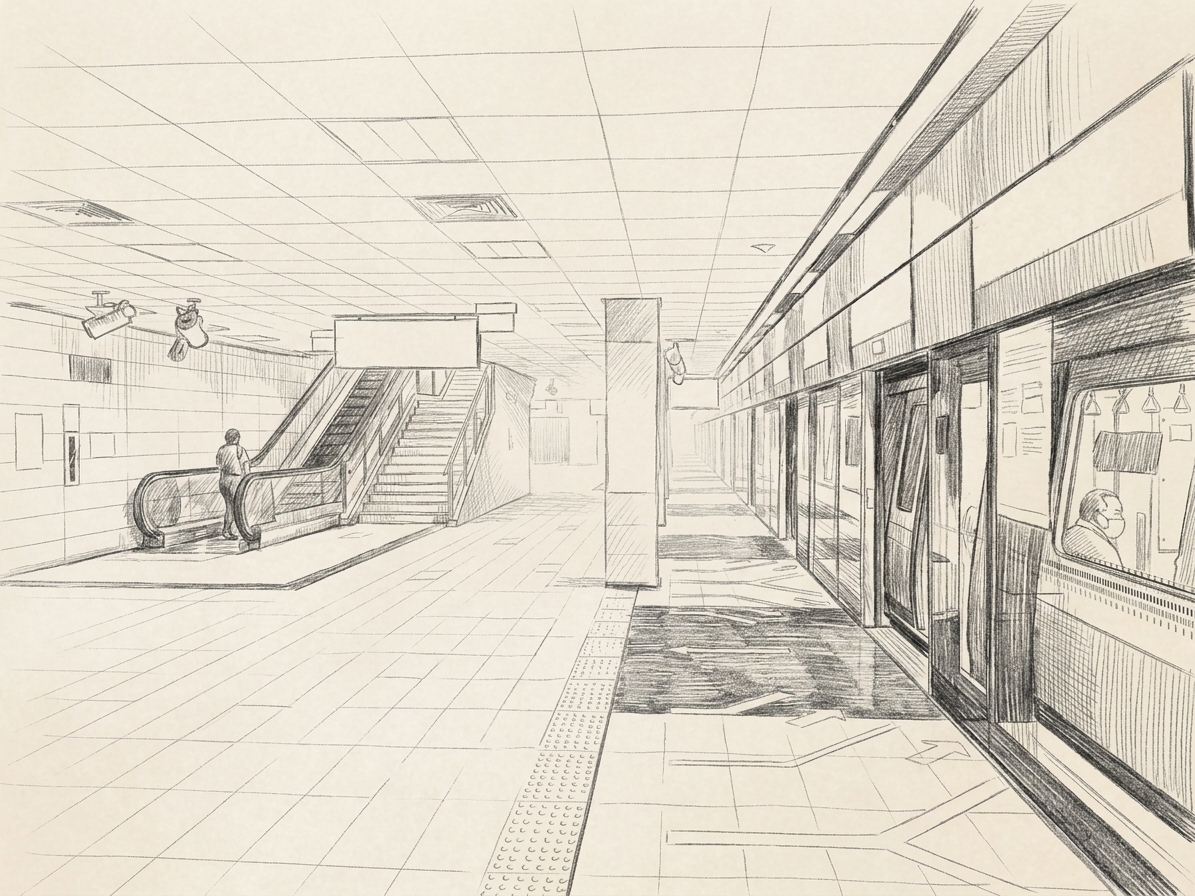
Everyday touchpoints beyond the big hubs
You don't need a special trip for most of it. Indonesian grocery items, sambal pastes, Indofood instant noodles, specific spice blends, show up in general Southeast Asian grocers across the island, not just in Geylang. NTUC and independent minimarts near most residential areas carry at least the basics. Geylang and City Plaza matter more for the harder-to-find items and for the social side, seeing people who speak the same language and eat the same food on a Sunday, than for weekly staples.
Food delivery apps also carry a wide spread of Indonesian and Padang-style restaurants now, so a craving on a weeknight rarely requires a special trip across the island.
It's not about living inside an enclave
Singapore doesn't really have an Indonesian ethnic enclave in the way some cities have Chinatowns or Little Indias built around residential density. What it has is a set of gathering points, mosques, a market, a school, an embassy, spread across different parts of the island, each serving a different need. Living close to all of them at once isn't really possible, and it isn't necessary either. The more useful move is picking a spot with clean transport access to the ones that matter most to you personally, whether that's Friday prayers, a weekend at City Plaza, or just knowing a good warung is a short ride away.
Frequently asked questions
Is there an Indonesian neighbourhood in Singapore? Not in the sense of a single residential enclave. Geylang's City Plaza is the closest thing to a dedicated gathering hub, and Kampong Glam carries the deepest historical Javanese heritage, but Singapore's Indonesian community is spread across the island rather than concentrated in one place to live.
Where do most Indonesians in Singapore live? There's no single residential cluster. Indonesian nationals in Singapore, estimated at around 250,000 as of 2022 by the Indonesian Embassy, span domestic workers, students, professionals, and families, and they live across the island the same way any other resident group does, close to work, school, or MRT access.
Is Geylang safe and worth visiting for the food and community? Yes. City Plaza and the surrounding stalls are a normal, well-used community hub, busiest on Sunday mornings and afternoons when it fills with picnicking groups and shoppers. It's a standard part of daily and weekly life for a lot of Singapore's Indonesian residents, not a fringe destination.
Which Lazybee house is closest to Geylang or Bugis? Chiltern Park in Serangoon has the shortest trip to both, thanks to its access to the Circle Line, North East Line, and a quick transfer to the Downtown Line. Check lazybee.sg for current room availability at Chiltern Park and Lazybee's other houses.
Sources: URA, Short-Term Accommodation guidelines; URA, Renting Property guidelines; MOM, S Pass eligibility.