Finding Chinese Community and Food Near Your Room in Singapore
Where to find Chinese community, groceries, and food in Singapore, and how it shapes which co-living neighbourhood fits your room search.
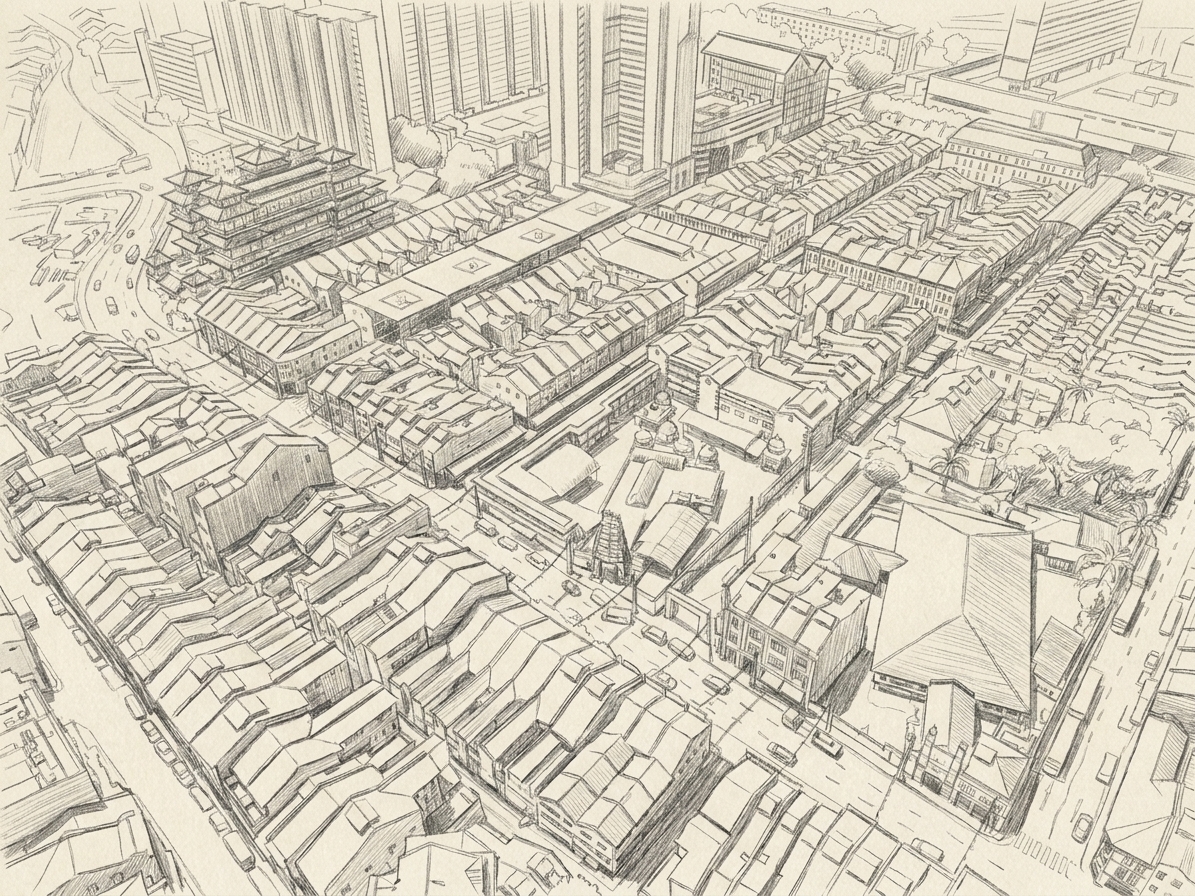
If Chinese community and food matter to your everyday life, the fastest way to check a room is to look at what's within a 10 to 15 minute walk or a short bus ride: a wet market, a hawker centre with dialect-style stalls, a supermarket that carries Chinese groceries, and ideally a clan association or temple that anchors the area. Singapore has these clustered in specific neighbourhoods, not spread evenly, so where you live changes how easy this is day to day. Chinatown is the obvious answer, but it's far from the only one.
Singapore's Chinese community isn't one thing
Singapore's Chinese population traces back to several dialect groups, mainly Hokkien, Teochew, Cantonese, Hakka and Hainanese, each with its own clan associations, food traditions and, historically, its own part of the city. That history still shows up today in which hawker stalls cluster where, and which temples and associations are based in which neighbourhood.
The Singapore Federation of Chinese Clan Associations (SFCCA), the umbrella body for over 200 member associations, is headquartered in Toa Payoh. The Singapore Hokkien Huay Kuan, the largest and oldest clan association with roots at Thian Hock Keng Temple, and the Teochew Poit Ip Huay Kuan, based on Balestier Road, are two of the most established. Mandarin is widely spoken across Singapore regardless of neighbourhood, but the density of Chinese-run shops, temples and community groups does vary by area.
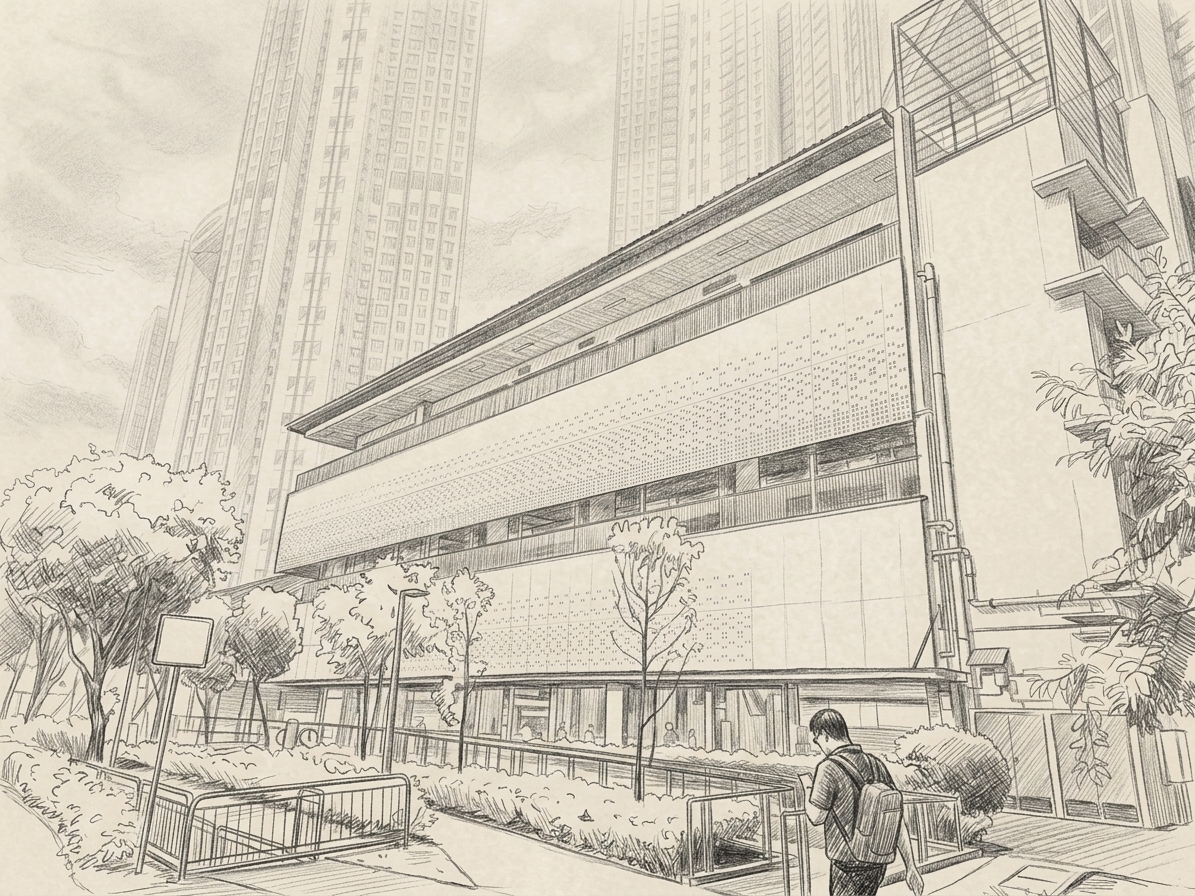
Neighbourhoods with strong Chinese community and food
Chinatown (District 1/2). The historic core, built around Pagoda Street, Smith Street and Ann Siang Hill. Home to the Chinatown Heritage Centre, Thian Hock Keng Temple, and Chinatown Food Street. Supermarkets like Yue Hwa Chinese Products and Scarlett Supermarket carry Chinese pantry staples that are harder to find elsewhere. Good for immersion, but rents and foot traffic reflect its tourist profile.
Toa Payoh. Home to SFCCA headquarters and a well-established heartland wet market and hawker scene. Central, well connected by MRT, and less touristy than Chinatown.
Balestier. Anchored by the Teochew Poit Ip Huay Kuan and known for Teochew and Hainanese food, including the original Balestier Road porridge and bak kut teh stalls that put the area on the food map.
Ang Mo Kio. One of Singapore's most established Chinese-majority heartland towns. The 409 Ang Mo Kio Market and Food Centre and Ang Mo Kio Central Market and Food Centre have been community anchors since the late 1970s and 80s, with hawker stalls often run by second or third-generation owners. Lazybee's Thomson Grove rooms sit in this part of Ang Mo Kio, close to both markets.
Serangoon. Serangoon Garden Market and Food Centre and the stalls around Serangoon Central carry strong Teochew and Hokkien food traditions, alongside NEX mall for everyday shopping. Lazybee's Chiltern Park rooms are a short walk from this cluster.
Jurong East. Yuhua Village Market and Food Centre, connected to a wet market since 1962, is a short walk from Chinese Garden MRT and serves a strong local Chinese and Southeast Asian hawker mix. Lazybee's Ivory Heights rooms are in this part of Jurong East.
Bishan. Home to Kong Meng San Phor Kark See Monastery on Bright Hill, Singapore's largest Mahayana Buddhist temple, founded in 1920 and still an active community and cultural site today.
| Neighbourhood | Community anchor | Food and market | Lazybee property |
|---|---|---|---|
| Chinatown (D1/D2) | Thian Hock Keng Temple, Chinatown Heritage Centre | Chinatown Food Street, Pagoda and Smith Streets. Yue Hwa Chinese Products and Scarlett Supermarket for harder-to-find pantry staples | None. Rents and foot traffic reflect its tourist profile |
| Toa Payoh | SFCCA headquarters, umbrella body for over 200 member associations | Established heartland wet market and hawker scene | None |
| Balestier | Teochew Poit Ip Huay Kuan | Teochew and Hainanese food, the original Balestier Road porridge and bak kut teh stalls | None |
| Ang Mo Kio | One of the most established Chinese-majority heartland towns | 409 Ang Mo Kio Market and Food Centre, and Ang Mo Kio Central Market and Food Centre, community anchors since the late 1970s and 80s | Thomson Grove, close to both markets |
| Serangoon | Strong Teochew and Hokkien traditions | Serangoon Garden Market and Food Centre, stalls around Serangoon Central, NEX mall | Chiltern Park, a short walk away |
| Jurong East | Local Chinese and Southeast Asian hawker mix | Yuhua Village Market and Food Centre, on a wet market site since 1962, a short walk from Chinese Garden MRT | Ivory Heights |
| Bishan | Kong Meng San Phor Kark See Monastery, Singapore's largest Mahayana Buddhist temple, founded 1920 | Active community and cultural site | None |
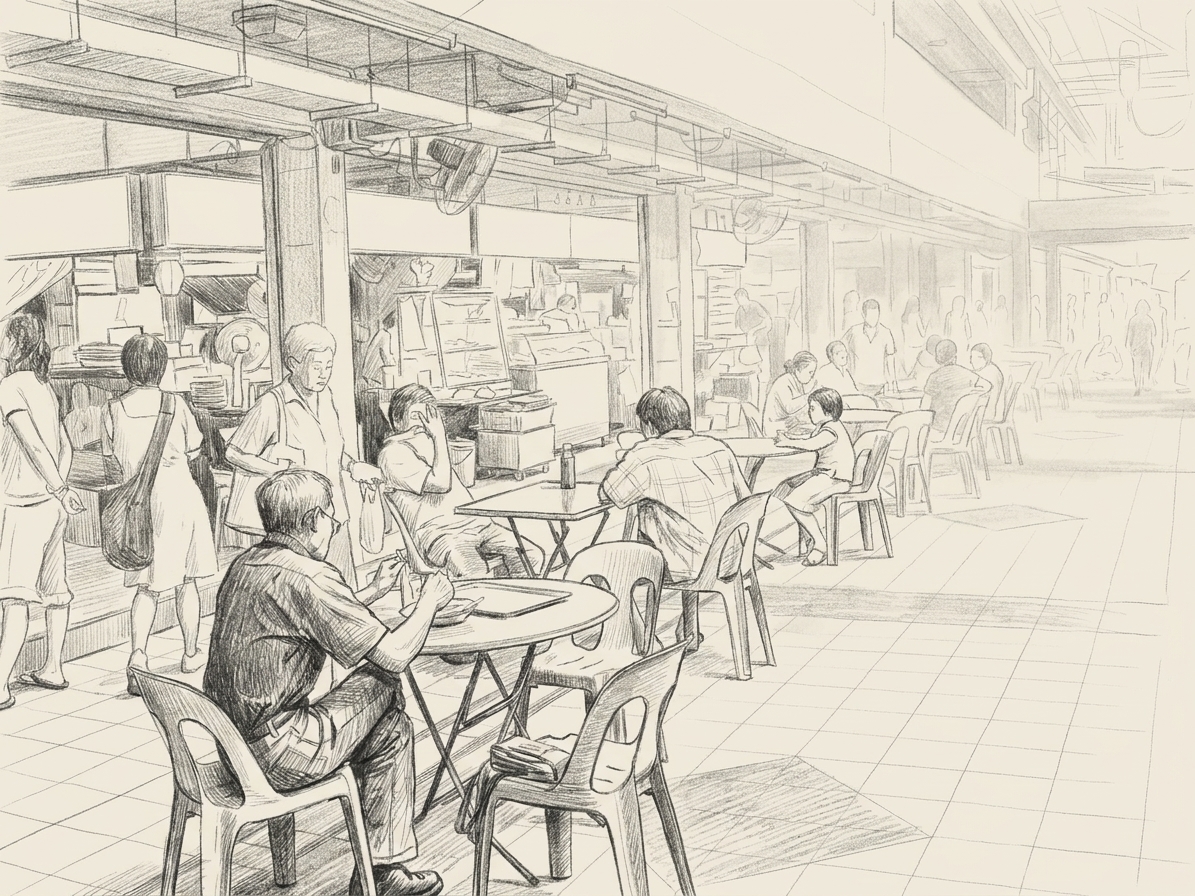
Chinese groceries: what to look for nearby
You don't need to live in Chinatown to shop like it. A few things worth checking near any room you're considering:
- A wet market or NTUC FairPrice, Sheng Siong or Cold Storage within walking distance. Sheng Siong in particular has a strong heartland footprint with over 80 stores islandwide and carries a wide range of fresh produce, meats and dry Chinese grocery staples at accessible prices.
- A dedicated Chinese grocer or import store, such as Yue Hwa Chinese Products, Tiannan, or similar specialty stores, for items a general supermarket won't stock: specific soy sauces, dried goods, festival items, or regional snacks.
- A hawker centre or coffee shop with dialect-style stalls nearby, since this is often a better read on local Chinese food culture than any single restaurant.
| What to check for | Why | Examples |
|---|---|---|
| A wet market or full supermarket within walking distance | Covers daily fresh produce, meat and dry staples | NTUC FairPrice, Sheng Siong (over 80 stores islandwide, strong heartland footprint), Cold Storage |
| A dedicated Chinese grocer or import store | For what a general supermarket will not stock: specific soy sauces, dried goods, festival items, regional snacks | Yue Hwa Chinese Products, Tiannan and similar specialty stores |
| A hawker centre or coffee shop with dialect-style stalls | Often a better read on local Chinese food culture than any single restaurant | Neighbourhood market and food centres |
None of this requires being in Chinatown itself. Ang Mo Kio, Serangoon, Jurong East, Toa Payoh, Balestier and Bishan all score well on this checklist and tend to be quieter and more residential than the city core.
How this should shape your room search
Community fit is a genuinely useful filter when you're choosing a room, alongside commute time and budget. A few practical steps:
- Search the neighbourhood name plus "wet market" or "hawker centre" before you commit to a viewing. Most Singapore neighbourhoods have at least one, but proximity matters more than you'd expect once you're moving through daily errands.
- Check the MRT or bus link back to Chinatown or Toa Payoh if you want occasional access to the bigger clan associations, temples or specialty grocers, even if you're not living right in those areas.
- Walk the actual route from a room to the nearest market or hawker centre during a viewing, rather than judging by straight-line distance on a map. Singapore's block layouts and covered walkways can make a 500m distance feel very different depending on the path.
- Ask current tenants or the operator what the food and shopping routine actually looks like nearby. Anyone who's lived in the unit for a few months will have a more useful answer than a listing description.
Lazybee's three Singapore properties happen to sit in three of the neighbourhoods above: Chiltern Park in Serangoon, Ivory Heights in Jurong East, and Thomson Grove in Ang Mo Kio. Each is within easy reach of a wet market or hawker centre with strong local Chinese food, and all three are on established MRT lines back into the city if you want to visit Chinatown or Toa Payoh on weekends. You can check current room availability and photos for each property at lazybee.sg.
FAQ
Do I need to live in Chinatown to be near Chinese community and food in Singapore? No. Chinatown is the most concentrated and historic hub, but heartland towns like Ang Mo Kio, Toa Payoh, Serangoon and Jurong East all have long-established wet markets, hawker centres and, in some cases, clan associations or temples that anchor Chinese community life just as strongly, usually with less tourist traffic.
Is Mandarin widely spoken across Singapore, or only in certain areas? Mandarin is one of Singapore's four official languages and is widely spoken and understood across the island, in shops, markets and government services. Dialect groups such as Hokkien, Teochew, Cantonese and Hakka are more geographically concentrated in their food and cultural presence, but the language itself isn't confined to specific neighbourhoods.
What's the easiest way to check if a neighbourhood has good Chinese grocery access before booking a room? Search the neighbourhood name with "wet market" or "hawker centre," check the distance on a map, and if possible walk the actual route during a viewing. A nearby NTUC FairPrice, Sheng Siong or Cold Storage covers daily basics, while a dedicated Chinese grocer nearby is worth checking separately if you're after specific imported items.
Ready to see what's currently available? Browse Lazybee's Chiltern Park, Ivory Heights and Thomson Grove rooms at lazybee.sg and filter by the neighbourhood that fits your routine.
Sources: URA, Short-Term Accommodation guidelines; URA, Renting Property guidelines.