Housing for International School Boarders Under 18 in Singapore
Housing for international school boarders under 18 in Singapore: guardian rules, Student's Pass requirements, and why standard co-living isn't the fit.
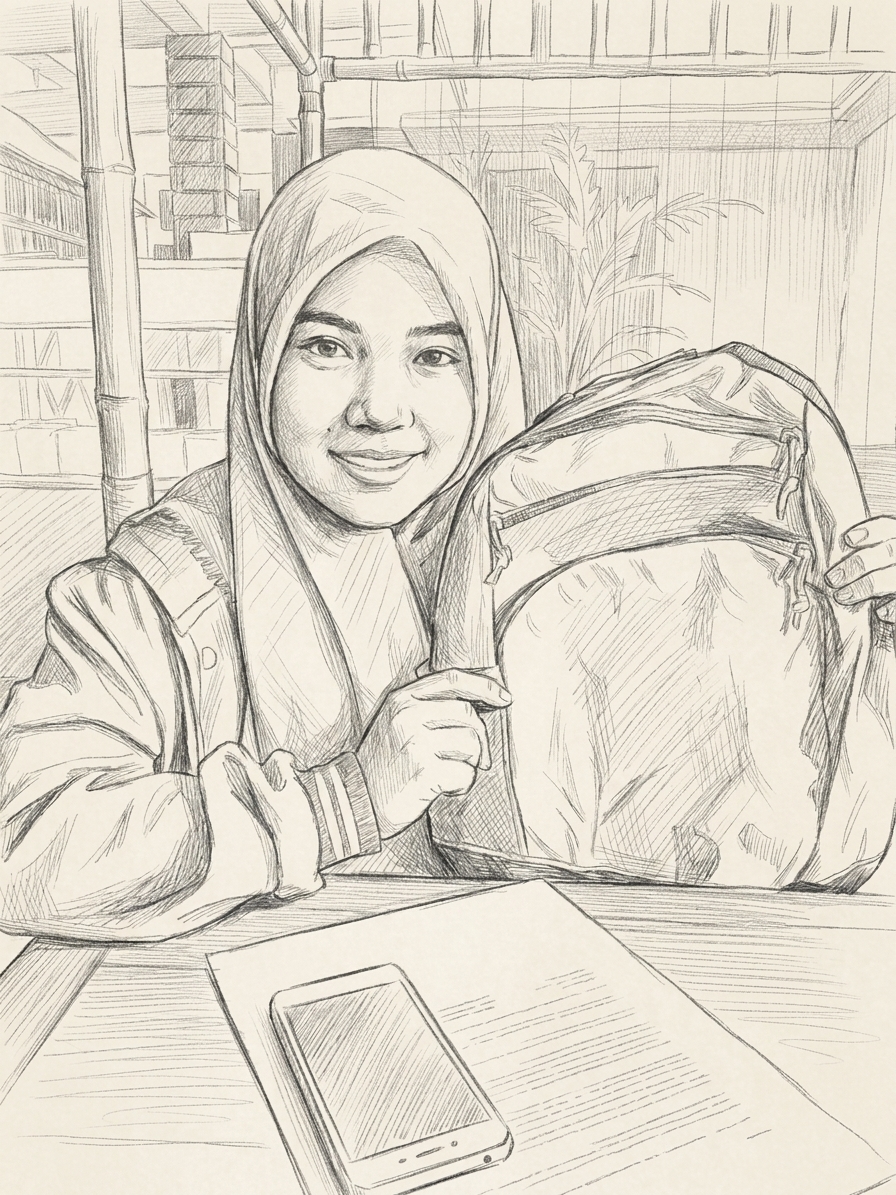
A minor under 18 cannot legally sign a Singapore tenancy or room licence agreement in their own name, and international schools here won't enrol a boarder without an approved guardian arrangement first. That rules out standard independent housing, including co-living, as a standalone option for an unaccompanied minor. The real choices are living with a parent in Singapore, a school-approved homestay guardian, or a boarding house tied to the school. This guide walks through what the law and the schools actually require, so parents aren't guessing.
What Counts as a "Boarder" Under 18 in Singapore?
"Boarder" is loose shorthand for any international school student who lives in Singapore without a parent in the same household. It covers three quite different setups: a school boarding house, a private homestay with a vetted guardian, or (less commonly) a relative's home.
The immigration side and the school side are separate systems with separate rules. A student needs a valid pass to be in Singapore at all (usually a Student's Pass, unless they're already here on a Dependant's Pass under a parent's Employment Pass). Separately, the school needs a guardian on file before it will let the student board. Getting the pass sorted doesn't mean the guardian question is settled, and vice versa.
Can a Minor Sign a Tenancy or Room Licence in Singapore?
No. The Civil Law Act was amended in 2009 to lower Singapore's general contractual age from 21 to 18, so an 18-year-old can sign most contracts including short-term room licences. A 17-year-old cannot. There's no legal mechanism for a minor to sign a lease or licence agreement in their own name here.
There's also a second age line worth knowing: contracts for a lease of land longer than three years generally still require the tenant to be 21, not 18. Most co-living arrangements, including Lazybee's, run on shorter licence terms, so the 18-year threshold is the one that matters day to day, but it doesn't change the answer for a minor. Someone under 18 is not a valid signatory either way.
In practice this means any housing arrangement for a boarder has to be signed by an adult, whether that's a parent, an approved guardian, or the school itself for boarding house intake.
What Do International Schools Actually Require?
Every international school sets its own guardianship policy, and the details vary by school, so treat the specifics below as illustrative rather than universal. Check the exact policy with the student's own school before relying on it.
The pattern that repeats across the schools we checked:
- Under 18 and not living with a parent → a guardian is required. The guardian must typically be a Singapore Citizen or Permanent Resident aged 21 or older (some schools set the bar at 25).
- The guardian is vetted, not just nominated. Schools ask for a completed guardianship agreement, want the guardian contactable at all times, and some require a clean record specifically around offences involving children.
- Homestay guardians usually have to live in the same home as the student, and schools cap how many boarders one guardian household can take (commonly around four to six).
- Younger students face tighter rules. Some schools only allow students below a certain age (often around Year 6 / age 11-12) to live with a parent or close extended family, not an unrelated homestay guardian, regardless of vetting.
None of this describes a shared co-living room with unrelated adult housemates. It describes a specific, supervised household where one vetted adult lives with the student and answers to the school for their welfare.
What Does ICA Require for the Student's Pass Itself?
This is where parents often get confused, because "guardian" gets used loosely. For the Student's Pass application itself, ICA's own guidance states it does not impose a requirement for a legal guardian. What it does require is a local sponsor: a Singapore Citizen or PR aged 21 or above. If the applicant has an SC or PR parent or step-parent in Singapore, that parent must act as the sponsor.
So there are two separate approvals happening, often confused as one:
| Requirement | Who sets it | What it covers |
|---|---|---|
| Local sponsor | ICA (immigration) | Signs off on the Student's Pass application; SC/PR, 21+ |
| Guardian | The school | Approves where the student actually lives; SC/PR, 21+ (or 25+ at some schools), vetted, usually lives with the student |
A local sponsor for the pass is not the same thing as a school-approved living arrangement. Parents sometimes assume ticking the ICA box covers housing too. It doesn't.
What Happens if There's No Suitable Guardian?
This is the part that makes "just book them a room" the wrong answer. Under Singapore's Children and Young Persons Act, a parent or guardian who fails to provide adequate housing, care, or supervision for a child can trigger a care and protection intervention by the Ministry of Social and Family Development. A child with no parent or guardian able and willing to care for them, and no suitable arrangement in place, can be found to be a child in need of care and protection, which is a Youth Court matter, not a housing inconvenience.
That's a heavier framework than most parents expect to run into over a school placement, but it's the backdrop against which "housing for boarders" has to be read. Singapore doesn't treat under-18 accommodation as a private matter between landlord and family. It treats it as something the school and, if things go wrong, the state have a stake in.
The Three Real Housing Options for Under-18 Boarders
- Living with a parent in Singapore. Simplest option where it's possible. No guardian process needed if a parent is in-country and named on the pass.
- A school-approved homestay guardian. A vetted SC/PR adult, usually living in their own home, taking on a small number of boarders under a formal agreement with the school.
- A school or affiliated boarding house. Some international schools run or partner with dedicated boarding facilities built and staffed for under-18 residents.
Every one of these puts a specific, accountable adult in the same home as the student, with the school's sign-off. That's the design constraint, and it's the one standard co-living doesn't meet.
Where Does Co-living Actually Fit In?
Honestly: it mostly doesn't, and we'd rather say that plainly than sell a family something unsuitable. Lazybee's rooms are built for working adults and adult students living independently, sharing common spaces with other unrelated tenants aged 18 and up. There's no live-in supervision, no vetting process against a school's guardianship checklist, and no capacity for us to act as the responsible adult a school requires. A minor cannot be the one signing the licence in any case, per the Civil Law Act point above.
The one scenario where it could theoretically overlap: an approved adult guardian (or a parent) who is themselves the one renting, actually living in the room full-time with their ward, and treating it functionally as their shared home. Even then, it's worth a direct conversation before assuming it works, since most co-living rooms are single-occupancy by design and house-mates are unrelated adults, which may or may not sit inside what a given school's guardianship policy actually allows. If that's the situation a family is weighing, get in touch with the Lazybee team to talk through whether a specific room and house actually fits, rather than assuming it does.
For the adults in the picture (a working parent relocating ahead of the family, or the guardian themselves needing their own place nearby), our guides on renting on an EP or Student's Pass and licence agreements versus tenancy agreements cover the adult-side rules in more depth.
FAQ
Can a 17-year-old sign a room rental agreement in Singapore? No. Singapore's contractual age is 18 under the Civil Law Act, so a 17-year-old cannot be the named signatory on any tenancy or licence agreement.
Does every international school require a guardian for under-18 boarders? Schools that admit students without a parent in Singapore generally do require one, though the exact age threshold and vetting process differs by school. Always check directly with the school in question.
Is a local sponsor for the Student's Pass the same as a school guardian? No. The local sponsor is an ICA immigration requirement tied to the pass application. The guardian is a separate approval from the school covering where and with whom the student actually lives.
Can co-living work for a family with a school-age child? Standard co-living rooms, including Lazybee's, are built for adults 18 and up living independently and aren't a substitute for a school-approved guardian arrangement. They can work for the adult guardian or a relocating parent's own accommodation. Speak to the team if there's a specific setup to work through.
What happens if a family can't arrange a guardian for their child? Without a parent, an approved guardian, or a boarding place, the school generally cannot enrol or house the student, and Singapore's child protection framework treats a child with no suitable carer as a matter for the Ministry of Social and Family Development, not something to work around informally.
Figures here that come from government schedules, MOM salary thresholds, ICA and HDB requirements, URA rules, fees and fares, are reviewed on their own timetables and move. Check the current number at the source before you rely on it.