Bangladeshi Students and Workers in Singapore: Housing Options Explained
Housing options for Bangladeshi students and workers in Singapore differ by pass type. Here's what applies to you, and where co-living fits in.
Housing for Bangladeshi nationals in Singapore splits along one line: what pass you hold. If you're on a Work Permit, mostly in construction, marine, or process work, your employer is legally required to arrange your accommodation, and that almost always means a regulated dormitory. If you're on an Employment Pass, S Pass, or Student Pass, you rent on the open market exactly like any other foreign professional or student, co-living included. The two paths don't overlap, and knowing which one you're on saves you from wasting time searching for options that were never built for your pass.
This guide lays out both paths honestly, including where co-living sits and where it doesn't.
What Type of Pass Are You On? This Decides Everything
Singapore's foreign workforce runs on a small set of passes, and each one comes with a different housing reality.
Work Permit. Issued mainly for construction, marine shipyard, process, manufacturing, and services roles. Bangladesh is one of the approved traditional source countries for Work Permit hiring in these sectors. Work Permit accommodation is arranged by your employer, not chosen by you.
S Pass. For mid-skilled roles, with a 2026 qualifying salary floor of S$3,300 a month for most sectors (S$3,800 in financial services), rising with age. S Pass holders rent their own housing.
Employment Pass (EP). For professionals, managers, and executives, with a 2026 qualifying salary floor of S$5,600 a month for most sectors (S$6,200 in financial services), assessed alongside the COMPASS points framework. MOM reviews the COMPASS thresholds periodically, so confirm the current numbers on the MOM website before relying on them. EP holders rent their own housing.
Student Pass. For those enrolled at a Singapore university, polytechnic, or approved private school. Student Pass holders rent their own housing too, though many first-years start in campus hostels before moving off-campus.
If you're not sure which pass you'll be on, that's the first thing to confirm with your employer or school before you look at a single listing.
Work Permit Holders: Dormitory Housing Is the Norm, and It's Regulated
If you're moving to Singapore on a Work Permit for construction, marine, or process work, dormitory-style housing isn't a downgrade or a workaround. It's the system these sectors run on, and it's built and regulated for exactly that purpose.
Since 19 September 2023, employers in the construction, marine shipyard, and process (CMP) sectors must prove acceptable accommodation before bringing in a new non-Malaysian Work Permit holder, typically a purpose-built dormitory, factory-converted dormitory, or construction temporary quarters, all licensed under the Foreign Employee Dormitories Act.
Since April 2023, that Act covers any dormitory with 7 or more beds, not just the large ones. Around 1,600 dormitories housing roughly 439,000 beds nationwide fall under it, and licensed sites must meet fire safety, sanitary, and public health standards, including a minimum of 4.5 square metres of living space per resident.
Bangladeshi construction workers also go through a pre-entry Skills Evaluation Certificate requirement, which MOM has indicated continues for workers from Bangladesh, India, Myanmar, and Sri Lanka until at least January 2028. Confirm the current timeline with MOM before relying on it.
None of this is something you shop for. It's arranged by your employer as a condition of your Work Permit, and it sits under a different regulatory system to the private rental market covered in the rest of this guide.
EP, S Pass, and Student Pass Holders: You Rent Like Everyone Else
If you're on an EP, S Pass, or Student Pass, none of the dormitory system above applies to you. You rent on the open private market, the same as a Singaporean or anyone else holding one of these passes. HDB rooms, condo rooms, whole-unit rentals, and co-living rooms are all fair game, and the same rules on minimum stay, deposits, and agreements apply to you as to anyone else.
The one hard rule across every pass: you need the pass itself issued and in hand, not just an offer letter or an In-Principle Approval, before you can sign a tenancy or licence agreement. If you're arriving while your pass is still processing, a hotel or short-stay serviced apartment bridges the gap. Some co-living operators will let you reserve a room against an offer letter, with the agreement finalised once the pass clears.
For the full mechanics of what a legitimate operator checks before you sign, see our guide on renting in Singapore as a foreigner.
Where Does Co-Living Fit In?
Co-living is built for exactly the EP, S Pass, and Student Pass segment, not for Work Permit dormitory housing. That's a genuinely different product for a genuinely different situation, and it's worth being clear about it rather than blurring the two together.
For a Bangladeshi professional starting a new role, or a student a few weeks from term start, co-living solves a specific problem: a room fast, furnished, with no local guarantor, and no bare 12-month tenancy signed before you've seen the neighbourhood.
- No guarantor chase. Operators verify your pass and income directly instead of requiring a local guarantor, which some HDB and condo landlords ask first-time renters for.
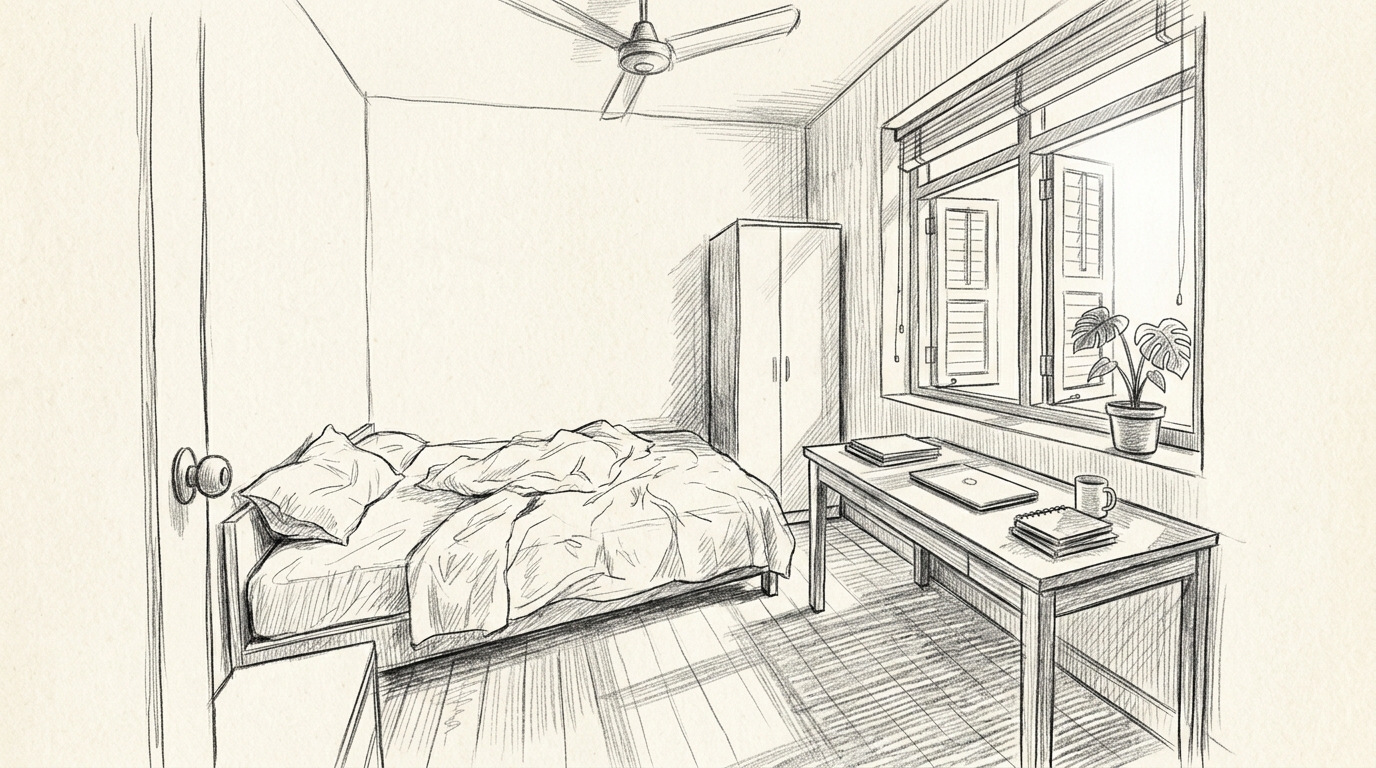
- Furnished from day one. Bed, wardrobe, wifi, and usually a shared kitchen are already set up.
- Shorter, more flexible terms. Useful if your Student Pass renews annually, or your lease shouldn't outlast your pass validity.
- Built-in social layer. Housemates already in the building, useful in your first months in a new country.
Lazybee runs three co-living properties in Singapore, Chiltern Park, Ivory Heights, and Thomson Grove, each with a mix of common rooms and ensuite master bedrooms. Current availability is listed on lazybee.sg.

What Does a Room Actually Cost?
Room prices move by type, size, and location, but the honest range across the co-living market in 2026 looks roughly like this:
| Room type | Typical monthly rent |
|---|---|
| Compact or budget room | S$600 to S$900 |
| Common room | S$1,000 to S$1,600 |
| Master bedroom (ensuite) | S$1,700 to S$2,500+ |
Co-living rent usually bundles in wifi, utilities, and furnishing, so the number you see is closer to your real monthly cost than a bare HDB or condo room, where those get billed separately. We don't quote a fixed figure here since it changes by room and by month. Check lazybee.sg for current pricing on specific rooms.
Budget separately for a security deposit, typically one month's rent, refundable in full at move-out barring real damage. Our security deposit guide covers what's standard.
Bangladeshi Community in Singapore: Food, Faith, and Everyday Support
Singapore's South Asian community hubs around Little India, Jalan Besar, and Farrer Park have long served Bangladeshi residents alongside the wider South Asian and Muslim communities there. Halal food is easy to find across the area, from Berseh Food Centre on Jalan Besar to the many halal-certified eateries lining Little India's streets, plus Mustafa Centre on Syed Alwi Road, open 24 hours, for groceries and daily essentials.
Mosques and community associations across the island, not only in Little India, give practical footing beyond food shopping, whether that's Friday prayers, festival gatherings, or simply a place to ask another Bangladeshi resident how something works. None of this is limited to any one visa category. Students, EP holders, S Pass holders, and Work Permit holders all draw on the same community infrastructure on their days off.
Settling In: The Practical Stuff
A few things worth sorting in your first weeks, separate from housing itself.
Banking. DBS, OCBC, and UOB open accounts for foreigners holding a valid pass and passport, usually in person once you have a local address on file.
SIM and connectivity. A local SIM from Singtel, StarHub, or M1 needs your passport and pass, usually sorted same-day at a mall outlet or airport kiosk.
Getting around. The MRT and bus network covers most of the island, and an EZ-Link or bank contactless card gets you on both.

Before You Sign: What to Check
- Your pass is issued and in hand, not just an offer letter or IPA.
- The lease length doesn't outlast your pass validity, especially on a Student Pass.
- Deposit terms and refund process are written into the agreement, not just promised verbally.
- The room and floor area match what's actually advertised. Our guide on is co-living legal in Singapore covers the minimum stay and occupancy rules every legitimate room should already meet.
Once those four are confirmed, you're taking on no more risk than any other renter here.
Frequently Asked Questions
Can Bangladeshi Work Permit holders rent a private room instead of staying in a dormitory? Employers in the construction, marine, and process sectors are required to arrange and prove acceptable accommodation for their Work Permit holders before entry, and that's typically a licensed dormitory. It isn't a personal choice the worker makes on the open rental market the way EP, S Pass, and Student Pass holders can.
Can I rent a co-living room in Singapore on an S Pass? Yes. S Pass holders rent on the open market like any other pass holder, and co-living is a common option for a first move since it's furnished and doesn't require a local guarantor.
Do Bangladeshi students need to live in a hostel while studying in Singapore? Not necessarily. Many first-years start in campus hostels, but Student Pass holders are free to rent privately, including co-living, once the pass is issued.
Is there a Bangladeshi community in Singapore? Yes, concentrated around Little India, Jalan Besar, and Farrer Park, with halal food, mosques, and community associations serving Bangladeshi residents across every visa category.
How much does a co-living room cost in Singapore? Realistically S$600 to S$2,500+ a month depending on room type and location, plus a deposit of around one month's rent. Check current listings for exact pricing since it moves by room and by month.
Looking for a furnished room on an EP, S Pass, or Student Pass, with no guarantor chase? Browse current availability at lazybee.sg.
Sources: MOM, Employment Pass eligibility and salary; MOM, S Pass eligibility and salary; MOM, Pre-entry housing check for CMP Work Permit holders; MOM, Proof of accommodation for Work Permit holders (press release); NTUC, Foreign Worker Dormitories Act coverage expansion; Figment, Co-Living Cost Singapore 2026 Price Guide.