Housing for Creative and Media Professionals in Singapore
Where creative and media pros work in Singapore, EP rules for creative roles, and why flexible housing beats a rigid 12-month lease for project income.
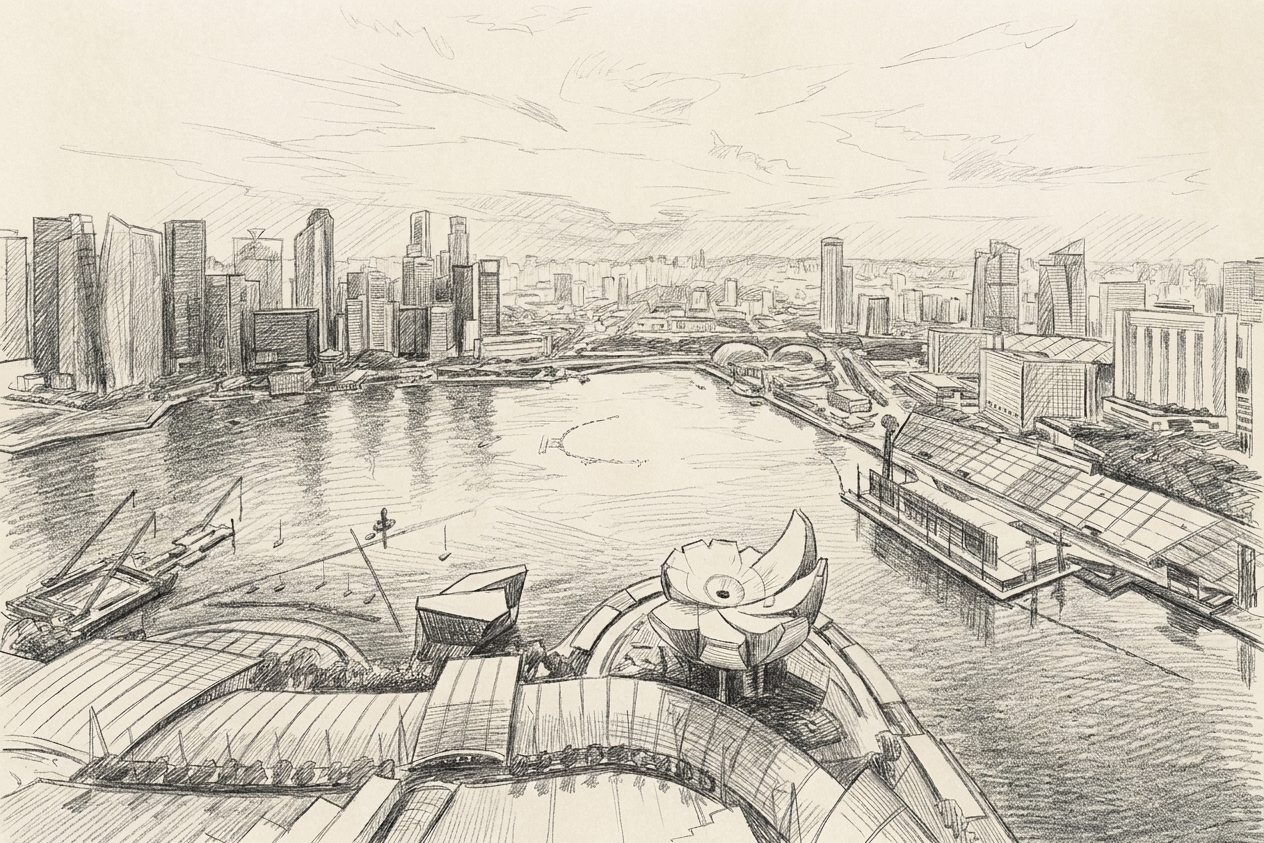
Creative and media professionals in Singapore work across a few distinct clusters, mainly one-north's Mediapolis for broadcast, gaming, and production, and the CBD and city fringe for advertising, branding, and design agencies. The bigger housing issue isn't location though. This industry runs on project contracts and freelance income, which fits badly with a standard 12-month lease built around a fixed monthly salary from day one. This piece covers both: where the work is, and why the housing shape needs to match how the income arrives.
Where does Singapore's creative and media industry actually cluster?
There's no single official "creative district" the way biomedical research has Biopolis. The industry sits across three distinct pockets, and where you work depends heavily on which part of the industry you're in.
One-north, and specifically Mediapolis within it, is the closest thing to a dedicated media hub. Mediapolis is a purpose-built precinct with soundstages, green-screen facilities, post-production suites, and games and animation studios. Mediacorp, Singapore's national broadcaster, relocated its entire operation to an 800,000 sq ft campus there in 2015. Razer runs its Southeast Asia headquarters out of one-north, and Grab's headquarters sits in the same precinct. If your work is broadcast, gaming, animation, or production-adjacent, one-north is where the infrastructure is built for it.
The CBD and nearby fringe areas are where advertising, branding, and communications agencies tend to operate, alongside the corporate marketing teams that brief them. This is less a single street and more a scatter across Raffles Place, Robertson Quay, and River Valley, wherever an agency can get office space near the clients it services.
The Bras Basah.Bugis precinct is Singapore's officially branded arts, culture, and learning district, home to LASALLE College of the Arts and NAFA. It's more education and gallery-facing than commercial studio space, but it's the area where a lot of design and fine arts graduates start their networks and first freelance gigs before moving into agency or studio work elsewhere.
| Cluster | What sits there | Who works there |
|---|---|---|
| One-north, and Mediapolis within it | Purpose-built precinct with soundstages, green-screen facilities, post-production suites, games and animation studios. Mediacorp moved its whole operation to an 800,000 sq ft campus here in 2015. Razer's Southeast Asia HQ and Grab's HQ sit in the same precinct | Broadcast, gaming, animation, production |
| CBD and city fringe | Scattered across Raffles Place, Robertson Quay and River Valley, wherever an agency can get space near its clients | Advertising, branding, communications, and the corporate marketing teams briefing them |
| Bras Basah.Bugis | Singapore's officially branded arts, culture and learning district. LASALLE College of the Arts and NAFA | Education and gallery-facing. Where many design and fine arts graduates build first networks and freelance gigs |
The practical upshot: a creative or media career here can genuinely mean working across two or three of these areas within the same year, sometimes the same month, depending on which project you're on.
Does the Employment Pass work differently for creative roles?
No. This is worth being direct about, since it's a common assumption. The Ministry of Manpower does not run a separate salary threshold for creative, media, or arts occupations. Employment Pass applicants fall under one of two sector categories: financial services, or everything else.
For the general sector (which covers creative and media roles), the qualifying salary starts at $5,600 a month for candidates aged 23 or under, rising progressively to $10,700 a month for candidates 45 and above. These are the current rates ahead of a scheduled increase from 1 January 2027. Financial services roles sit on a higher scale, starting at $6,200 and rising to $11,800.
On top of the salary floor, most applicants also need to clear COMPASS, a points-based framework assessing salary, qualifications, workforce diversity, local hiring support, and (where relevant) a skills shortage bonus. A minimum of 40 points across the six criteria is required. Candidates earning $22,500 a month or more, or coming in for a role of one month or less, are exempted from COMPASS entirely.
| Sector | Qualifying salary at age 23 or under | Rising to, at age 45 and above |
|---|---|---|
| General sector, which covers creative and media | S$5,600/month | S$10,700/month |
| Financial services | S$6,200/month | S$11,800/month |
These are the current rates ahead of a scheduled increase from 1 January 2027. On top of the salary floor, most applicants must also clear COMPASS, a points framework covering salary, qualifications, workforce diversity, local hiring support and, where relevant, a skills shortage bonus. A minimum of 40 points across the six criteria is required. Candidates earning S$22,500 a month or more, or coming in for a role of one month or less, are exempt from COMPASS entirely.
In short: a creative director, art director, or producer applying for an EP goes through the same salary and points test as any other general-sector role. There's no carve-out that makes it easier, and none that makes it harder. For the mechanics of renting once your pass is approved, see our guide on renting on an EP, S Pass, or Student Pass in Singapore.

Why creative and media work runs on project income, not a fixed monthly salary
A large share of work in advertising, production, and design happens on a project or contract basis rather than permanent headcount. Agencies staff up for a pitch or campaign and staff down after it ships. Production houses hire crew per shoot. Freelance designers, editors, and copywriters bill per project, not per month.
Even professionals in a permanent role often supplement it with freelance work, or move between a permanent contract and a string of project contracts over a two or three year stretch. That's normal here in a way it isn't in banking or the public sector.
The practical effect on your finances is real. Income can be lumpy: a strong month after a project wraps, then a leaner stretch while the next brief comes in. That's manageable day to day. It becomes a problem the moment a landlord wants proof of a stable monthly salary and a year-long signature before you've even started the job.
Why a 12-month lease is the wrong shape for this kind of income
A standard tenancy agreement in Singapore assumes two things: a tenant who's staying exactly 12 months, and a tenant with a predictable paycheck to show for it. Both assumptions break down fast for a project-based creative career.
If your next contract runs three months and then who knows, locking into a year-long lease means either paying rent on a room you've left, or scrambling to break it early, which usually costs a chunk of your deposit. If you're between contracts and can't show three months of payslips from a new employer, some landlords won't rent to you at all, regardless of your actual earning history.
Flexible, shorter-commitment housing sidesteps both problems. A room you can hold for a few months, renew if the next contract lands, or walk away from cleanly if it doesn't, matches how this industry pays people. It's not about being unable to commit. It's the housing commitment matching the employment commitment, rather than outrunning it.
What to look for in a room as a creative or media professional
- A commute that works across more than one likely work location, since your next project could be in one-north, the CBD, or elsewhere
- A lease structure that doesn't require a year-long commitment or continuous payslip history
- All-in rent, so utilities and wifi aren't separate bills to chase in a lean month
- Reliable, fast wifi for uploading large files, video, or renders on a deadline
- A private, lockable room so gear or client materials aren't sitting in a shared space
- A household that doesn't assume a fixed 9-to-5, since shoot days and deadline crunches don't run on office hours
| Look for | Why |
|---|---|
| A commute that works for more than one likely work location | Your next project could be at one-north, in the CBD, or elsewhere |
| A lease that does not need a year's commitment or continuous payslip history | Standard tenancies assume a fixed salary and a full 12 months, both of which break on project income |
| All-in rent | Utilities and wifi are not separate bills to chase in a lean month |
| Reliable, fast wifi | Uploading large files, video or renders against a deadline |
| A private, lockable room | Gear and client materials are not sitting in shared space |
| A household that does not assume a fixed 9-to-5 | Shoot days and deadline crunches do not run on office hours |
Where co-living fits into this
Lazybee runs three co-living houses in Singapore: Chiltern Park in Serangoon, Ivory Heights in Jurong East, and Thomson Grove near Lentor. None sit inside one-north or the CBD directly, so if your work is anchored at Mediapolis or a CBD agency, factor the commute in like you would for any job. What co-living solves is the lease structure: a private room, all-in pricing, and a commitment that doesn't force you to guess your income twelve months out before you sign anything.
For a fuller sense of what rent actually looks like by area, see our guide to co-living cost by district in Singapore. If you're weighing co-living against other housing in Singapore more broadly as someone starting or restarting a career here, our guide for career switchers moving to Singapore in their 30s covers a lot of the same ground from a different angle. And for a closer look at the three Lazybee houses themselves, read the Chiltern Park, Ivory Heights, and Thomson Grove guide.
Frequently asked questions
Do creative and media professionals need a different type of work pass in Singapore? No. Most professional and managerial creative roles, art directors, producers, designers, editors, use the standard Employment Pass, assessed against the same general-sector salary floor and COMPASS points test as any other industry. There's no separate creative-sector visa category.
Is it harder to rent in Singapore on freelance or project-based income? It can be, mainly because standard tenancy agreements assume a fixed monthly salary and a full year's commitment. Some landlords want continuous payslips before they'll sign. Flexible housing with shorter commitment periods avoids that requirement.
Where should I live if I work across one-north and the CBD? There's no single perfect answer, since the two areas sit on opposite sides of the island's transport network. The right call depends on which location your current contract is anchored to and how much that's likely to shift over your next few projects.
Can I find a room in Singapore without a 12-month lease? Yes. Co-living operators, including Lazybee, offer shorter, more flexible commitment periods than a standard tenancy agreement, which suits project-based income better than a fixed year-long lease.
Next step
If your work moves between contracts, or between one-north, the CBD, and wherever the next brief takes you, check live room availability across all three Lazybee houses at lazybee.sg. It's built for exactly this kind of career, not a fixed year-long commitment made before you know what your income looks like in month six.
Sources: MOM, Employment Pass eligibility; MOM, S Pass eligibility; URA, Renting Property guidelines; URA, Short-Term Accommodation guidelines.