HDB vs Private Property: Why Is HDB Six Months When Condos Are Three?
HDB flats need a 6 month minimum stay, private property needs 3. Here's why, under which law, and what it actually means for renters and owners.
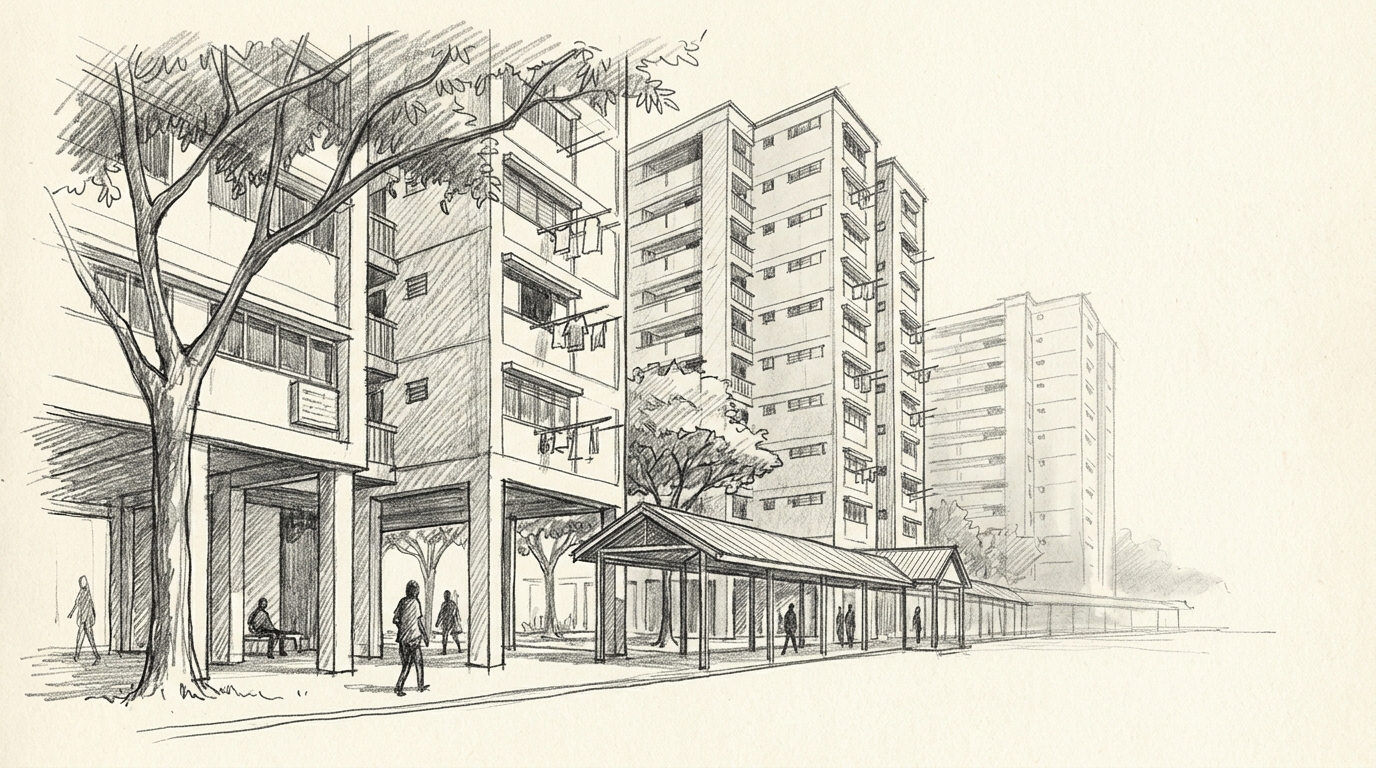
Because they're governed by two different laws. HDB flats fall under the Housing and Development Act, and HDB sets a minimum subletting period of six months, for a whole flat and for a single bedroom. Private property, condos, landed homes, apartments, falls under URA's planning rules, which have required a minimum stay of three consecutive months since June 2017. Same country, same idea of "no short-term renting," two regulators with two numbers.
That's the answer in full. The rest of this piece is what actually follows from it, because the six-month and three-month rules aren't cosmetic. They change what you can legally offer as a landlord, what you can legally sign as a tenant, and where the penalties land if either side gets it wrong.
HDB and Private Rules Are Not the Same Law. Here Is the Split
HDB flats are public housing. Renting one out, whole flat or single bedroom, means asking HDB for approval first, and HDB's Terms and Conditions for renting set the six-month floor. There's no shorter option. A one-month or three-month HDB tenancy simply isn't a legal HDB tenancy, no matter what a listing says.
Private property sits under URA. Since 2017, URA dropped the private minimum from six months to three, specifically to give owners more flexibility while still ruling out Airbnb-style short stays. Anything under three consecutive months on private property is short-term accommodation, and that's the category URA actively enforces against.
The two rules didn't start in the same place and didn't move together. HDB never followed URA's 2017 change. That's the entire reason the numbers look mismatched today, and it's worth remembering next time a listing description conflates the two.
8 Differences Between HDB and Private Rental Rules
| HDB flat | Private property | |
|---|---|---|
| Minimum stay | 6 months | 3 months |
| Regulator | HDB | URA |
| Who can rent out a whole unit | SC owners who've met MOP (5 years, or 3 for pre-Aug 2010 non-subsidised flats) | Any owner, no MOP |
| Approval needed | Yes, HDB application before renting | No approval needed for a standard 3+ month lease |
| Application fee | $9 per bedroom, $18 for a whole flat | None |
| Owner residency | Owner or an authorised occupier must keep living there for bedroom rental | Owner can live elsewhere |
| Max lease length | 36 months per application (24 if any subtenant is a non-Malaysian non-citizen) | No fixed statutory cap |
| Penalty for breach | Fines up to S$50,000, or compulsory acquisition of the flat, per the Housing and Development (Amendment) Act | Fines up to S$200,000, jail for repeat offenders |
The occupancy cap is the one place the two rules actually converge: both HDB flats of four rooms or larger and private units of at least 90 square metres can now house up to eight unrelated occupants, a relaxation HDB and URA jointly extended to 31 December 2028 as of their 16 January 2026 announcement.
HDB Room vs Condo Co-Living Room: The Honest Comparison
An HDB bedroom is usually cheaper, and that's the real draw. But the owner has to keep living in the flat while you're there, which means less privacy. You're locked into six months from day one, and if the owner wants out early, the paperwork and the personal dynamic get messy fast.
A condo or apartment co-living room runs on the three-month minimum and is usually run by an operator, not an owner-occupier. The relationship is professional from the start: a proper agreement, a fixed process for issues, no shared kitchen with the landlord's family. It tends to cost more, but you're paying for privacy and a shorter commitment.
Neither wins outright. Price alone points to HDB. Shorter lock-in and an operator instead of a live-in owner points to private.
Myth: Co-Living Is Banned in HDB Flats
It isn't. This one comes up constantly, usually from someone who's seen an enforcement story about illegal subletting and assumed the whole category is off-limits. Renting out spare bedrooms in an HDB flat is explicitly allowed, provided the flat has three rooms or more, the tenancy runs at least six months, the owner applies to HDB first, and an owner or authorised occupier continues living there.
What's actually banned is renting an HDB flat out for short stays, renting to more tenants than the occupancy cap allows, or subletting without ever telling HDB. Those are the violations that show up in the news. Ordinary, approved bedroom rental in an HDB flat is not one of them, and treating co-living itself as the problem misreads what HDB is actually enforcing.
The HDB Assumption That Gets Tenants Evicted
The single most common mistake is assuming an HDB room works like a private one: flexible, easy to walk away from if plans change. It doesn't. Six months is each tenant's minimum continuous occupation period under HDB's own terms. Leaving early breaks the agreement you signed, and it can sour the one relationship, with the flat owner, that HDB tenancies depend on more than private ones do.
The second version sits with owners: assuming that because a tenant "only wants three months," they can quietly agree to it outside the formal application. That's what gets flagged, because it's the owner, not the tenant, who's on the hook with HDB when a subletting period doesn't match what was approved.
HDB's Subletting Conditions, Quoted and Explained
A few conditions worth having in plain English, since HDB's own wording is dense:
"Each tenant... must be in continuous occupation of the flat for at least 6 months." This is the floor. There's no shorter legal HDB tenancy, for a whole flat or a bedroom.
Minimum Occupation Period of 5 years (3 years for non-subsidised flats bought before 30 August 2010) applies before an owner can rent out the whole flat. It does not apply to renting out a spare bedroom while the owner still lives there, which is a separate, more accessible pathway.
Maximum subletting period of 36 months per application, reduced to 24 months if any subtenant is a non-Malaysian non-citizen. Renewal is possible, but it's a fresh application, not an automatic extension.
Application fee of $9 per bedroom, or $18 for a whole flat, paid to HDB as part of getting approval before any tenant moves in.
Breach consequences range up to a S$50,000 fine or compulsory acquisition of the flat, under the graduated penalty framework HDB has used since a 2015 amendment. Check the exact fine for any specific case, since HDB sets it at its own discretion rather than a fixed figure per offence.
HDB Rental Compliance: A Checklist for Flat Owners
- Confirm your flat has at least 3 rooms before renting out a bedroom, and confirm you've met MOP before renting out the whole unit.
- Apply to HDB and get written approval before any tenant moves in, not after.
- Set the tenancy at 6 months minimum, in writing, in the agreement itself.
- Check the total occupant count against the cap for your flat size, currently up to 8 for 4-room-or-larger flats through end-2028.
- If renting bedrooms, confirm an owner or authorised occupier is genuinely still resident, not just registered as one.
- Keep the application current if a tenant changes mid-lease. A new tenant needs a new or updated application, not a verbal handover.
- Never agree to a stay shorter than 6 months "off the books," even if the tenant asks. That risk sits with you, not them.
Getting a Room, Either Way
If HDB's six months fits your plans and price matters more than privacy, it's a legitimate path, just get the application done properly. If three months and a professionally run building suit you better, that's what private co-living is built for. Lazybee's rooms across Thomson Grove, Ivory Heights and Chiltern Park run on that three-month private-property minimum, with listings at book.lazybee.sg. For the broader legal picture, our piece on whether co-living is legal in Singapore covers occupancy caps and licence agreements in more depth.
HDB Room Rental: The Twelve Most Asked Questions
Is co-living legal in HDB flats? Yes. Renting out spare bedrooms in a 3-room-or-larger HDB flat is explicitly allowed under HDB's own terms, subject to approval and the 6-month minimum.
Can I rent an HDB room for 3 months? No. HDB's minimum is 6 months for every tenant, whether it's a whole flat or a single bedroom. Three months is the private property minimum, not HDB's.
Why is HDB's minimum 6 months and private property's only 3? Different regulators. HDB has kept its 6-month floor throughout; URA lowered private property's minimum from 6 to 3 months back in 2017.
Can an HDB owner rent to more than one tenant? Yes, up to the flat's occupancy cap, currently up to 8 unrelated occupants for 4-room-or-larger flats, through end-2028.
Do I need HDB's approval before renting out a bedroom? Yes. Approval is required before any tenant moves in, with a $9 per bedroom application fee.
What's the maximum HDB subletting period? 36 months per application, or 24 months if any subtenant is a non-Malaysian non-citizen.
Can foreigners rent a room in an HDB flat? Yes, subject to the flat's occupancy cap and the shorter 24-month maximum that applies when a subtenant is a non-Malaysian non-citizen.
What happens if a tenant leaves an HDB room before 6 months? It breaches the signed tenancy. It's not typically the tenant who faces HDB penalties, but it puts the owner's approval and the relationship at risk.
Does the flat owner have to keep living there while renting out a bedroom? Yes. An owner or an authorised occupier must remain resident for the duration of any bedroom rental.
What's the difference between renting out a whole HDB flat and just a bedroom? Whole-flat rental requires the owner to have met MOP (5 years, or 3 for older non-subsidised flats) and the owner moves out. Bedroom rental has no MOP requirement, but the owner has to stay.
Does the 8-person occupancy cap apply to every HDB flat? No. It applies to flats of 4 rooms or larger. Smaller flats fall under the standard, lower cap.
What's the penalty for illegal HDB subletting? Fines up to S$50,000 or compulsory acquisition of the flat for serious or repeat breaches, under HDB's graduated penalty framework. Check the specific fine for any individual case, since HDB applies this range at its own discretion.
Figures here that come from government schedules, MOM salary thresholds, ICA and HDB requirements, URA rules, fees and fares, are reviewed on their own timetables and move. Check the current number at the source before you rely on it.